
Replacing coffee

Best tea to replace coffee, without losing the morning lift

An organic black tea blend whose caffeine and L-theanine give a steadier lift, with a caffeine-free option for the afternoon

In short

The best way to swap coffee for tea is to keep a real lift in the morning and lose the jitters and crash. Sippo Slow Mornings is a full black tea whose caffeine comes paired with L-theanine, an amino acid research links to calm, steady attention, so the energy is smoother than coffee. For the afternoon, switch to caffeine-free Good Times so you keep the ritual without the late caffeine. A gentler lift, not a stimulant hit.

Most people who quit coffee do not miss the caffeine so much as the ritual and the lift. Tea keeps both: a real, satisfying morning cup, but with a gentler caffeine curve because the leaf pairs caffeine with calming L-theanine. Slow Mornings is the bridge for the morning, and caffeine-free Good Times takes over the afternoon, so the whole day still has its cups.

The pick

What we'd reach for

The coffee swapSlow Mornings

Slow Mornings

smooth breakfast tea

Best for
A steady morning lift without the coffee jitters
Hero ingredient
Caffeine paired with L-theanine
Match
Anyone cutting down on coffee

How it compares

Replacing coffee with Slow Mornings

What matters when you quit coffeeSippo Slow MorningsConventional
A real morning liftYes, moderate caffeineYes, often too much
Caffeine paired with L-theanineYes, naturally in the leafNo, caffeine alone
The jitters and the crashMuch gentlerCommon
Easier on a sensitive stomachUsuallyCan be harsh
A caffeine-free afternoon optionYes, switch to Good TimesNo
Keeps the ritualYes, a proper cupYes

What's inside, and why

The ingredients doing the work

Found in: Slow Mornings teaWell established

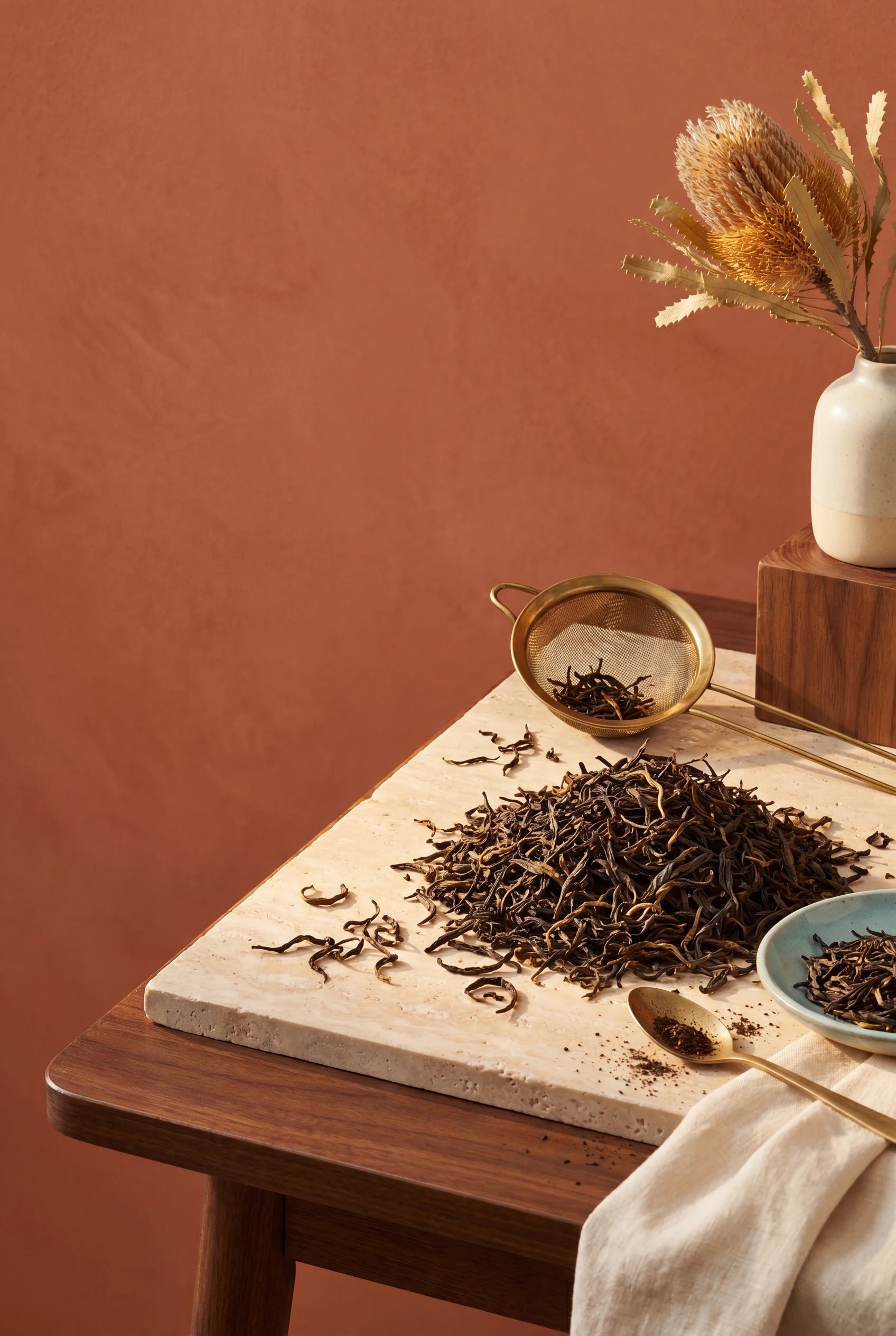
Ceylon black tea

Camellia sinensis

Bright and brisk, the source of the morning lift. In tea the caffeine comes paired with L-theanine, and a meta-analysis found that combination supports attention and alertness more smoothly than caffeine alone (Camfield et al., 2014).
Found in: Slow Mornings teaWell established

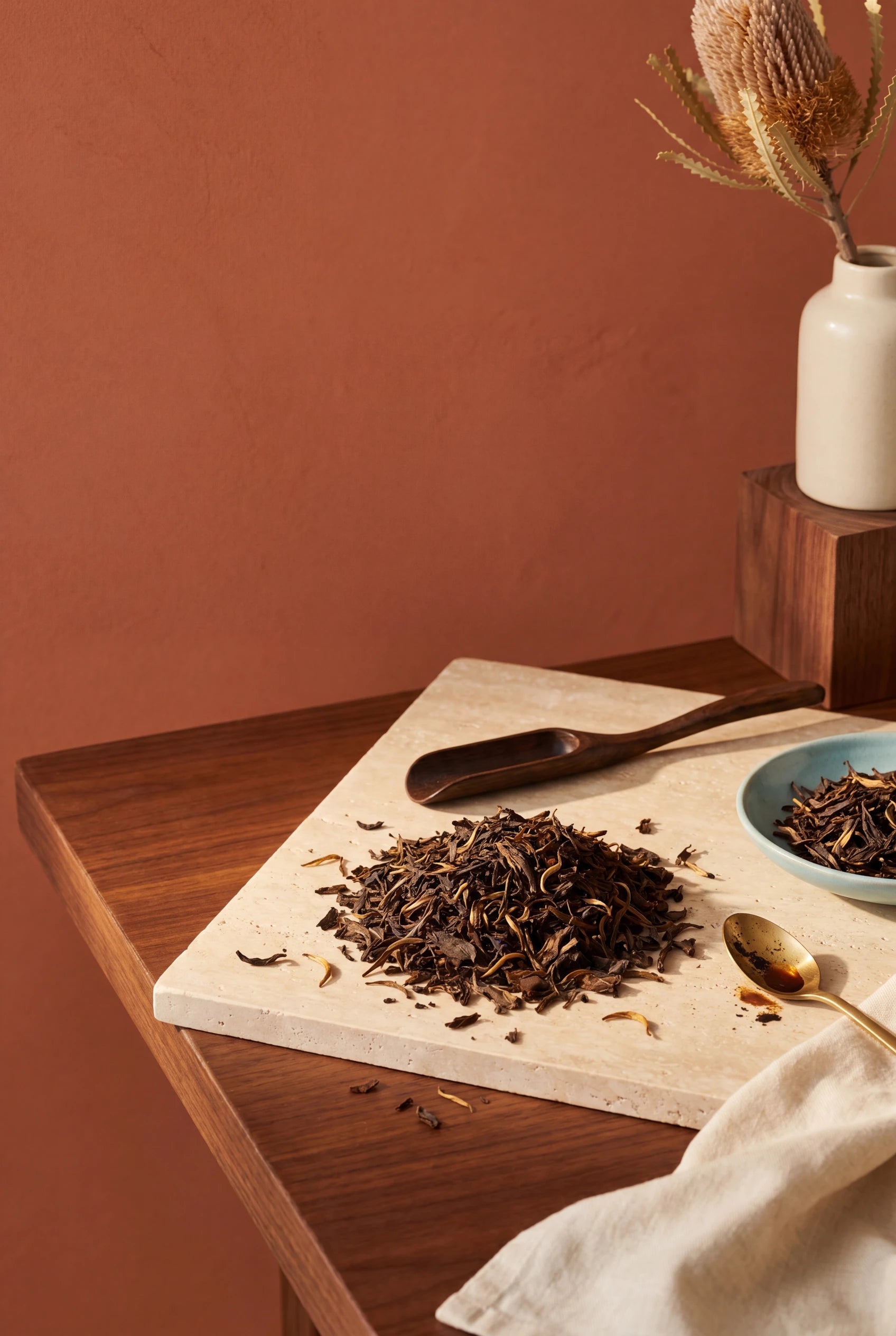
Assam black tea

Camellia sinensis

Deep and malty, for the full body that makes a tea feel like a real coffee replacement rather than a downgrade. Carries L-theanine, linked to lower stress-related symptoms (Hidese et al., 2019).

Found in: Slow Mornings teaTraditional

White silver tea

Camellia sinensis

A delicate tea that softens the blend, so the lift feels calm and even rather than sharp, the opposite of a coffee spike.

Found in: Slow Mornings teaTraditional

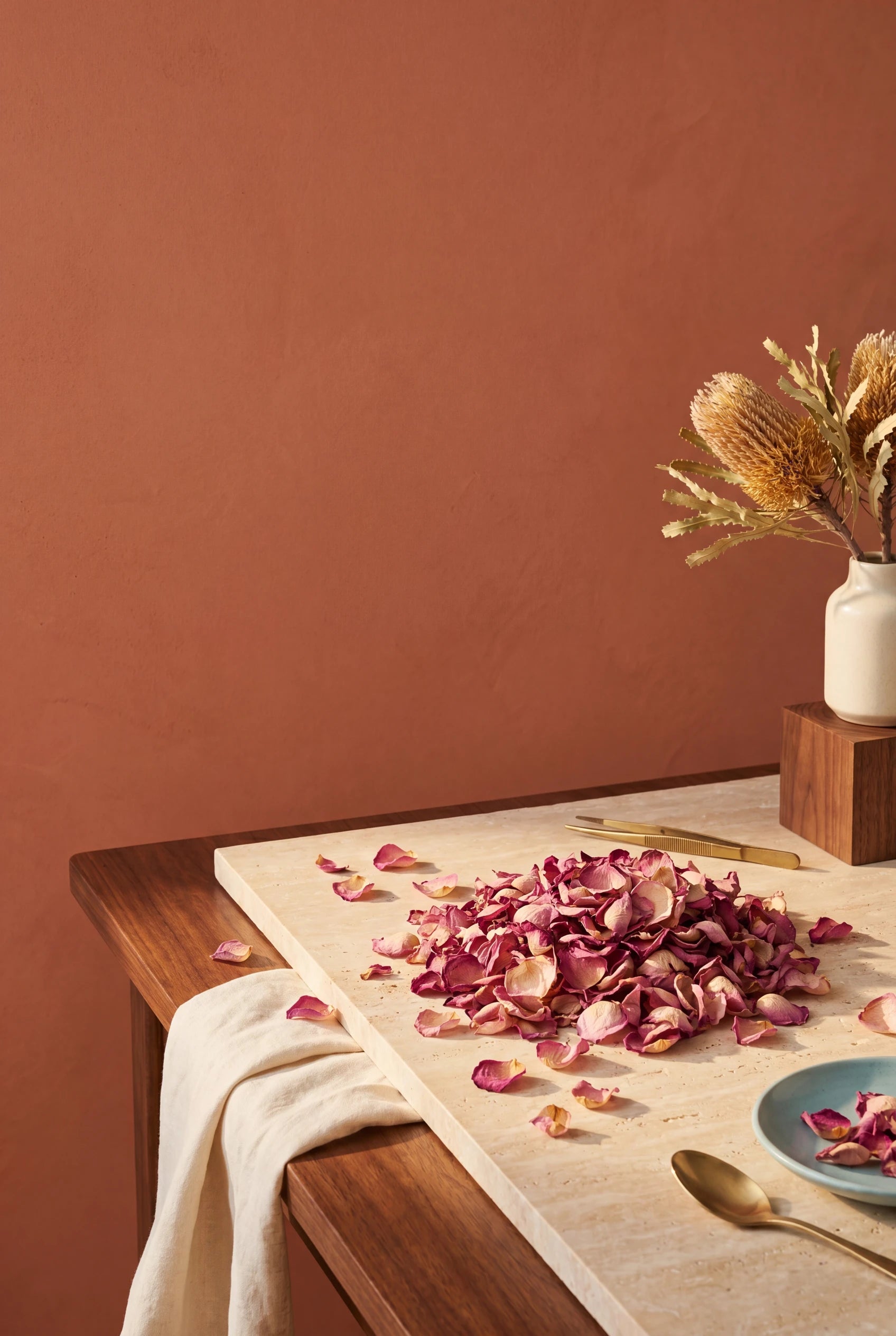
Rose petals

Rosa damascena

A soft floral note that turns the morning cup into a ritual worth keeping, which is half the battle when you are leaving coffee behind.

How it adapts

What you need, and how it helps

TargetHow it solves itKey ingredientWhat you'll notice
Missing the morning liftA full black tea with real caffeineCeylon + AssamA satisfying wake-up
Hating the coffee jittersCaffeine paired with calming L-theanineBlack tea leafSteadier, no shakes
The mid-morning crashA gentler caffeine curveWhite tea softens itEnergy that lasts
Wanting an afternoon cup tooSwitch to caffeine-free Good TimesGood TimesRitual all day, sleep intact
A sensitive stomachSmoother and less acidic than coffeeThe blendA lift without the churn

Outside-in routine pairings

Wake the body up, too

Slow Mornings replaces the coffee lift from the inside. A cool morning shower wakes the body up from the outside, no caffeine required.

Mint Condition

Mint Condition

matcha mint body scrub

Mint Condition is our matcha mint body scrub, and its pure peppermint gives a genuine cooling tingle that clears the morning fog, the kind of wake-up people used to get from coffee. The cup and the shower, a clean start without the beans.

See Mint Condition

People also ask

Questions, answered

Slow Mornings is a full black tea, so it has a real, moderate dose of caffeine, less than coffee but enough for a satisfying lift. Because the caffeine is paired with L-theanine, many people find the energy steadier and easier to work through than coffee's spike (Camfield et al., 2014).

Switch to caffeine-free Good Times. It keeps the ritual, the warm or iced cup, the pause, without the late caffeine that disrupts sleep. Keeping the ritual is what makes leaving coffee stick.

If you are a heavy coffee drinker, tapering helps: replace your morning coffee with Slow Mornings first, keep the afternoon caffeine-free, and reduce gradually. The gentler caffeine level eases the transition rather than cutting you off cold.

Many people find black tea gentler and less acidic than coffee, so it sits more easily on a sensitive stomach. As always, everyone is different, so see how it suits you.

Swapping coffee for tea, in depth

The deep dive

What you actually miss about coffee

When people try to quit coffee, the surprise is how much of it is ritual and lift rather than the caffeine itself: the warm cup, the morning pause, the feeling of switching on. Tea keeps all of that, which is why it is the most sustainable coffee replacement. The trick is matching the lift closely enough in the morning that it does not feel like a downgrade.

Why tea's lift is smoother

Coffee delivers a large, fast dose of caffeine and nothing to temper it, hence the spike and the jittery crash. Tea carries less caffeine, paired with L-theanine, an amino acid in the leaf; a meta-analysis found the two together support attention and alertness more smoothly than caffeine alone (Camfield et al., 2014), and L-theanine has been linked to lower stress-related symptoms (Hidese et al., 2019). So the morning lift is real but calmer.

The morning-to-afternoon system

The simplest way to replace coffee across the whole day is two cups: Slow Mornings for the morning, where you want a genuine caffeine lift, and caffeine-free Good Times for the afternoon, where coffee usually sabotages your sleep. You keep a ritual at both ends of the day, but only the morning one has caffeine, which protects the sleep that makes the whole thing work.

Making the switch stick

Go gradually: swap the morning coffee first, keep afternoons caffeine-free, and reduce over a week or two rather than quitting cold. Brew Slow Mornings strong enough to feel substantial, take it black or with a splash of milk, and lean into the ritual. Done that way, tea is not a compromise on coffee, it is a calmer version of the same daily pleasure, with better afternoons and better sleep.

About the author

Dan Bartley

Co-founder, Sippo

Dan co-founded Sippo with Nicole and writes the brand's ingredient guides, working from peer-reviewed sources and standards bodies like Cochrane and the NIH. He is not a medical professional, and these guides are educational, not medical advice. Every clinical claim on this page is cited in full below, with its evidence tier and any caveats noted honestly.

hello@sippo.au
The research behind this3 peer-reviewed sources, with tiers and caveats
  1. Camfield, D. A., Stough, C., Farrimond, J., & Scholey, A. B. (2014). Acute effects of tea constituents L-theanine, caffeine, and epigallocatechin gallate on cognitive function and mood: A systematic review and meta-analysis. Nutrition Reviews, 72(8), 507-522. https://doi.org/10.1111/nure.12120

    Tier 2Systematic review and meta-analysis

    Pooled trials found L-theanine with caffeine improves attention and alertness, the pairing that occurs naturally in tea. Trial doses are standardised; tea delivers a gentler version of the same combination.

  2. Hidese, S., Ogawa, S., Ota, M., Ishida, I., Yasukawa, Z., Ozeki, M., & Kunugi, H. (2019). Effects of L-theanine administration on stress-related symptoms and cognitive functions in healthy adults: A randomized controlled trial. Nutrients, 11(10), 2362. https://doi.org/10.3390/nu11102362

    Tier 2Randomised controlled trial

    L-theanine, the amino acid in tea, was associated with lower stress-related symptoms and better cognitive scores. Used a 200 mg supplement, more than one cup delivers; cited for the calm-focus mechanism.

  3. Hartley, L., Flowers, N., Holmes, J., Clarke, A., Stranges, S., Hooper, L., & Rees, K. (2013). Green and black tea for the primary prevention of cardiovascular disease. Cochrane Database of Systematic Reviews, 6, CD009934. https://doi.org/10.1002/14651858.CD009934.pub2

    Tier 1Cochrane systematic review

    Cochrane review of tea and heart-health prevention. Findings are modest and about long-term habitual intake, not a single cup; cited honestly for general context, not a treatment claim.

Keep the ritual, lose the jitters

A steady morning lift and a caffeine-free afternoon cup. Love it in 30 days or it's on us.

Shop Slow Mornings