Pink Himalayan salt
Halite
The coarse grit that does the heavy lifting on thick skin. Long used as a body polish, the salt crystals buff down calloused elbows, knees and heels that a fine sugar scrub would slide right over.
Elbows, knees, hands and feet
Organic body scrub formulated with pink salt and three plant oils to soften thick, rough skin without drying it out
The roughest skin on your body, elbows, knees, heels and hard-working hands, needs a coarser grit to soften it and real moisture so it does not just dry out again. Sippo Mint Condition pairs coarse pink salt with a fine sugar polish and three plant oils, so it buffs thick patches smooth while keeping them hydrated. Used two to three times a week with a little extra attention to the rough spots, it softens the look and feel of calloused areas. It is cosmetic care, not a treatment for any skin condition.
Elbows, knees and heels are where skin thickens to protect itself, so they go rough, dry and sometimes cracked-looking. A fine sugar scrub barely touches them, and a harsh foot file just strips and dries. What actually softens thick skin is a coarser grit to buff it down paired with oils that put moisture back, which is exactly how Mint Condition handles the rough spots.
The pick

matcha mint body scrub
How it compares
| What matters for rough patches | Sippo Mint Condition | Conventional |
|---|---|---|
| Coarse grit for thick skin | Yes, pink Himalayan salt | Often only fine grit, too soft |
| Moisture so skin does not re-roughen | Yes, three oils | Rarely, most just abrade |
| Gentle enough for the rest of the body too | Yes, fine sugar as well | Single grit, less versatile |
| Strips and dries rough skin | No, oils replace moisture | Common with files and harsh scrubs |
| Synthetic fragrance | None | Common |
| Certified-organic ingredients | Yes, all eight | Rarely |
What's inside, and why

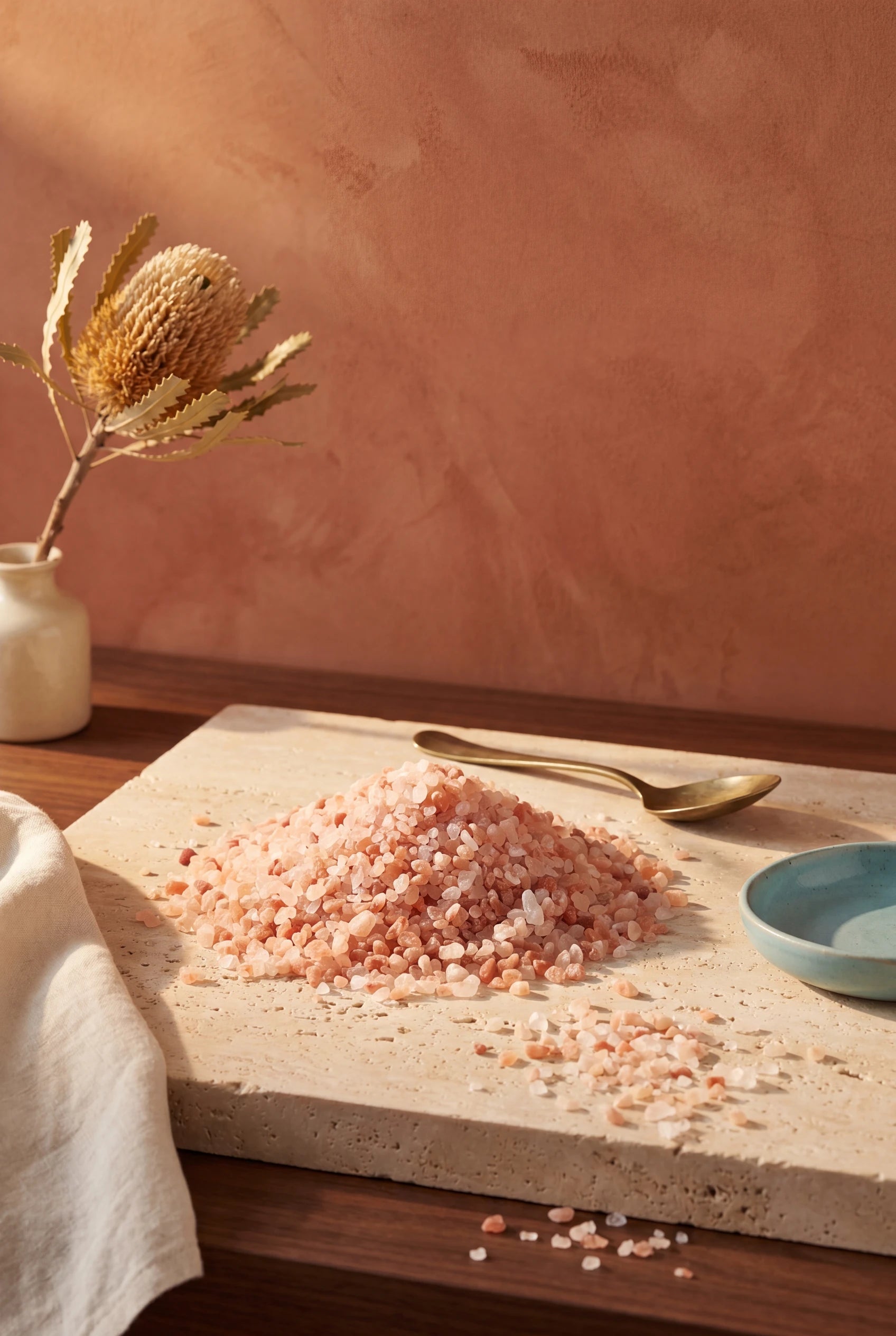
Halite
The coarse grit that does the heavy lifting on thick skin. Long used as a body polish, the salt crystals buff down calloused elbows, knees and heels that a fine sugar scrub would slide right over.

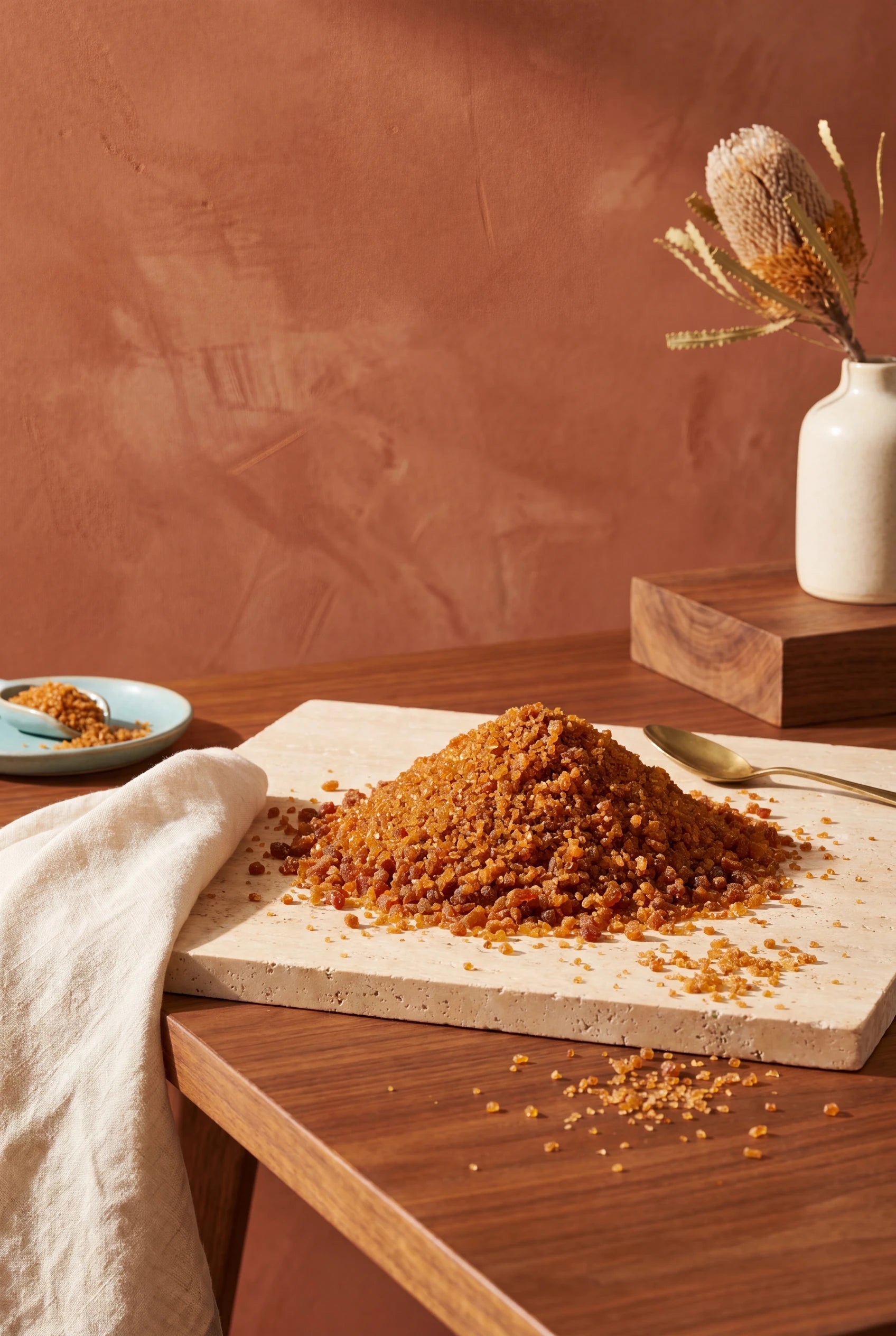
Saccharum officinarum
The finer polish, with naturally occurring AHAs that loosen the build-up of dead surface cells on rough patches (Tang & Yang, 2018; Kornhauser et al., 2010). It smooths after the salt has done the buffing.

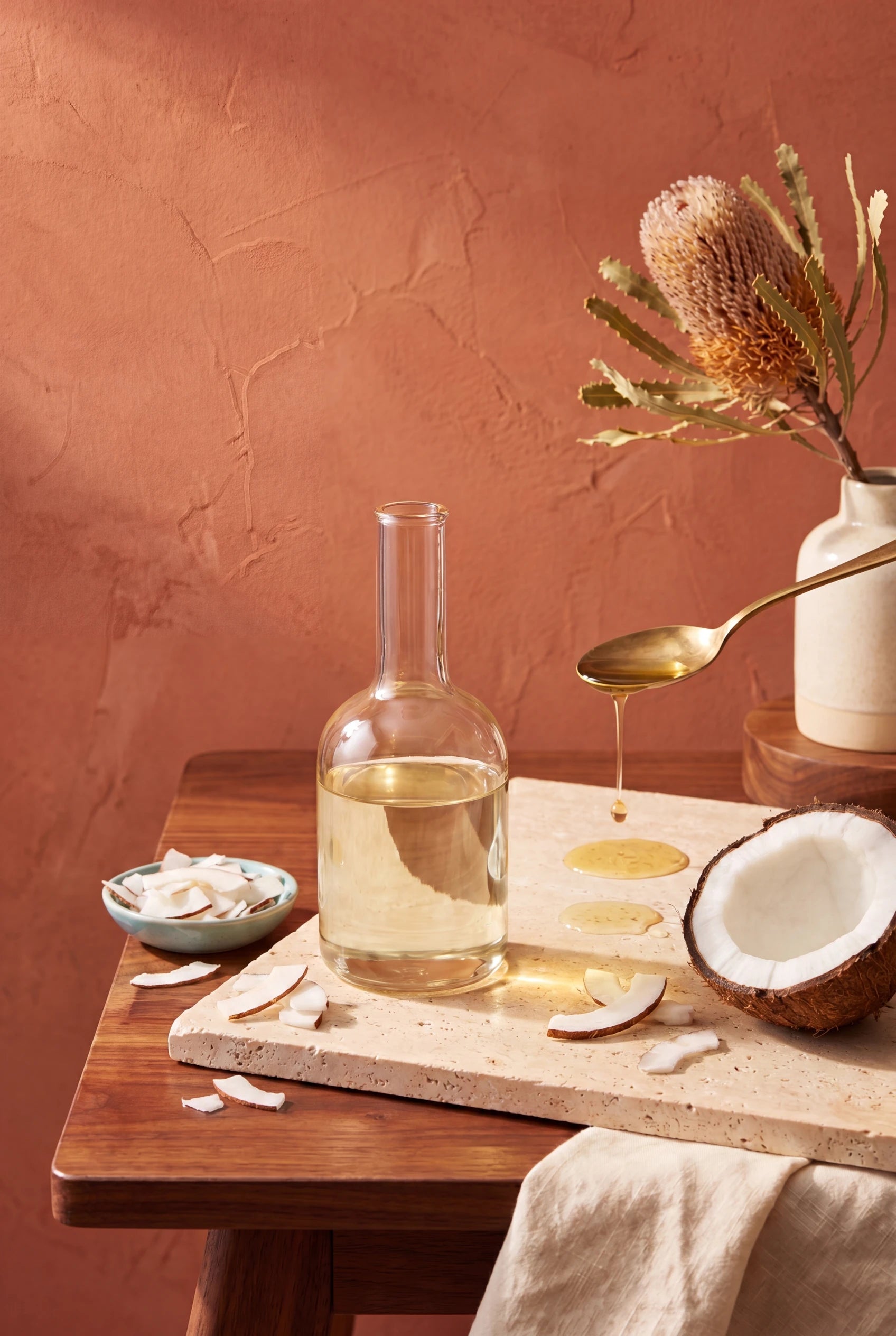
Cocos nucifera
The moisture rough skin is short on. Coconut oil supports the barrier and reduced water loss versus mineral oil in a controlled trial (Evangelista et al., 2014), so softened skin stays soft instead of drying out and re-roughening.

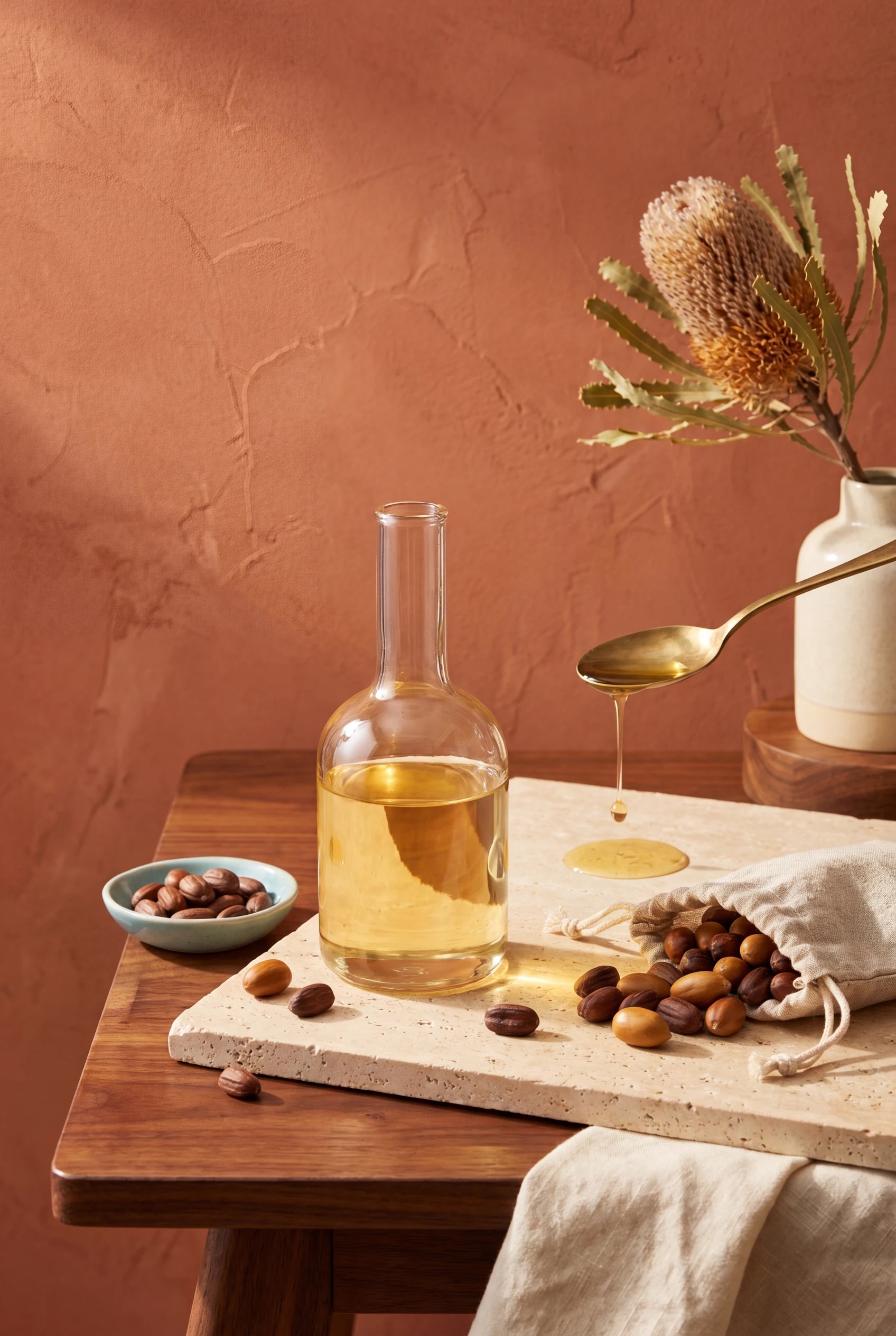
Prunus dulcis
A light, vitamin E-rich oil that finishes thick skin soft and conditioned (Ahmad, 2010), the second moisture layer over the coconut.
How it adapts
| Target | How it solves it | Key ingredient | What you'll notice |
|---|---|---|---|
| Rough, calloused heels | Coarse salt buffs the thick surface down | Pink salt | Softer, smoother heels |
| Dry, ashy elbows and knees | Salt smooths, then oils hydrate | Salt + coconut | No more rough, dry patches |
| Hard-working, dry hands | Fine polish and conditioning oils | Rapadura + almond | Softer, more comfortable hands |
| Skin that re-roughens fast | Built-in oils keep moisture in | Three-oil blend | Softness that lasts longer |
| Wanting one product for it all | Coarse and fine grits in one | Multi-grit formula | Rough spots and smooth skin, one jar |
| Cracked-looking dry skin | Gentle smoothing plus deep moisture | Coconut + almond | More comfortable, less flaky |
Routine pairings
A bit of slow body care pairs well with a slow, warming cup.

warm apple spice tea
Stay Awhile is warm apple and spice with a hint of toasted coconut, a comforting, lightly caffeinated cup for second pours. The easy companion to a quiet evening of looking after the rough edges.
See Stay AwhilePeople also ask
The pink salt is the key. It is a coarse grit that buffs down thick, calloused skin a fine sugar scrub cannot reach. Give heels, elbows and knees extra time and pressure, then the oils keep them soft. For very cracked or painful heels, see a podiatrist.
A file only abrades and tends to leave skin dry. This buffs and moisturises in one step, because the three oils go in as you scrub, so rough skin is softened and hydrated rather than stripped.
Yes. It has a fine sugar grit alongside the coarse salt, so it is gentle enough for arms and legs while still handling the rough spots. One jar covers both.
Understanding rough skin, in depth
These areas get rough for a reason: they take the most pressure, friction and bending, so the skin thickens to protect itself, building up extra layers of dead cells in a process called hyperkeratosis. There are also fewer oil glands on the elbows, knees and heels, which is why they dry out faster than the skin around them. The result is thick, dry, sometimes cracked-looking skin that ordinary body care barely touches.
Softening thick skin takes two things working together. First, a coarse enough grit to actually buff down the built-up surface: pink Himalayan salt does this where fine sugar slides over the top, and the natural AHAs in rapadura sugar help loosen the dead-cell build-up as well (Tang & Yang, 2018). Second, real moisture, because thick skin that is simply abraded and left dry quickly re-roughens. Coconut oil supports the barrier and reduced water loss in a controlled trial (Evangelista et al., 2014), and almond oil adds a soft finish (Ahmad, 2010), so the smoothed skin stays smooth.
Work the scrub into heels, elbows and knees with a little more time and pressure than the rest of your body, two to three times a week, and let the oils sit a moment before rinsing. Consistency beats intensity: regular gentle buffing keeps thick skin in check far better than occasional aggressive filing, which only triggers more build-up. For cracked, painful or bleeding skin, this is not the answer, see a podiatrist or doctor.
Tang, S.-C., & Yang, J.-H. (2018). Dual effects of alpha-hydroxy acids on the skin. Molecules, 23(4), 863. https://doi.org/10.3390/molecules23040863
Supports the AHA exfoliation mechanism. Discusses AHAs at formulation strengths above what raw rapadura sugar delivers, so the page applies the mechanism, not the magnitude.
Kornhauser, A., Coelho, S. G., & Hearing, V. J. (2010). Applications of hydroxy acids: Classifications, mechanisms, and photoactivity. Clinical, Cosmetic and Investigational Dermatology, 3, 135-142. https://doi.org/10.2147/CCID.S9042
Supports hydroxy-acid chemical exfoliation and surface cell turnover. Mechanism reference; raw cane sugar has not been tested as a finished topical.
Evangelista, M. T. P., Abad-Casintahan, F., & Lopez-Villafuerte, L. (2014). The effect of topical virgin coconut oil on SCORAD index, transepidermal water loss, and skin capacitance in mild to moderate pediatric atopic dermatitis. International Journal of Dermatology, 53(1), 100-108. https://doi.org/10.1111/ijd.12339
Topical virgin coconut oil reduced transepidermal water loss and improved skin hydration versus mineral oil (mean SCORAD reduction 68% vs 38%). Population was paediatric atopic dermatitis, not the general body-skin user; cited for the barrier and hydration mechanism.
Ahmad, Z. (2010). The uses and properties of almond oil. Complementary Therapies in Clinical Practice, 16(1), 10-12. https://doi.org/10.1016/j.ctcp.2009.06.015
Supports almond oil's emollient profile and vitamin E content. Used for the soft, conditioned-finish framing, not a specific skin-condition claim.
Keep exploring
Buffs and moisturises in one step. Love it in 30 days or it's on us.
Shop the range