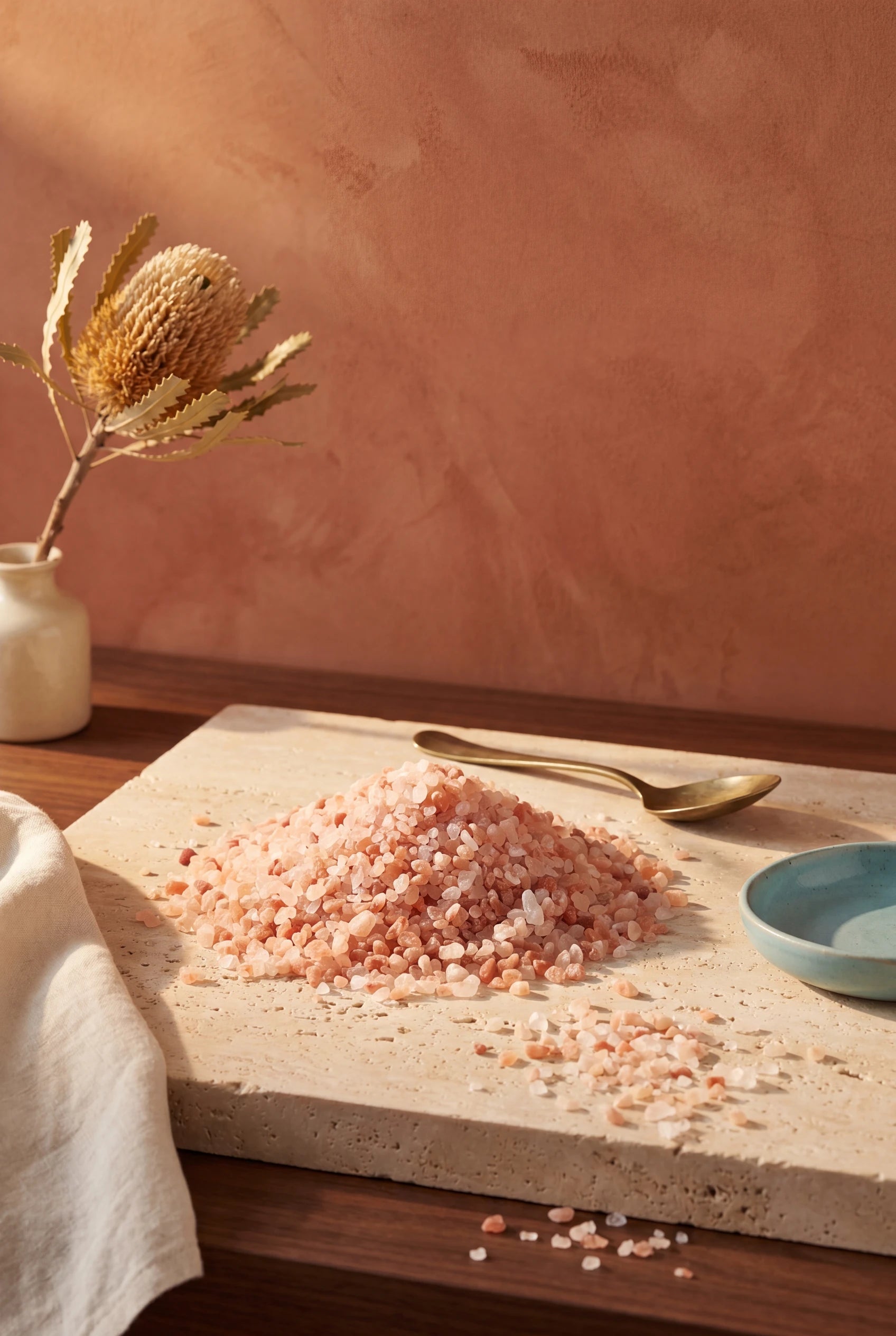
Pink Himalayan salt
Halite
A coarser grit that buffs the surface and helps keep pores clear on the areas that congest most, the back, shoulders and chest. Traditionally used as a body polish, it does the clearing work the fine sugar alone cannot.
Oily and congestion-prone skin
Organic body scrub formulated with pink salt and non-comedogenic jojoba to clear and smooth congestion-prone skin without stripping
For oily and congestion-prone body skin, the best scrub keeps pores clear without stripping, because stripped skin often makes more oil in response. Sippo Mint Condition uses pink Himalayan salt and a fine sugar polish to clear the surface, with jojoba oil that conditions without clogging pores. Used two to three times a week, it smooths and clears congestion-prone areas like the back, chest and shoulders. It is cosmetic care for blemish-prone skin, not a treatment for acne, which a doctor should guide.
Oily and congestion-prone skin gets a lot of harsh advice: strip it, dry it out, scrub it hard. That usually backfires, because skin stripped of oil often responds by making more. The better approach is to keep the surface clear with a gentle polish and a balancing oil that does not clog pores. Counterintuitive as it sounds, the right oil is part of the answer, and that is how Mint Condition is built.
The pick

matcha mint body scrub
How it compares
| What matters for oily skin | Sippo Mint Condition | Conventional |
|---|---|---|
| Clears pores without stripping | Yes, salt plus a fine polish | Often strips and over-dries |
| Non-comedogenic oil that balances skin | Yes, jojoba | Rarely, or none at all |
| Harsh detergents that trigger more oil | None | Common |
| Gentle enough for the back and chest | Yes, 2 to 3 times a week | Sometimes too abrasive |
| Synthetic fragrance | None | Common |
| Certified-organic ingredients | Yes, all eight | Rarely |
What's inside, and why

Halite
A coarser grit that buffs the surface and helps keep pores clear on the areas that congest most, the back, shoulders and chest. Traditionally used as a body polish, it does the clearing work the fine sugar alone cannot.

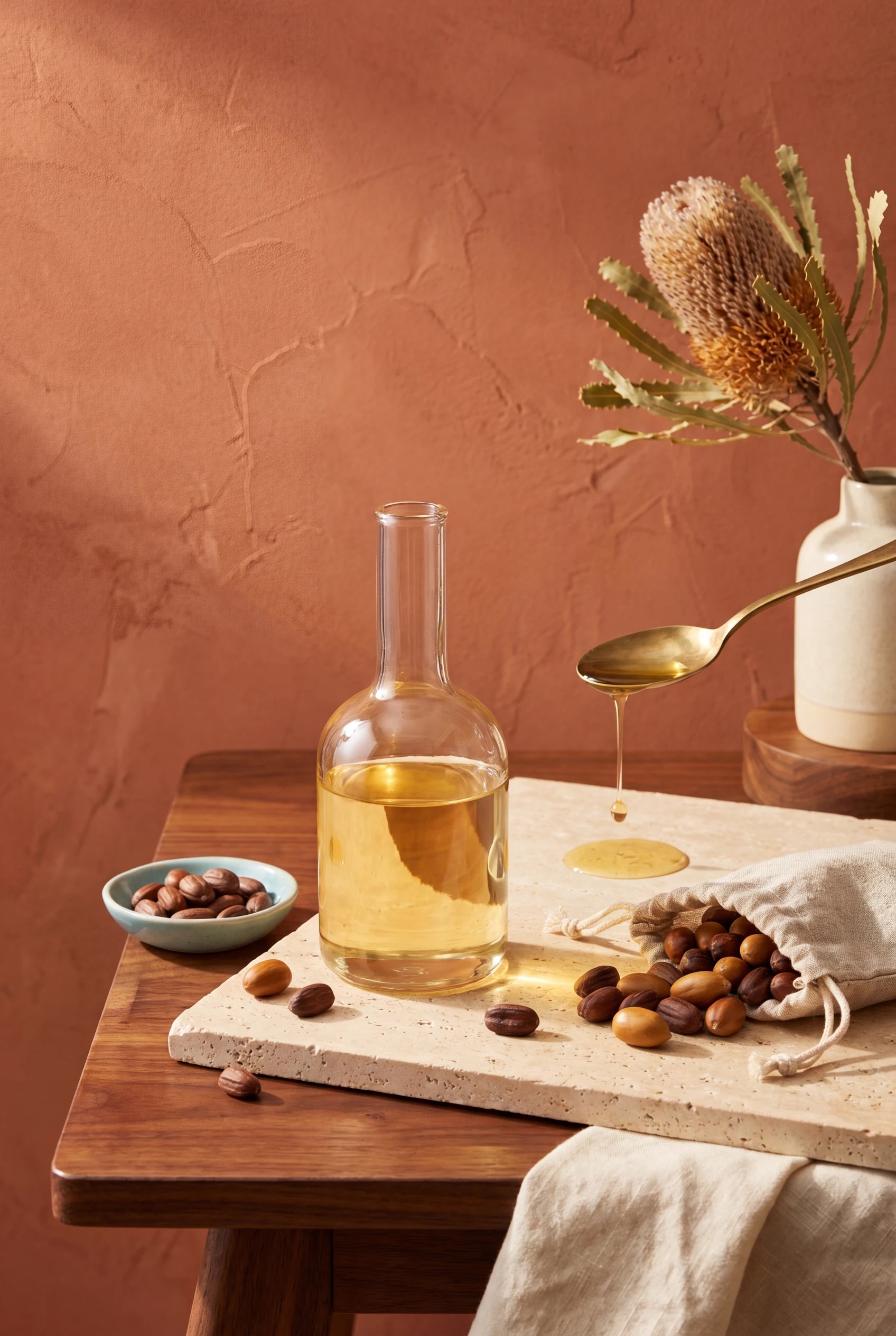
Simmondsia chinensis
The balancing oil. Jojoba is so close to your skin's own sebum that it conditions without clogging pores, and a dermatology review notes it suits oily and acne-prone skin precisely because it is non-comedogenic (Pazyar et al., 2013).

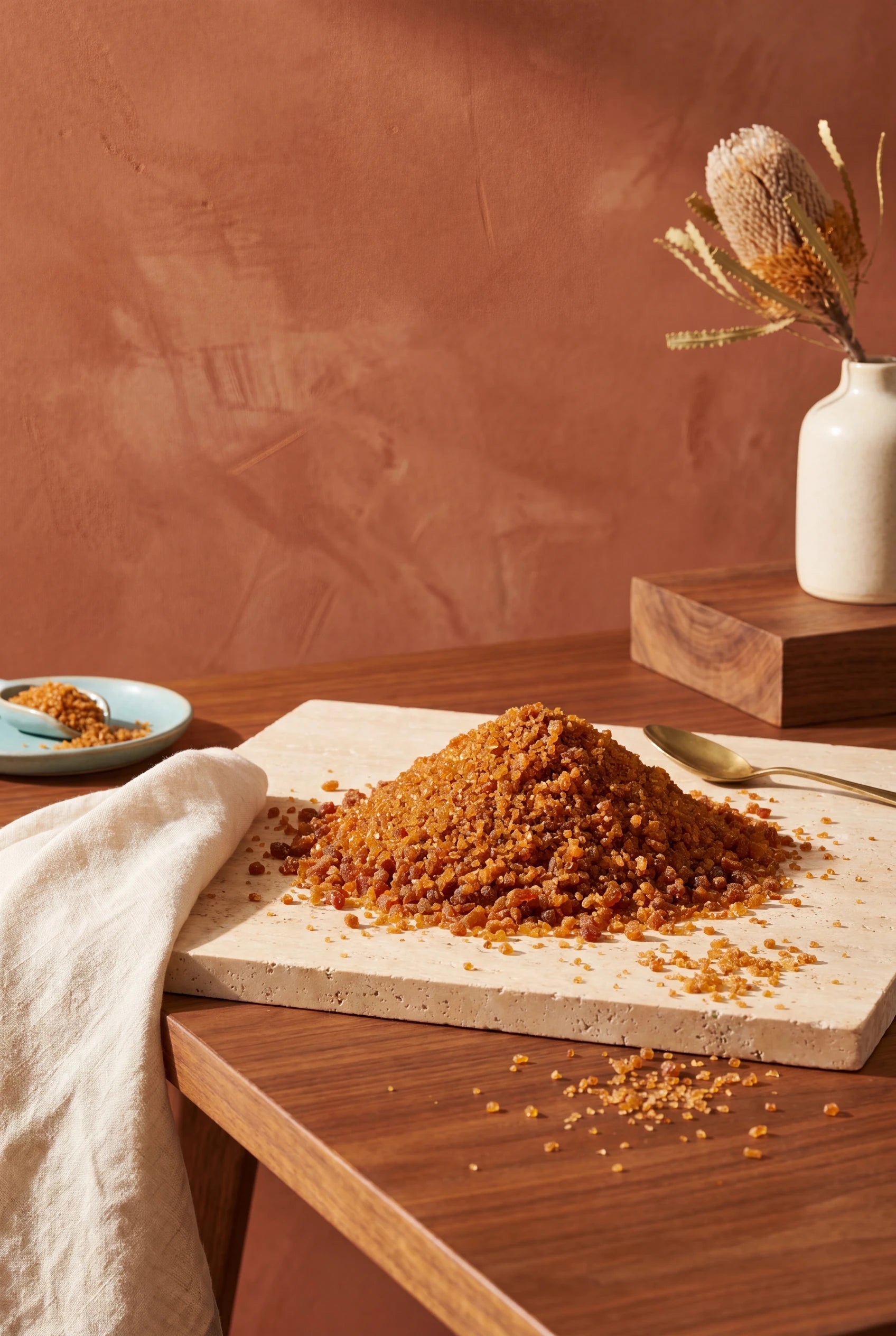
Saccharum officinarum
A fine polish whose naturally occurring AHAs help loosen the dead cells and surface build-up that block pores (Tang & Yang, 2018; Kornhauser et al., 2010), keeping congestion-prone skin smoother.

Camellia sinensis
Green tea polyphenols bring antioxidant and soothing support to skin that can look red and uneven where it congests (Katiyar et al., 2000). Matcha is a green tea, so it carries these catechins.
How it adapts
| Target | How it solves it | Key ingredient | What you'll notice |
|---|---|---|---|
| Congestion on the back and shoulders | Coarser salt grit clears hard-to-reach areas | Pink salt | Smoother, clearer-looking skin |
| Oily skin that over-produces | Balancing oil instead of stripping | Jojoba | Skin that is less greasy, not drier |
| Blocked-looking, bumpy texture | Fine AHAs loosen surface build-up | Rapadura sugar | A clearer, smoother surface |
| Redness where skin congests | Antioxidant, soothing green tea support | Matcha | A calmer, more even look |
| Sweat-related congestion | Keeps pores clear after activity | Salt + fine grit | Fewer rough, blocked patches |
| Fear that oil makes it worse | Non-comedogenic jojoba does not clog | Jojoba oil | Balanced skin, no extra breakouts |
Routine pairings
While Mint Condition clears the surface, an antioxidant-rich cup is a fitting companion from the inside.

mandarin berry hibiscus tea
Good Times is our most antioxidant-rich tea, with mandarin, hibiscus, acai, goji and a full berry cast. A bright, caffeine-free cup that complements the scrub's antioxidant support, equally good hot or over ice.
See Good TimesPeople also ask
It sounds backwards, but yes. Stripping oily skin often makes it produce more oil to compensate. Jojoba is non-comedogenic and so close to your own sebum that it balances skin without clogging pores, which is gentler and more effective than drying skin out.
It is built to keep congestion-prone areas like the back and shoulders clear and smooth, with salt and a fine polish to lift surface build-up and non-comedogenic jojoba that will not block pores. We frame this as clearer, smoother-looking skin rather than treating acne, which is medical.
Yes, it is a good time to use it, since sweat and friction can leave congestion-prone skin rough. Use it two to three times a week, and on other days a rinse keeps things clear without over-exfoliating.
Understanding oily, congestion-prone skin, in depth
The instinct with oily, congestion-prone skin is to strip it: harsh detergents, drying scrubs, anything that squeaks. The problem is that removing too much oil disrupts the barrier, and skin frequently responds by producing even more oil to compensate, a cycle that leaves skin greasy and irritated at once. Clearing the surface gently, rather than aggressively degreasing it, is the more sustainable approach, and it is kinder to the congestion-prone areas that are hardest to reach.
Counterintuitively, a non-comedogenic oil is part of clearing congestion-prone skin. Jojoba's structure is so close to human sebum that the skin reads it as balanced and eases its own oil production, and a dermatology review specifically notes its suitability for oily and acne-prone skin because it does not clog pores (Pazyar et al., 2013). Paired with a fine rapadura polish, whose natural AHAs loosen the dead cells and build-up that block pores (Tang & Yang, 2018), and coarser pink salt for the back and shoulders, you get skin that is clearer without being stripped.
Congestion-prone skin does best with regular, gentle clearing rather than occasional scrubbing. Two to three times a week keeps the surface smooth, with extra attention to the back, chest and shoulders where sweat and friction collect. Green tea polyphenols add antioxidant and soothing support for skin that can look red where it congests (Katiyar et al., 2000). This is cosmetic care for blemish-prone skin and not a treatment for acne, so if you have persistent or painful breakouts, see your doctor or a dermatologist alongside a gentle routine like this.
Pazyar, N., Yaghoobi, R., Ghassemi, M. R., Kazerouni, A., Rafeie, E., & Jamshydian, N. (2013). Jojoba in dermatology: A succinct review. Giornale Italiano di Dermatologia e Venereologia, 148(6), 687-691.
Reviews jojoba's close similarity to human sebum, its non-comedogenic conditioning, and anti-inflammatory action. Review-level evidence, not a single large trial.
Tang, S.-C., & Yang, J.-H. (2018). Dual effects of alpha-hydroxy acids on the skin. Molecules, 23(4), 863. https://doi.org/10.3390/molecules23040863
Supports the AHA exfoliation mechanism. Discusses AHAs at formulation strengths above what raw rapadura sugar delivers, so the page applies the mechanism, not the magnitude.
Kornhauser, A., Coelho, S. G., & Hearing, V. J. (2010). Applications of hydroxy acids: Classifications, mechanisms, and photoactivity. Clinical, Cosmetic and Investigational Dermatology, 3, 135-142. https://doi.org/10.2147/CCID.S9042
Supports hydroxy-acid chemical exfoliation and surface cell turnover. Mechanism reference; raw cane sugar has not been tested as a finished topical.
Katiyar, S. K., Ahmad, N., & Mukhtar, H. (2000). Green tea and skin. Archives of Dermatology, 136(8), 989-994. https://doi.org/10.1001/archderm.136.8.989
Foundational review of green tea polyphenols on skin: topical antioxidant, anti-inflammatory and photoprotective mechanisms. Matcha is a green tea, so these catechin (EGCG) findings apply to the compound, not to matcha as a distinct tested product.
Keep exploring
Gentle clearing, balanced skin, no harsh degreasing. Backed by our 30 day happiness guarantee.
Shop the range