Spearmint

Spearmint tea benefits: research and tradition

An honest look at the mellow mint with genuine, if early, research interest in hormonal balance

In short

Spearmint is the gentler, sweeter mint, and it is more than a flavour: small trials have studied its anti-androgen effect in women with hormonal imbalance, and it has a long tradition as a digestive herb. Sippo Quiet Hours uses it for its soft character and genuine, if early, research interest. It is a pleasant daily cup with some interesting science, not a hormonal treatment. For hormonal concerns, work with your doctor.

Spearmint usually plays second fiddle to peppermint, but it is the more interesting of the two. Beyond its mellow, sweet flavour, small studies have looked at spearmint's effect on hormones, and it carries a long digestive tradition. Quiet Hours leans on it, so this page lays out what is genuinely known, and what is still early.

The pick

What we'd reach for

Spearmint-led blendQuiet Hours

Quiet Hours

mellow mint tea

Best for
A mellow, caffeine-free spearmint cup
Hero ingredient
Spearmint leaf
Match
Anyone who enjoys a soft mint tea

How it compares

Spearmint vs peppermint tea

What sets spearmint apartSippo Quiet HoursConventional
Mellow, sweet characterYesOften sharp and cooling
Research interest in hormonal balanceYes, small trialsNot the same evidence
Gentle on a sensitive systemYesCan be intense
Caffeine freeYesUsually
Real cut leaves, not dustYes, pyramid bagOften dust
Certified organicYesVariable

What's inside, and why

The ingredients doing the work

Found in: Quiet Hours teaEmerging

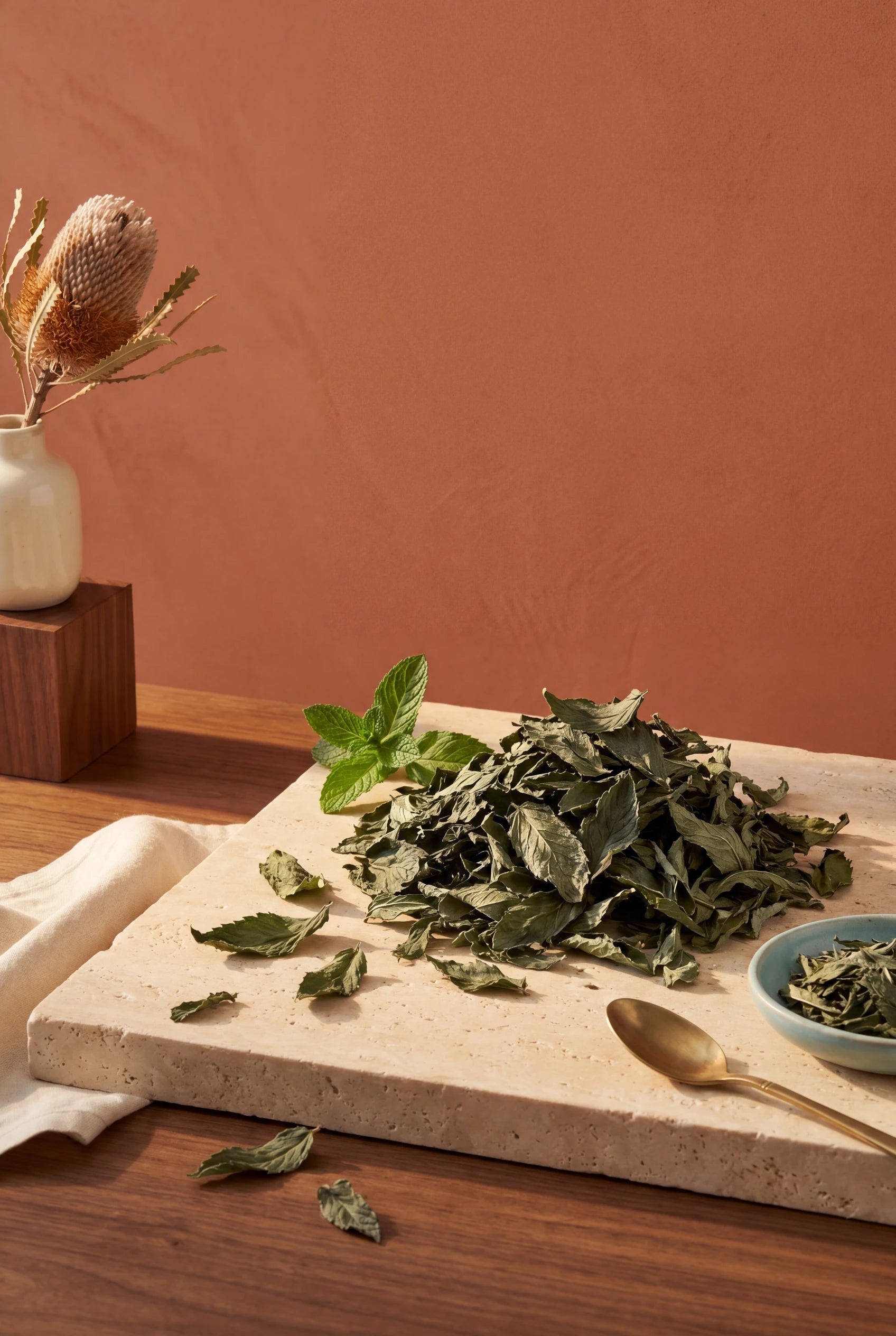
Spearmint leaf

Mentha spicata

The star. Small randomised trials found spearmint tea reduced free and total testosterone in women with hormonal imbalance over several weeks (Grant, 2010; Akdoğan et al., 2007). Small studies, a genuine but early signal, plus a long tradition as a soft digestive mint.
Found in: Quiet Hours teaWell established

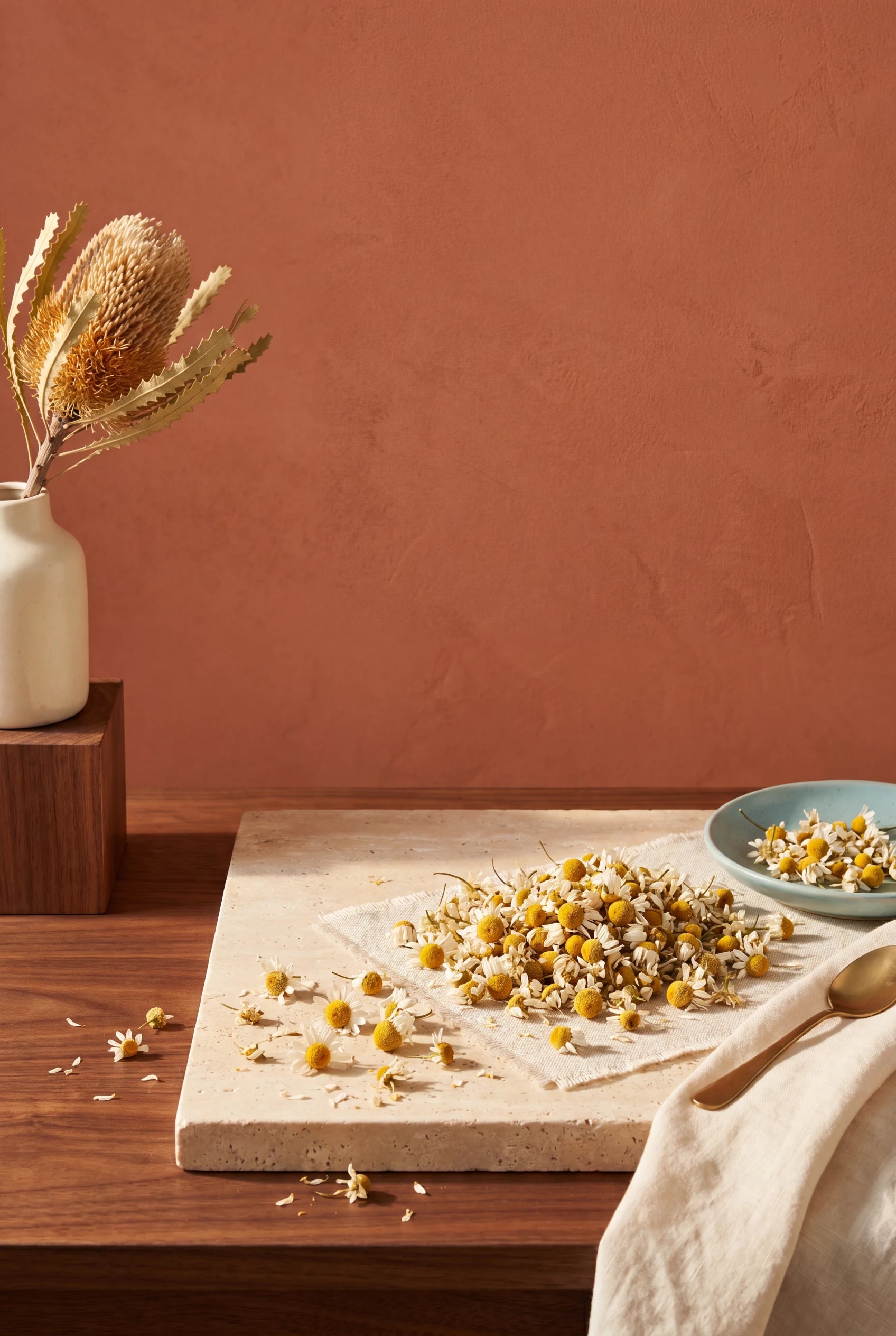
Chamomile flowers

Matricaria chamomilla

A gentle, calming flower with research interest in calm and sleep quality (Amsterdam et al., 2009), pairing softly with the mint.

Found in: Quiet Hours teaWell established

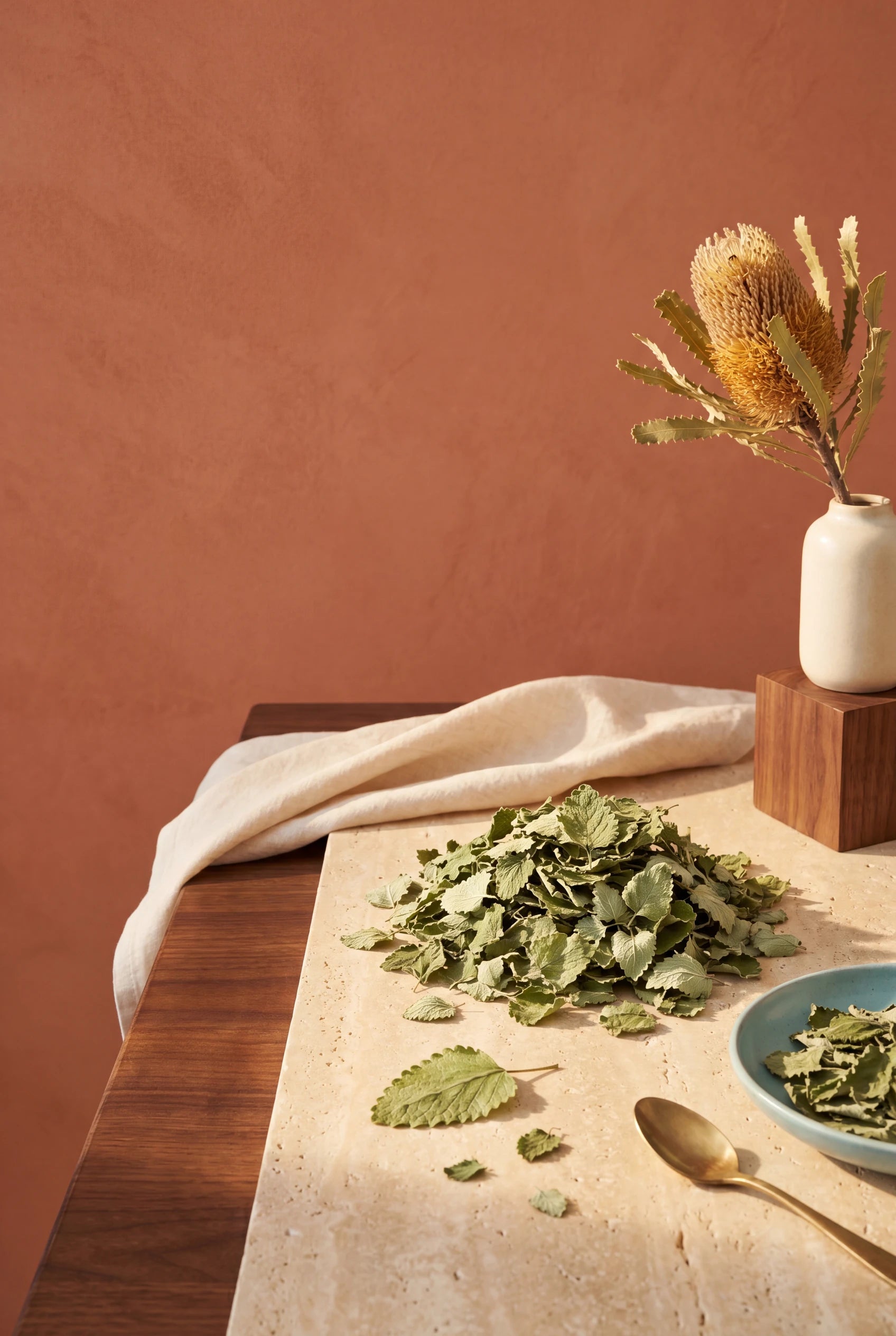
Lemon balm leaf

Melissa officinalis

A soft, citrusy herb a meta-analysis links to improved calm and mood versus placebo (Ghazizadeh et al., 2021).

Found in: Quiet Hours teaTraditional

Marshmallow root

Althaea officinalis

A traditional demulcent that gives the cup a smooth, soothing body.

How it adapts

What you need, and how it helps

TargetHow it solves itKey ingredientWhat you'll notice
Curious about spearmint and hormonesAn honest read of the small-trial researchSpearmint leafClear, measured information
Wanting a soft, sweet mintMellow spearmint, never sharpSpearmintA gentle, easy cup
A cup after a mealMint's long digestive traditionSpearmintA fresh, settling finish
Not wanting caffeineNaturally caffeine-freeHerbal, no tea leafSip it any hour
Wanting it cleanNo added sugar or synthetic flavouringReal organic herbsHonest and simple

People also ask

Questions, answered

Spearmint is a mellow, caffeine-free mint with two things going for it: a long traditional use as a soft digestive herb, and genuine, if early, research interest in hormonal balance. Small randomised trials found spearmint tea reduced testosterone levels in women with hormonal imbalance (Grant, 2010; Akdoğan et al., 2007). We frame it honestly as an interesting, well-tolerated herb, not a treatment.

There is a real but early signal. The trials were small and short, and a tea is not a treatment for any hormonal condition. So we would say spearmint is a genuinely interesting herb with some research behind it, worth enjoying as a daily cup, but if you are managing a hormonal condition, work with your doctor. We cover this in detail on our spearmint and hormonal balance guide.

Yes. Quiet Hours is a herbal blend with no tea leaf, so you can enjoy spearmint any time, including the evening.

For most people it is a gentle everyday tea. If you are pregnant, breastfeeding, on medication or managing a hormonal condition, check with your doctor first.

Spearmint, in depth

The deep dive

The gentler mint

Spearmint and peppermint are different plants with different characters. Peppermint is sharp, cooling and high in menthol; spearmint is mellow, sweet and far gentler, which makes it the easier mint to drink in quantity and the kinder one on a sensitive system. That softness is why it leads our Quiet Hours blend.

The genuinely interesting research

Spearmint is unusual among everyday herbs in having a small but real body of hormonal research. Two randomised trials found that drinking spearmint tea reduced free and total testosterone in women with hormonal imbalance over several weeks (Grant, 2010; Akdoğan et al., 2007). That is a genuine signal, and an unusual one for a common kitchen herb, which is what makes spearmint worth a closer look.

The honest limits

Those trials were small and short, and a tea is not a treatment for any hormonal condition. The effect on visible symptoms was modest and did not always reach significance. So the right framing is: spearmint is a well-tolerated herb with a genuine but early research signal, best enjoyed as a daily cup, not relied on as a remedy. If you are managing something hormonal, your doctor leads.

How to enjoy it

Steep it a good few minutes for a full, mellow flavour. It is lovely after a meal in the digestive-mint tradition, and because it is caffeine free it doubles as an evening cup. For the hormonal-balance angle specifically, our dedicated spearmint guide goes deeper.

About the author

Dan Bartley

Co-founder, Sippo

Dan co-founded Sippo with Nicole and writes the brand's ingredient guides, working from peer-reviewed sources and standards bodies like Cochrane and the NIH. He is not a medical professional, and these guides are educational, not medical advice. Every clinical claim on this page is cited in full below, with its evidence tier and any caveats noted honestly.

hello@sippo.au
The research behind this3 peer-reviewed sources, with tiers and caveats
  1. Grant, P. (2010). Spearmint herbal tea has significant anti-androgen effects in polycystic ovarian syndrome: A randomized controlled trial. Phytotherapy Research, 24(2), 186-188. https://doi.org/10.1002/ptr.2900

    Tier 2Randomised controlled trial (n=42)

    Drinking spearmint tea twice daily for 30 days reduced free and total testosterone in women with PCOS. Small trial; the reduction in visible hirsutism approached but did not reach significance. Genuine signal for the ingredient, not a treatment claim.

  2. Akdoğan, M., Tamer, M. N., Cüre, E., Cüre, M. C., Köroğlu, B. K., & Delibaş, N. (2007). Effect of spearmint (Mentha spicata Labiatae) teas on androgen levels in women with hirsutism. Phytotherapy Research, 21(5), 444-447. https://doi.org/10.1002/ptr.2074

    Tier 2Small clinical study (n=21)

    Spearmint tea reduced free testosterone in women with hirsutism over a short intervention. Very small and brief; supports the anti-androgen direction, not a clinical promise.

  3. Amsterdam, J. D., Li, Y., Soeller, I., Rockwell, K., Mao, J. J., & Shults, J. (2009). A randomized, double-blind, placebo-controlled trial of oral Matricaria recutita (chamomile) extract therapy for generalized anxiety disorder. Journal of Clinical Psychopharmacology, 29(4), 378-382. https://doi.org/10.1097/JCP.0b013e3181ac935c

    Tier 2Randomised controlled trial

    Chamomile extract reduced generalised anxiety symptoms versus placebo over 8 weeks. Used a standardised extract, not tea, so cited for the calming mechanism behind a soothing ritual, not as proof a teabag treats anything.

The interesting mint, honestly described

Mellow, caffeine-free spearmint with genuine research interest. Love it in 30 days or it's on us.

Shop Quiet Hours