Throat soothing

Best tea for a sore throat and gentle throat soothing

A caffeine-free herbal tea with marshmallow root, the traditional demulcent that coats and soothes the throat

In short

For a scratchy, sore throat, the most genuinely soothing herb is marshmallow root, a traditional demulcent whose mucilage forms a soft, coating layer over irritated tissue. Sippo Quiet Hours is built around it, with calming chamomile, in a warm, caffeine-free cup. It soothes the feeling of a sore throat; it is not a treatment for infection. For a severe or lasting sore throat, see your doctor.

A sore throat makes you want something warm, soft and soothing, and here herbs have a real, recognised role. Marshmallow root has been used to soothe the throat for centuries, and unusually for a herbal ingredient it is backed by gold-standard monographs. Quiet Hours puts it at the centre of a gentle, caffeine-free cup made for exactly this.

The pick

What we'd reach for

The throat-soothing cupQuiet Hours

Quiet Hours

mellow mint tea

Best for
Soothing the feeling of a scratchy, sore throat
Hero ingredient
Marshmallow root
Match
Anyone with a scratchy throat wanting comfort

How it compares

Sippo Quiet Hours vs a plain hot drink

What matters for a sore throatSippo Quiet HoursConventional
Throat-soothing marshmallow rootYes, a recognised demulcentNo
Caffeine freeYesVariable
Gentle on a raw throatYes, soft and coatingPlain warmth only
Added sugar or synthetic flavouringNoneVariable
Real cut herbs in a pyramid bagYesNot applicable
Certified organicYesVariable

What's inside, and why

The ingredients doing the work

Found in: Quiet Hours teaWell established

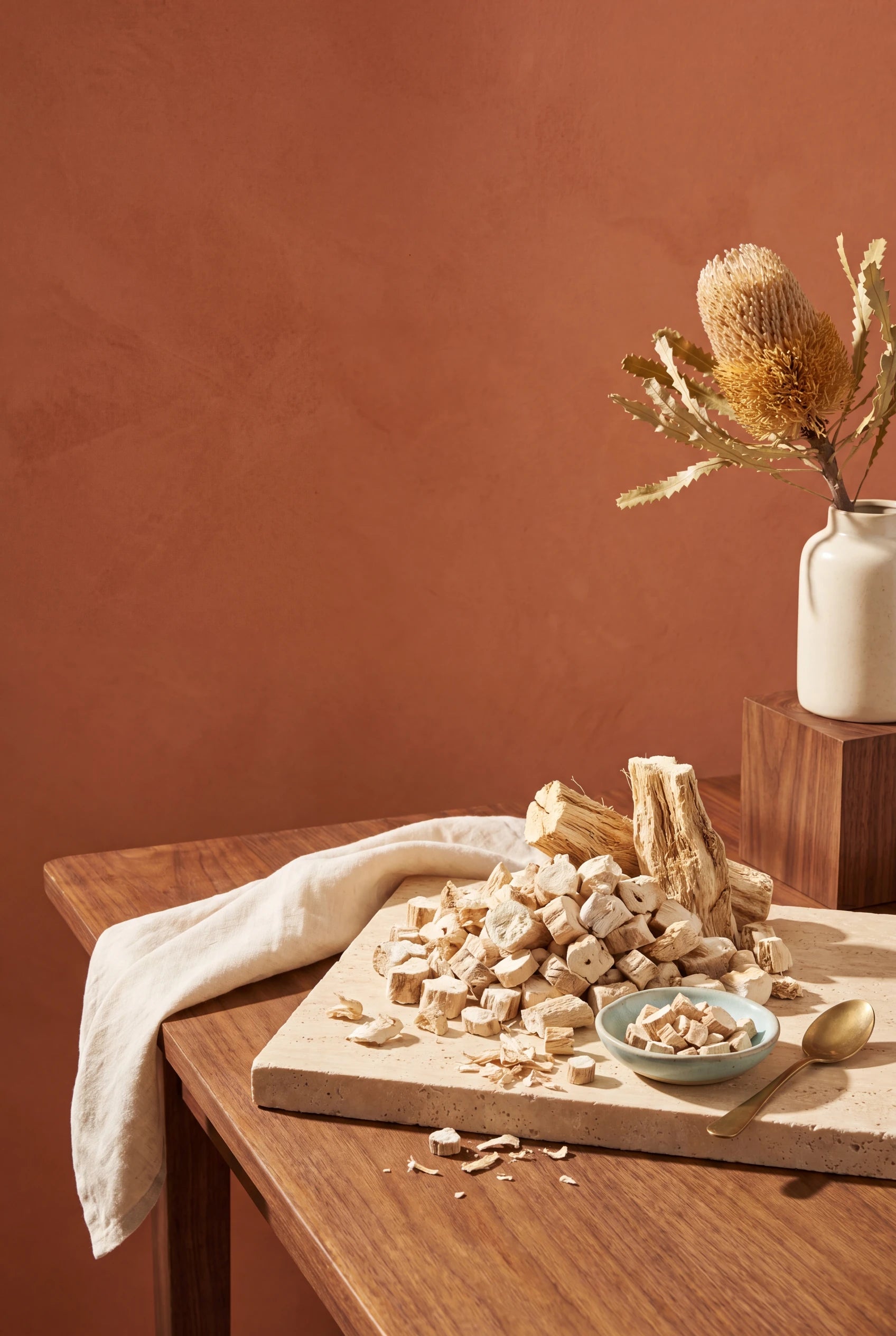
Marshmallow root

Althaea officinalis

The star, and one of the best-supported herbs we use. Marshmallow root is rich in mucilage that forms a soft, protective coating over irritated mucous membranes, a demulcent action for the throat recognised in the ESCOP and EMA monographs (ESCOP, 2019; EMA, 2016), with antitussive activity shown for its polysaccharides (Sutovska et al., 2011).

Found in: Quiet Hours teaWell established

Chamomile flowers

Matricaria chamomilla

A gentle, calming flower with apigenin and bisabolol, studied for soothing, anti-inflammatory action (Amsterdam et al., 2009), adding warmth and softness to the cup.

Found in: Quiet Hours teaTraditional

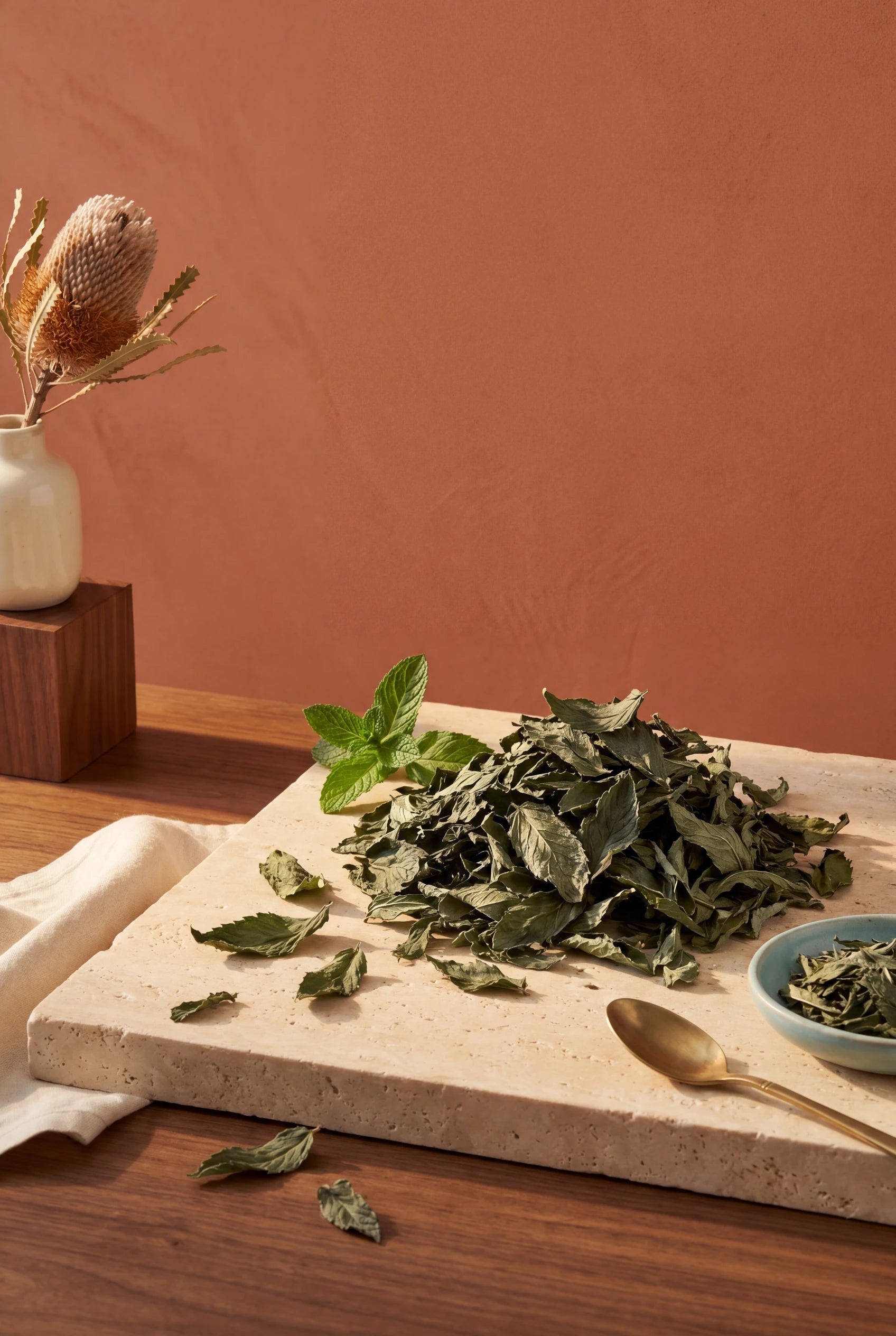
Spearmint leaf

Mentha spicata

Mellow spearmint gives a soft, fresh note that is easy on a raw throat, never sharp.

Found in: Quiet Hours teaTraditional

Lemon balm leaf

Melissa officinalis

A soft, citrusy herb traditionally enjoyed to calm, rounding out the soothing base.

How it adapts

What you need, and how it helps

TargetHow it solves itKey ingredientWhat you'll notice
A scratchy, raw throatMarshmallow root's soft, coating mucilageMarshmallow rootA soothed, coated feeling
A dry, tickly coughDemulcent polysaccharides shown to be antitussiveMarshmallow rootGentle throat comfort
Wanting warmth without caffeineNaturally caffeine-freeHerbal, no tea leafSip it any hour, including bed
A throat too raw for strong flavoursMellow, gentle herbsSpearmint + chamomileSoft and easy to drink
Wanting it cleanNo added sugar or synthetic flavouringReal organic herbsAdd honey if you like

People also ask

Questions, answered

One built on marshmallow root. It is a demulcent: its mucilage forms a soft, coating layer that soothes an irritated throat, a use recognised in the ESCOP and EMA monographs (ESCOP, 2019; EMA, 2016). Quiet Hours is built around it, in a warm, caffeine-free cup. It soothes the feeling of a sore throat rather than treating any infection.

It has unusually good support for a herbal ingredient. Its soothing demulcent action on the throat is documented in regulatory and phytotherapy monographs, and its polysaccharides have shown antitussive (anti-cough) activity in research (Sutovska et al., 2011). We frame it as genuine soothing comfort, not a cure for the underlying cause.

You can, and many people find honey in a warm cup soothing for a sore throat. Stir it into the brewed tea once it has cooled slightly. Avoid honey for children under one year old.

If a sore throat is severe, lasts more than a few days, comes with a high fever or difficulty swallowing, or keeps coming back, see your doctor. A soothing cup is for comfort, not a substitute for medical care.

Marshmallow root and the throat, in depth

The deep dive

Why a sore throat wants a demulcent

A sore throat is irritated, inflamed tissue, and the most directly soothing thing you can do is coat and protect it. That is exactly what a demulcent does: it is a substance rich in mucilage, a soft, gel-like soluble fibre that forms a protective layer over the mucous membranes. Marshmallow root is one of the classic demulcents, which is why it has been the throat herb of choice for centuries.

The evidence behind it

Marshmallow root is unusually well supported for a herbal ingredient. Its demulcent, throat-soothing use is documented in both the ESCOP phytotherapy monograph and the European Medicines Agency's regulatory herbal monograph (ESCOP, 2019; EMA, 2016), and its polysaccharides have demonstrated antitussive, cough-soothing activity in research (Sutovska et al., 2011). That is a strong, consistent base for a soothing claim, which is why this is one of the more confident pages we write.

The honest boundary

Soothing the feeling of a sore throat is not the same as treating its cause. Most sore throats are viral and resolve on their own; some are bacterial and need medical attention. Marshmallow root makes a raw throat feel better while it heals, but it does not treat an infection, and we will not imply it does. If your sore throat is severe, lasting or feverish, see your doctor.

How to get the most from it

Steep it a good few minutes, ideally with the lid on, so the mucilage can fully develop, then sip it warm and slowly so it coats the throat. A spoon of honey stirred in adds to the soothing effect. Because it is caffeine free you can keep a warm cup going through the day and into the evening.

About the author

Dan Bartley

Co-founder, Sippo

Dan co-founded Sippo with Nicole and writes the brand's ingredient guides, working from peer-reviewed sources and standards bodies like Cochrane and the NIH. He is not a medical professional, and these guides are educational, not medical advice. Every clinical claim on this page is cited in full below, with its evidence tier and any caveats noted honestly.

hello@sippo.au
The research behind this3 peer-reviewed sources, with tiers and caveats
  1. European Scientific Cooperative on Phytotherapy. (2019). Althaeae radix (Marshmallow root). ESCOP Monographs (2nd ed., supplement). ESCOP.

    Tier 1Phytotherapy monograph

    Gold-standard monograph documenting marshmallow root's traditional demulcent (soothing) action on the throat and mucous membranes. Cited for the smooth, soothing character of the cup, a traditional use.

  2. European Medicines Agency, Committee on Herbal Medicinal Products. (2016). European Union herbal monograph on Althaea officinalis L., radix (EMA/HMPC/436679/2015). European Medicines Agency.

    Tier 1Regulatory herbal monograph

    Regulatory monograph confirming marshmallow root's traditional use as a demulcent to soothe the throat, mouth and mild digestive-tract irritation. A gold-standard traditional-use reference.

  3. Amsterdam, J. D., Li, Y., Soeller, I., Rockwell, K., Mao, J. J., & Shults, J. (2009). A randomized, double-blind, placebo-controlled trial of oral Matricaria recutita (chamomile) extract therapy for generalized anxiety disorder. Journal of Clinical Psychopharmacology, 29(4), 378-382. https://doi.org/10.1097/JCP.0b013e3181ac935c

    Tier 2Randomised controlled trial

    Chamomile extract reduced generalised anxiety symptoms versus placebo over 8 weeks. Used a standardised extract, not tea, so cited for the calming mechanism behind a soothing ritual, not as proof a teabag treats anything.

Real soothing for a sore throat

Built on marshmallow root, the recognised throat demulcent. Love it in 30 days or it's on us.

Shop Quiet Hours