


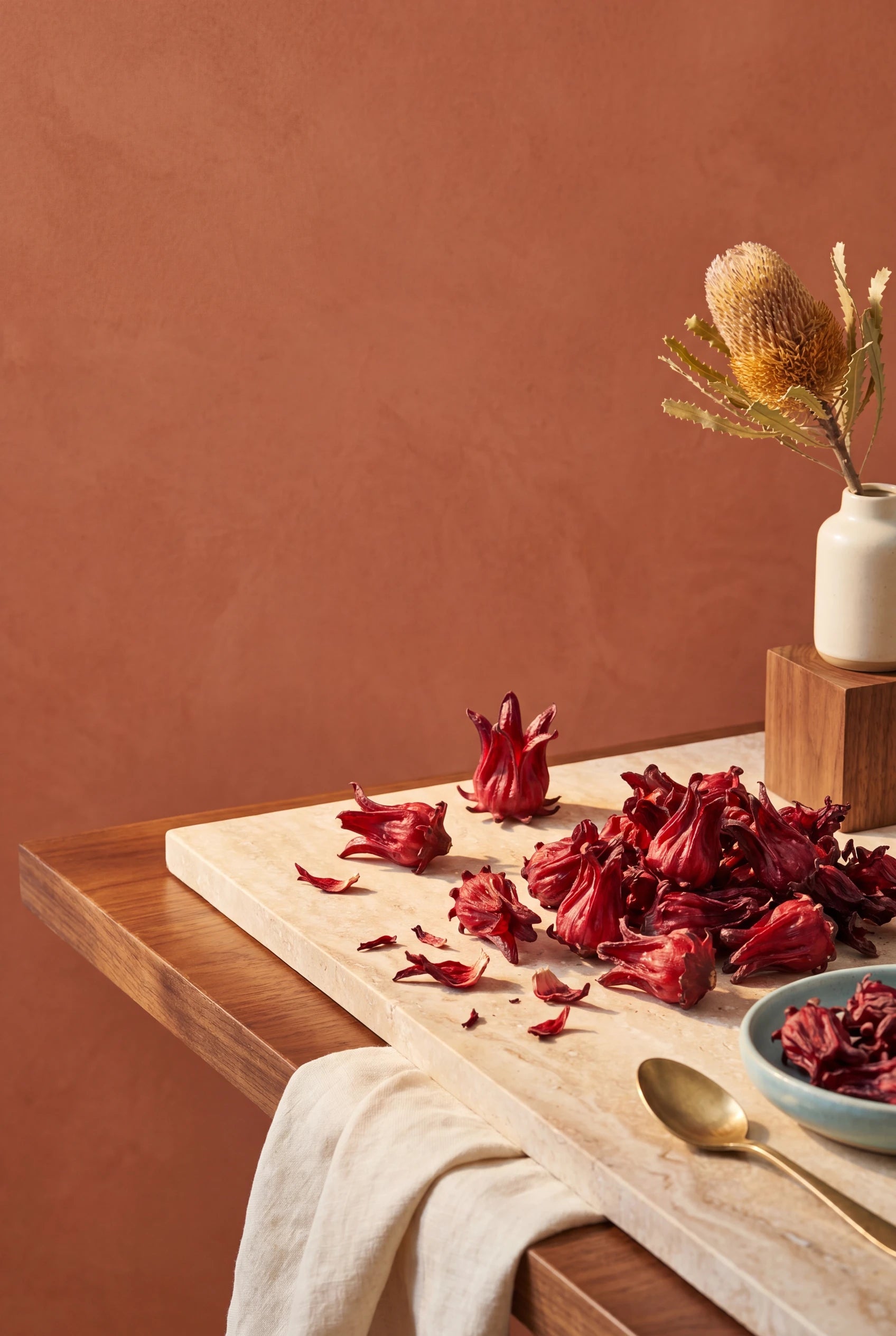
 Found in: Good Times teaTraditional
Hibiscus flower
Hibiscus sabdariffa
The ruby base, naturally rich in vitamin C and antioxidant anthocyanins, and the tart backbone that makes the cup taste bright and alive.

Cold and flu season
A bright, vitamin-C-rich fruit cup and a throat-soothing herbal blend, for a comforting seasonal ritual
In cold and flu season, a warm cup is a comforting ritual, and the right ingredients make it a pleasant one. Sippo Good Times is rich in vitamin C from hibiscus, goji and mandarin peel, while Quiet Hours leans on throat-soothing marshmallow root. Neither is a cold remedy, and no tea prevents or cures illness, but a warm, vitamin-C-rich, throat-soothing cup is a lovely thing to reach for when you are run down.
When the season turns and everyone around you is sniffling, a warm cup is one of life's small comforts. We are not going to tell you tea fights off a cold, because it does not. What Good Times and Quiet Hours offer is a comforting seasonal ritual: bright vitamin-C-rich fruit in one, soothing marshmallow root for a scratchy throat in the other.
 Written and reviewed by Dan Bartley, co-founder of Sippo · Last reviewed June 2026
The pick

mandarin berry hibiscus tea
How it compares
| What matters in a seasonal cup | Sippo Good Times | Conventional |
|---|---|---|
| Vitamin C from real fruit | Yes, hibiscus, goji, mandarin | Often synthetic, with lots of sugar |
| Added sugar | None | Often very high |
| Real, visible ingredients | Yes, in a pyramid bag | Powder |
| Caffeine free | Yes | Variable |
| Honest about what it does | Yes, comfort not cure | Often implies it fights colds |
| Certified organic | Yes | Rarely |
What's inside, and why
Found in: Good Times teaTraditionalHibiscus sabdariffa
The ruby base, naturally rich in vitamin C and antioxidant anthocyanins, and the tart backbone that makes the cup taste bright and alive.
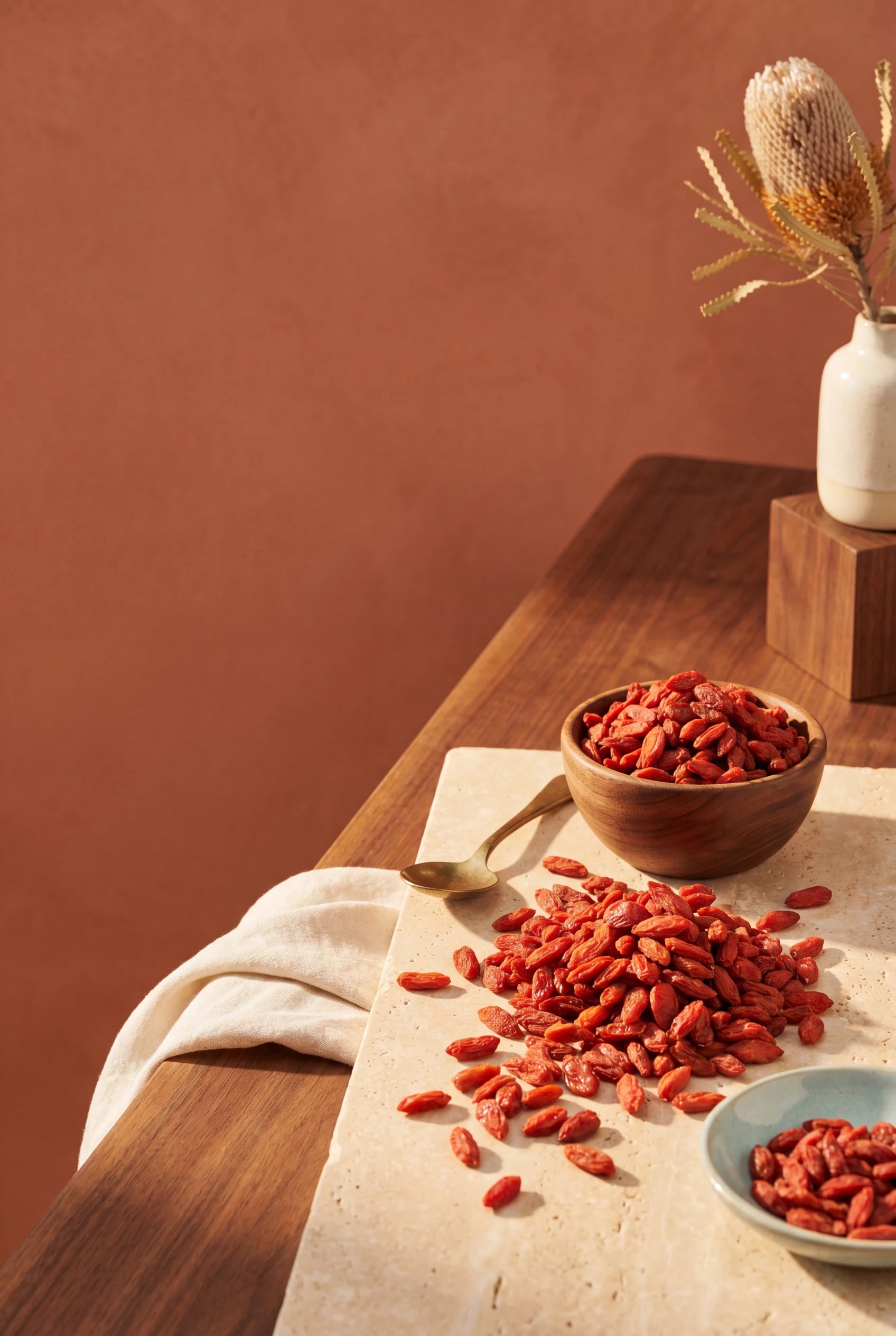 Found in: Good Times teaTraditional
Lycium barbarum
A soft, sweet berry that contributes vitamin C and carotenoids, adding to the cup's vitamin-C content and rounding the tartness.
 Found in: Good Times teaTraditional
Citrus reticulata
Bright citrus peel, a natural source of vitamin C and flavonoids, that lifts the whole cup, the note that makes it feel fresh and seasonal.
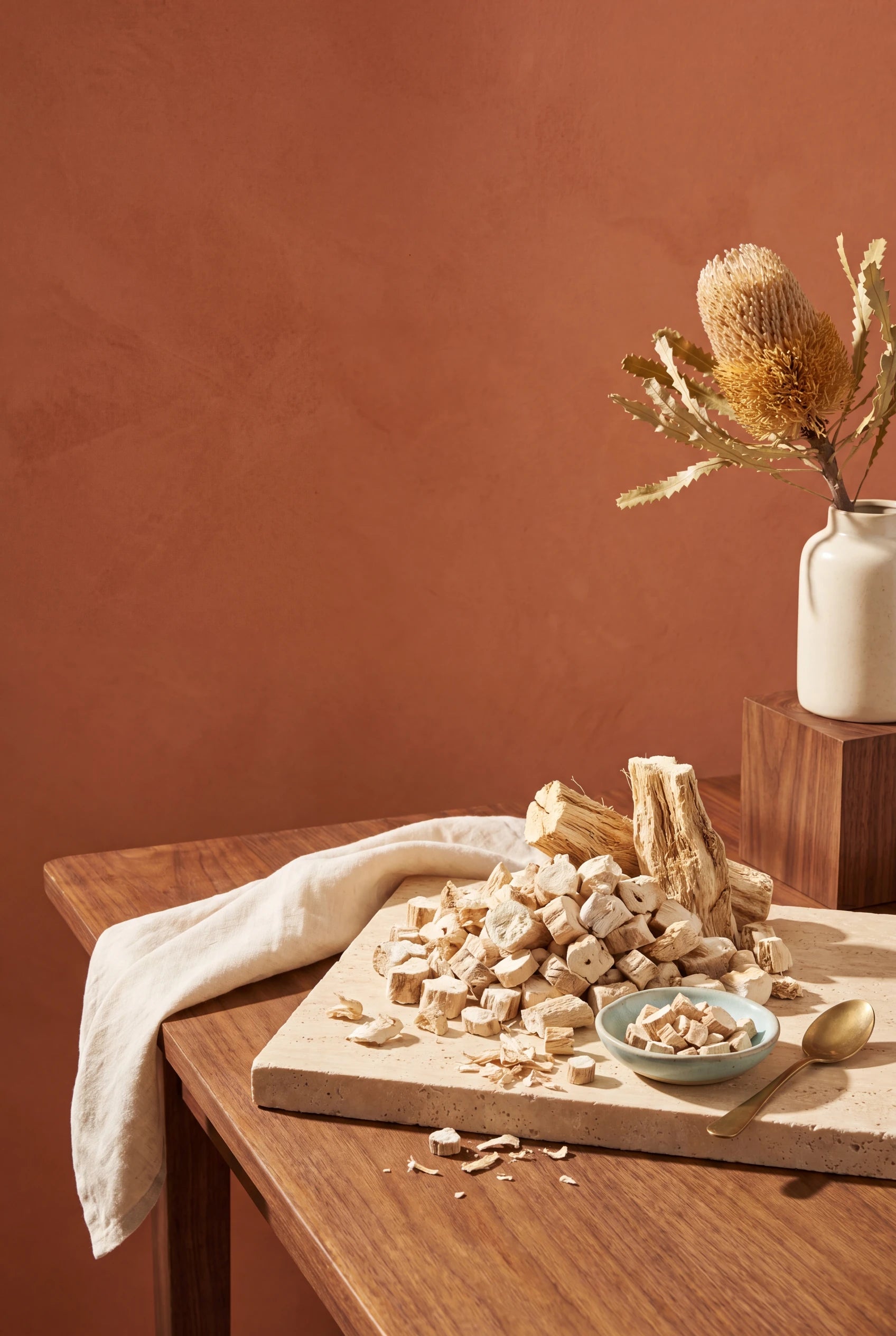 Found in: Quiet Hours teaWell established
Althaea officinalis
In our Quiet Hours blend, marshmallow root is a traditional demulcent that soothes a scratchy throat, documented in the ESCOP and EMA monographs (ESCOP, 2019; EMA, 2016). The companion cup for throat comfort.
How it adapts
| Target | How it solves it | Key ingredient | What you'll notice |
|---|---|---|---|
| Wanting a vitamin-C-rich cup | Real fruit naturally rich in vitamin C | Hibiscus + goji + mandarin | A bright, fruit-forward brew |
| A scratchy throat | Throat-soothing marshmallow root in Quiet Hours | Marshmallow root | A softer, more soothed throat |
| Avoiding sugary cold-and-flu sachets | No added sugar, real fruit | Good Times | Comfort without the sugar hit |
| Wanting warmth when run down | A warm, caffeine-free ritual | The whole cup | A small daily comfort |
| Drinking it any hour | Caffeine free | Fruit and herbs, no tea leaf | Sip it day or night |
People also ask
No tea prevents, treats or cures a cold or flu, and we will not pretend otherwise. What a warm cup offers is comfort and hydration, and Good Times is naturally rich in vitamin C from real fruit, while marshmallow root in Quiet Hours soothes a scratchy throat (ESCOP, 2019). Think of it as a comforting seasonal ritual, not a remedy.
Yes, naturally. Hibiscus, goji and mandarin peel all contribute vitamin C, which is well recognised for its role in normal immune function as part of a balanced diet. We describe this as vitamin-C content from real fruit, not a claim that the tea prevents illness.
For throat comfort specifically, our caffeine-free Quiet Hours leans on marshmallow root, a traditional demulcent that soothes the throat (ESCOP, 2019; EMA, 2016). A warm cup and honey can be comforting too. For a severe or lasting sore throat, see your doctor.
Good Times is caffeine free, so you can sip it any hour, including when you are resting up.
Tea in cold and flu season, honestly
Let's be clear up front: no tea prevents, treats or shortens a cold or the flu. The science on hot drinks and illness is mostly about comfort, warmth and hydration, all of which genuinely help you feel better even though they do not fight the virus. So we frame these cups as a comforting seasonal ritual, never a remedy.
Vitamin C is well recognised for its role in supporting normal immune function as part of a balanced diet, and Good Times is naturally rich in it thanks to hibiscus, goji and mandarin peel. We are careful here: this is about the vitamin-C content of real fruit in a pleasant cup, not a claim that drinking tea stops you getting sick. A balanced diet does the real work; the tea is a tasty, no-added-sugar way to enjoy some bright fruit.
Throat comfort is where herbs have the clearest traditional role. Marshmallow root, in our Quiet Hours blend, is a demulcent: its mucilage soothes and coats an irritated throat, documented in the ESCOP and EMA monographs (ESCOP, 2019; EMA, 2016). A warm cup of it, perhaps with honey, is a genuinely soothing thing when your throat is raw.
Keep it simple: Good Times for a bright, vitamin-C-rich, no-sugar warm drink through the day, and Quiet Hours for throat comfort and an evening wind-down. Rest, fluids and your doctor's advice do the heavy lifting; these cups are the comforting part. If symptoms are severe or lasting, see your doctor.
European Scientific Cooperative on Phytotherapy. (2019). Althaeae radix (Marshmallow root). ESCOP Monographs (2nd ed., supplement). ESCOP.
Gold-standard monograph documenting marshmallow root's traditional demulcent (soothing) action on the throat and mucous membranes. Cited for the smooth, soothing character of the cup, a traditional use.
European Medicines Agency, Committee on Herbal Medicinal Products. (2016). European Union herbal monograph on Althaea officinalis L., radix (EMA/HMPC/436679/2015). European Medicines Agency.
Regulatory monograph confirming marshmallow root's traditional use as a demulcent to soothe the throat, mouth and mild digestive-tract irritation. A gold-standard traditional-use reference.
Ellis, L. R., Zulfiqar, S., Holmes, M., Marshall, L., Dye, L., & Boesch, C. (2022). A systematic review and meta-analysis of the effects of Hibiscus sabdariffa on blood pressure and cardiometabolic markers. Nutrition Reviews, 80(6), 1723-1737. https://doi.org/10.1093/nutrit/nuab104
Pooled chronic trials found hibiscus lowered systolic blood pressure by about 7 mmHg versus placebo. Most trials used concentrated hibiscus over weeks; a fruit blend with hibiscus is gentler, so this is context, not a promise.
Keep exploring
Bright, vitamin-C-rich and honest about what it is. Love it in 30 days or it's on us.
Shop Good Times
Join the ritual
Your code is on its way, along with the small daily moments worth keeping.
A little welcome gift
Give the wheel a spin to reveal your welcome offer. Works on your first subscription order, tea or scrub.
For fun, every spin lands on our 45% welcome offer, so you cannot lose.
You won 45% off
Pop your details in and your code appears on the next step, ready to use today.
Please add your first name and a valid email.
Applies to your first subscription order. No noise, just good things, unsubscribe any time.
Here's 45% off your first subscription order. We've emailed it too.
SIPPO45
Start shopping