Lemon balm and marshmallow root

Lemon balm and marshmallow root tea benefits, honestly explained

An honest look at two quietly impressive herbalist botanicals, and the calming blend they sit in

In short

Lemon balm is a soft, citrusy herb that a meta-analysis links to improved calm and mood, and marshmallow root is a traditional demulcent valued for its smooth, soothing quality. Both sit in Sippo Quiet Hours alongside chamomile and spearmint, a mellow, caffeine-free evening cup. Real research interest for lemon balm, traditional use for marshmallow, and an honest ritual rather than a remedy.

Two of the quieter herbs in the cupboard deserve more attention: lemon balm, a gentle mood-lifter with genuine research behind it, and marshmallow root, the traditional soother that gives a cup its silky body. Both are in Quiet Hours, and this is the honest account of what each one does.

The pick

What we'd reach for

Herbalist blendQuiet Hours

Quiet Hours

mellow mint tea

Best for
A calming cup built on lemon balm and marshmallow
Hero ingredient
Lemon balm and marshmallow root
Match
Anyone who likes a soft, soothing herbal cup

How it compares

Sippo Quiet Hours vs a plain herbal bag

What matters in a herbalist blendSippo Quiet HoursConventional
Lemon balm with research interestYes, a key herbRarely featured
Soothing marshmallow rootYes, for a smooth bodyAlmost never
Real cut leaves, not dustYes, in a pyramid bagOften dust
Caffeine freeYesUsually
Added sugar or flavouringNoneSometimes
Certified organicYesVariable

What's inside, and why

The ingredients doing the work

Found in: Quiet Hours teaWell established

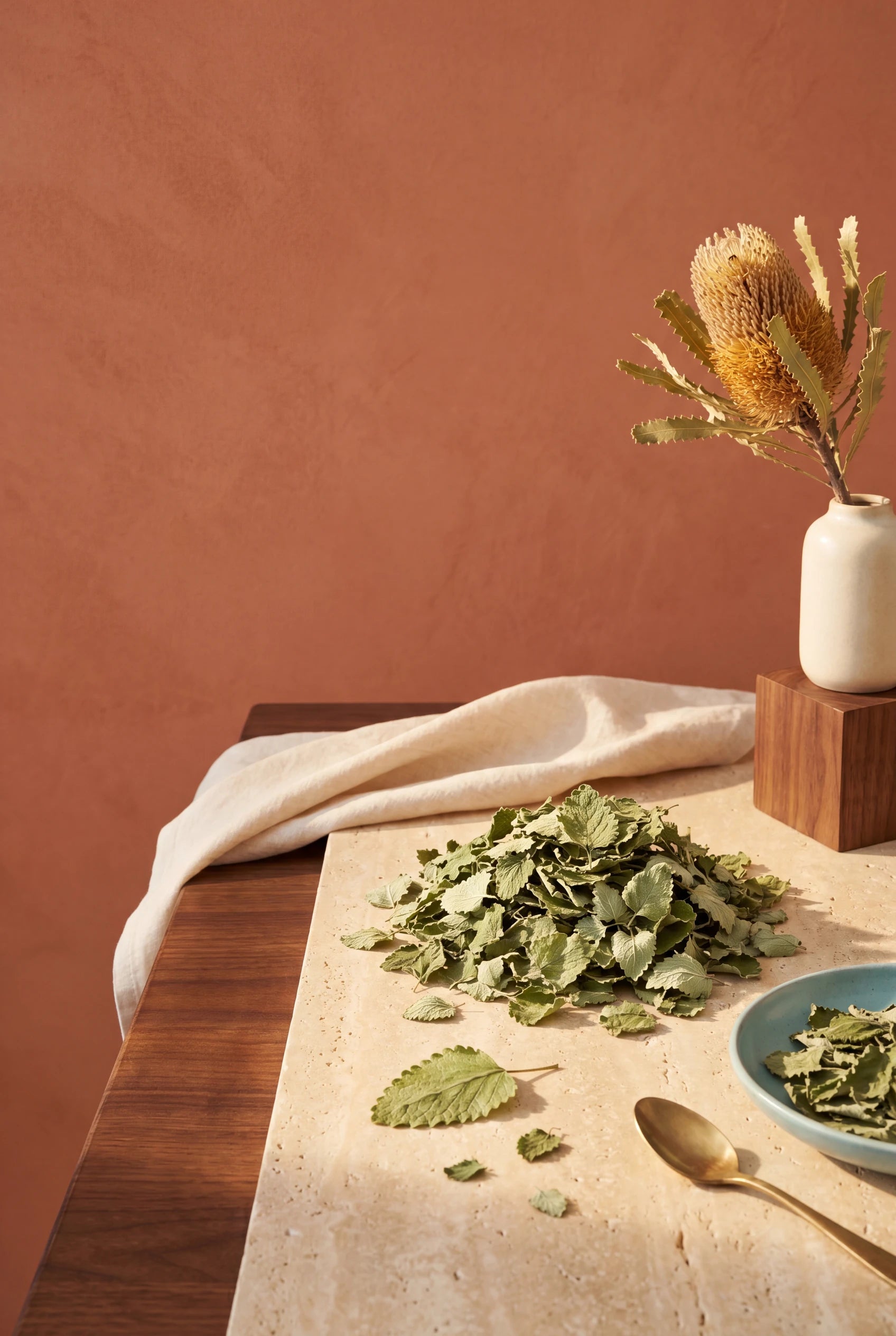
Lemon balm leaf

Melissa officinalis

A soft, citrusy member of the mint family. A systematic review and meta-analysis found lemon balm improved anxiety and mood versus placebo (Ghazizadeh et al., 2021), and a trial found a single dose lifted calmness in healthy adults (Kennedy et al., 2002).

Found in: Quiet Hours teaWell established

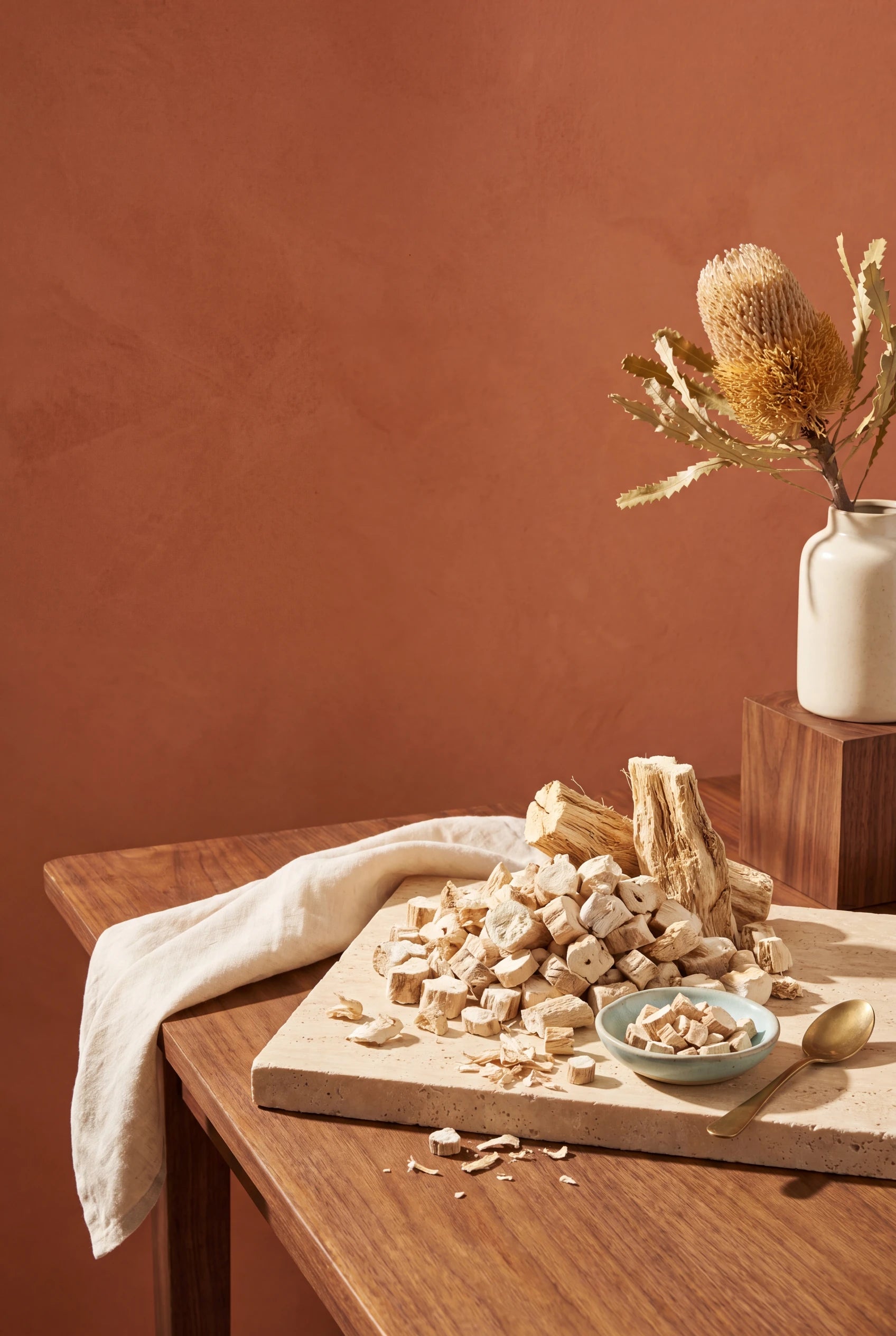
Marshmallow root

Althaea officinalis

A traditional demulcent: its natural mucilage gives a smooth, coating, soothing quality, documented in the ESCOP monograph for the throat and mucous membranes (ESCOP, 2019). It is what gives the cup its silky body.

Found in: Quiet Hours teaWell established

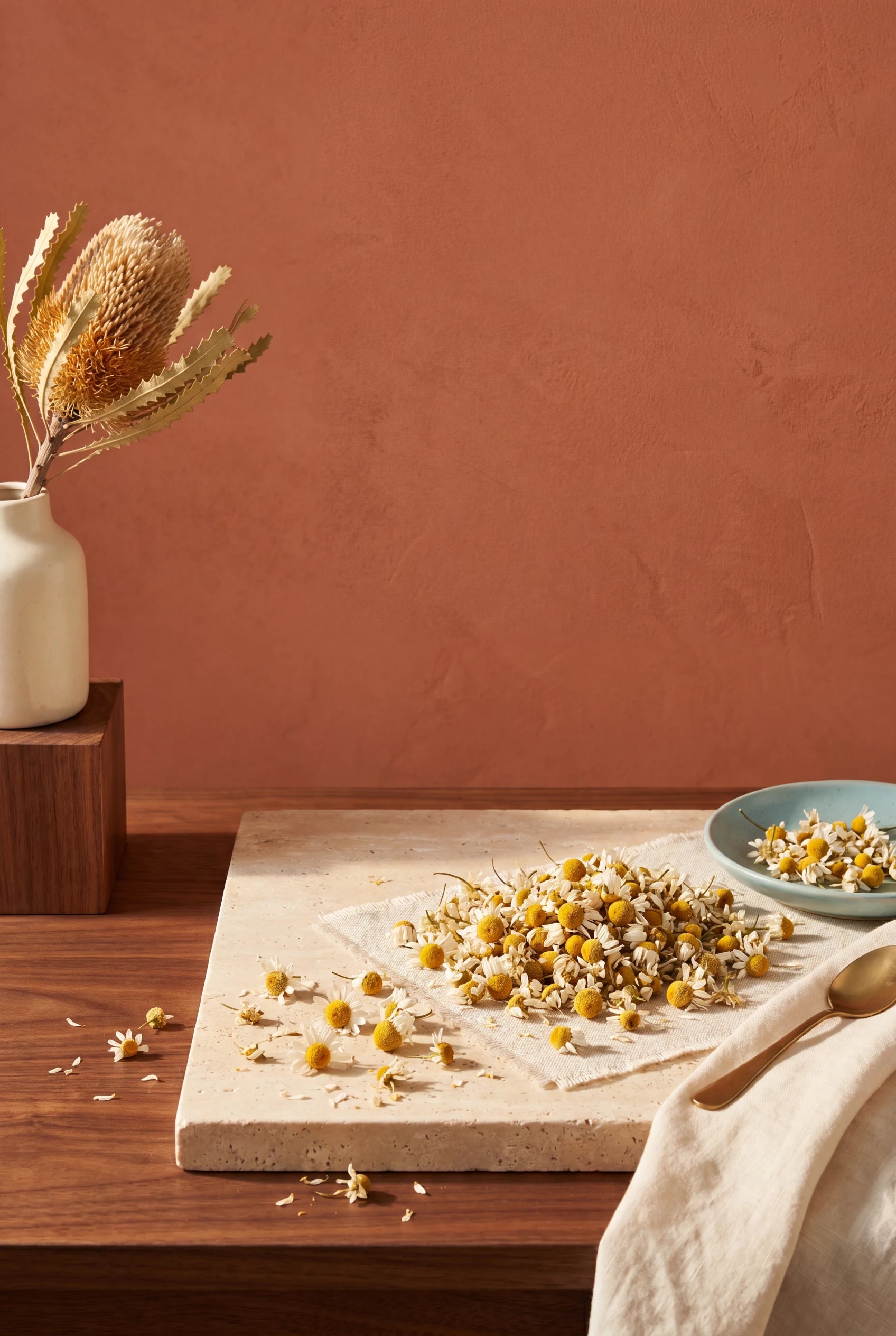
Chamomile flowers

Matricaria chamomilla

The classic evening flower, with its own research interest in calm and sleep quality (Hieu et al., 2019), rounding out the herbalist character of the blend.

Found in: Quiet Hours teaTraditional

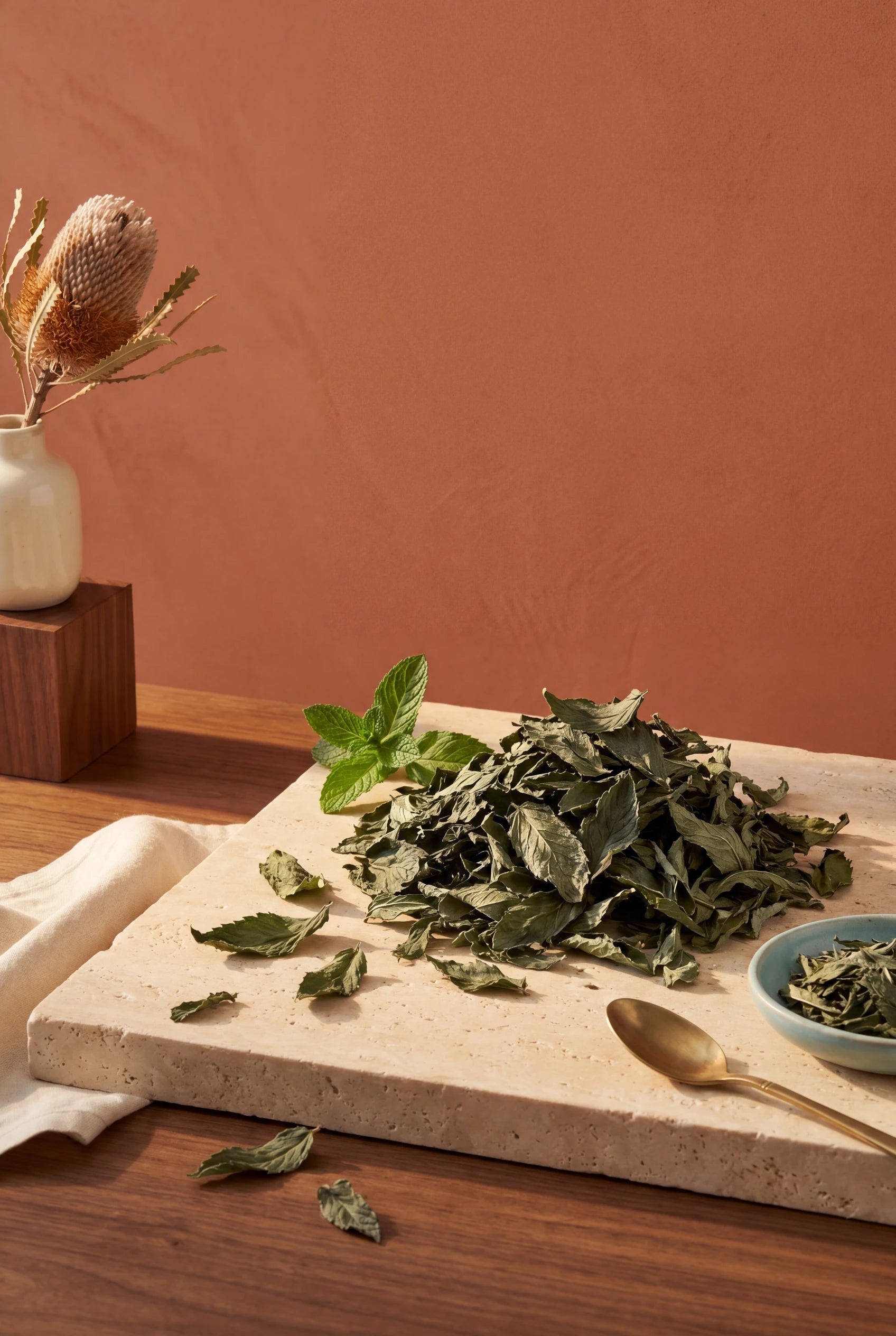
Spearmint leaf

Mentha spicata

The mellow mint heart that lifts and freshens the soft, herbal base, so the cup tastes as good as it feels.

How it adapts

What you need, and how it helps

TargetHow it solves itKey ingredientWhat you'll notice
Wanting a gentle mood liftLemon balm, researched for calm and moodLemon balmA soft, settling cup
Liking a smooth, soft cupMarshmallow root's soothing bodyMarshmallow rootSilky, rounded texture
Curious about herbalist botanicalsTwo quietly impressive herbs, honestly explainedLemon balm + marshmallowReal interest, no hype
Winding down without caffeineA caffeine-free evening blendThe whole cupCalm, sleep intact
Wanting it cleanNo added sugar or flavouringReal organic herbsHonest and simple

Outside-in routine pairings

Soften the evening, too

These herbs soothe the evening from the inside. A warm shower with Mint Condition softens the body from the outside.

Mint Condition

Mint Condition

matcha mint body scrub

Mint Condition is our matcha mint body scrub, with warm oils and a gentle cooling tingle. A soothing herbal cup and a warm shower make a complete, caffeine-free wind-down.

See Mint Condition

People also ask

Questions, answered

Lemon balm is a gentle herb with genuine research interest in calm and mood: a systematic review and meta-analysis found it improved anxiety and mood versus placebo (Ghazizadeh et al., 2021), and a trial found a single dose lifted calmness (Kennedy et al., 2002). Those used standardised extracts, so a teabag is gentler, but it is one of the better-researched calming herbs.

Marshmallow root is a traditional demulcent: it is rich in mucilage that gives a smooth, soothing, coating quality, documented in the ESCOP monograph for the throat and mucous membranes (ESCOP, 2019). In a blend it adds a silky, rounded body and a soft finish.

For most people both are gentle, everyday herbs. As always, if you are pregnant, breastfeeding or on medication, check with your doctor, since marshmallow root may affect the absorption of medicines taken at the same time, so space them apart.

The lemon balm has real research interest in calm, and the cup as a whole makes a soothing evening ritual. We frame it honestly as that, a calming ritual, not a sedative or a treatment.

Two quiet herbs, honestly

The deep dive

Lemon balm, the gentle mood-lifter

Lemon balm is a soft, lemony member of the mint family that herbalists have used for calm for centuries, and modern research has taken an interest. A systematic review and meta-analysis found it improved anxiety and mood scores versus placebo (Ghazizadeh et al., 2021), and an earlier controlled trial found a single dose increased calmness in healthy adults (Kennedy et al., 2002). As ever, those studies used standardised extracts at higher doses than a teabag, so we frame lemon balm as a well-researched calming herb in a gentler, everyday form.

Marshmallow root, the traditional soother

Marshmallow root is one of the classic herbalist botanicals, valued not for a stimulant or calming effect but for its texture: it is rich in mucilage, a natural soluble fibre that becomes soft and coating in water. The ESCOP monograph documents its traditional demulcent use for soothing the throat and mucous membranes (ESCOP, 2019). In a tea, that translates into a smooth, silky, rounded body that makes the whole cup feel softer and more comforting.

Why they work together

Quiet Hours pairs these two with chamomile and spearmint for a reason. Lemon balm and chamomile bring the calming character with real research interest, marshmallow root brings the soothing, silky texture, and spearmint lifts and freshens the whole thing so it is genuinely pleasant to drink. The botanicals complement each other into a cup that is more than the sum of its parts.

How to enjoy them

Steep a good few minutes so the marshmallow root can soften and the lemon balm can open up, and enjoy it in the evening as a wind-down. A small practical note: marshmallow root's coating quality means it is sensible to space it apart from any medication you take, and to check with your doctor if you are pregnant, breastfeeding or on regular medicines. Otherwise, it is simply one of the softest, most soothing caffeine-free cups you can make.

About the author

Dan Bartley

Co-founder, Sippo

Dan co-founded Sippo with Nicole and writes the brand's ingredient guides, working from peer-reviewed sources and standards bodies like Cochrane and the NIH. He is not a medical professional, and these guides are educational, not medical advice. Every clinical claim on this page is cited in full below, with its evidence tier and any caveats noted honestly.

hello@sippo.au
The research behind this4 peer-reviewed sources, with tiers and caveats
  1. Ghazizadeh, J., Sadigh-Eteghad, S., Marx, W., Fakhari, A., Hamedeyazdan, S., Torbati, M., Taheri-Tarighi, S., Araj-Khodaei, M., & Mirghafourvand, M. (2021). The effects of lemon balm (Melissa officinalis L.) on depression and anxiety in clinical trials: A systematic review and meta-analysis. Phytotherapy Research, 35(12), 6690-6705. https://doi.org/10.1002/ptr.7252

    Tier 2Systematic review and meta-analysis

    Pooled clinical trials found lemon balm improved anxiety and depression scores versus placebo. The strongest evidence is for calm/mood; we extend it to evening wind-down cautiously.

  2. Kennedy, D. O., Scholey, A. B., Tildesley, N. T., Perry, E. K., & Wesnes, K. A. (2002). Modulation of mood and cognitive performance following acute administration of Melissa officinalis (lemon balm). Pharmacology Biochemistry and Behavior, 72(4), 953-964. https://doi.org/10.1016/s0091-3057(02)00777-3

    Tier 2Randomised controlled trial

    A single dose of lemon balm improved calmness and mood in healthy adults. Used a standardised extract, so a teabag is gentler; cited for the calming mechanism.

  3. European Scientific Cooperative on Phytotherapy. (2019). Althaeae radix (Marshmallow root). ESCOP Monographs (2nd ed., supplement). ESCOP.

    Tier 1Phytotherapy monograph

    Gold-standard monograph documenting marshmallow root's traditional demulcent (soothing) action on the throat and mucous membranes. Cited for the smooth, soothing character of the cup, a traditional use.

  4. Hieu, T. H., Dibas, M., Surya Dila, K. A., Sherif, N. A., Hashmi, M. U., Mahmoud, M., Trang, N. T. T., Abdullah, L., Nghia, T. L. B., Y, M. N., Hoang-Trong, T., Tien Huy, N., Karimzadeh, S., Kamel, M. G., & Huy, N. T. (2019). Therapeutic efficacy and safety of chamomile for state anxiety, generalized anxiety disorder, insomnia, and sleep quality: A systematic review and meta-analysis of randomized trials and quasi-randomized trials. Phytotherapy Research, 33(6), 1604-1615. https://doi.org/10.1002/ptr.6349

    Tier 2Systematic review and meta-analysis

    Pooled trials found chamomile improved anxiety and sleep quality. The included studies vary in form and dose; this supports research interest in chamomile for sleep, framed cautiously for a tea.

Two quiet herbs, one soothing cup

Lemon balm and marshmallow root, honestly explained and beautifully blended. Love it in 30 days or it's on us.

Shop Quiet Hours