

Blood sugar and cinnamon

Cinnamon tea and healthy blood sugar: what the research actually says

An honest look at the evidence for cinnamon, and where a warm spiced cup fits a balanced lifestyle

In short

No tea cures or treats diabetes, and cinnamon is not a substitute for diabetes medication. That said, cinnamon is one of the more researched kitchen spices here: pooled trials have linked it to a modest reduction in fasting blood glucose, though at concentrated doses far above a cup of tea. Sippo Stay Awhile is a warm, cinnamon-led cup to enjoy as part of a balanced lifestyle, not a blood-sugar treatment. If you are managing blood sugar, keep working with your doctor.

Let's start with the limit, because here it really matters: no tea treats diabetes, and cinnamon is not a replacement for any medication or medical advice. What is genuinely interesting is that cinnamon has drawn over a decade of research attention for its relationship with blood-sugar response. Stay Awhile is a warm, cinnamon-led cup, so this page lays out what is actually known, and what is not.

The pick

What we'd reach for

Cinnamon-led blendStay Awhile

Stay Awhile

warm apple spice tea

Best for
A warm, cinnamon-rich cup for a balanced lifestyle
Hero ingredient
Cinnamon bark
Match
Anyone who enjoys a cosy spiced cup

What's inside, and why

The ingredients doing the work

Found in: Stay Awhile teaEmerging

Cinnamon bark

Cinnamomum

The reason this page exists. Pooled trials have linked cinnamon to a modest reduction in fasting blood glucose, with a smaller, inconsistent effect on longer-term markers (Allen et al., 2013; Akilen et al., 2012). Those trials used gram-scale standardised doses, far more than a cup of tea, so we cite the research, not a promise.

Found in: Stay Awhile teaTraditional

Apple pieces

Malus domestica

Real dried apple gives the cup a natural, baked-apple sweetness with no added sugar, the comforting body of the blend.

Found in: Stay Awhile teaTraditional

Cloves

Syzygium aromaticum

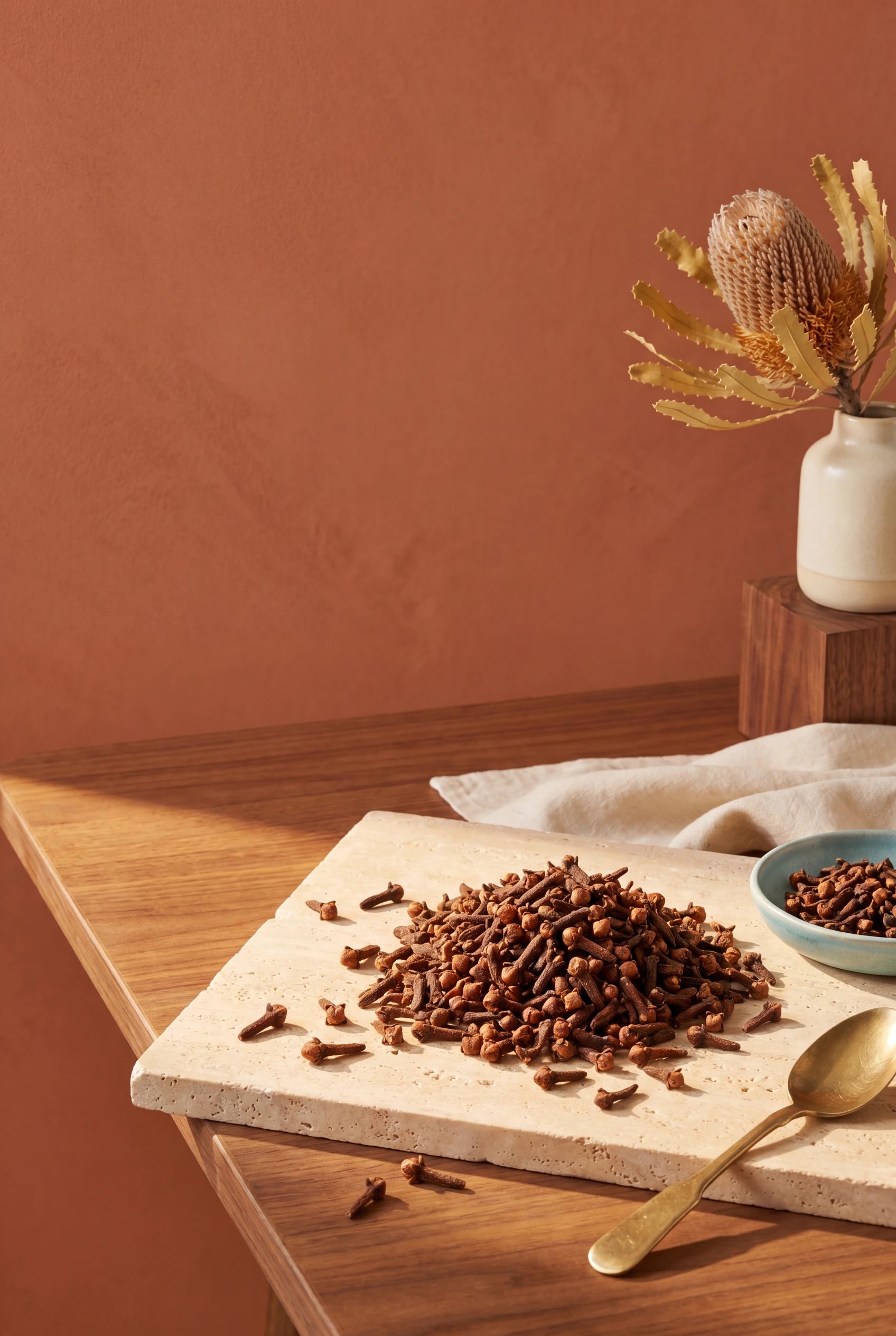
A whisper of warm clove, rich in eugenol, rounds out the cinnamon with a little depth and a traditional spiced-cup character.

Found in: Stay Awhile teaTraditional

Toasted coconut

Cocos nucifera

A soft, sweet, toasted note that makes the cup unmistakably Stay Awhile, balancing the warming spice.

How it adapts

What you need, and how it helps

TargetHow it solves itKey ingredientWhat you'll notice
Curious about cinnamon and blood sugarAn honest read of the research, not a promiseCinnamon barkClear, measured information
Wanting a warm cup you enjoyCosy cinnamon, apple and spiceCinnamon + appleA genuinely lovely cup
Cutting sugary warm drinksNo added sugar, sweetness from appleApple piecesA better daily habit
Wanting only a gentle liftJust a touch of sencha green teaSenchaCosy, with a soft lift

People also ask

Questions, answered

Research is genuinely interested here. Pooled trials have linked cinnamon to a modest reduction in fasting blood glucose, though the effect on longer-term markers like HbA1c was small and inconsistent (Allen et al., 2013; Akilen et al., 2012). Crucially, those trials used gram-scale standardised cinnamon, far more than a cup of tea provides, so we will not claim Stay Awhile affects your blood sugar.

No, absolutely not. Cinnamon is not a substitute for diabetes medication or medical advice, and you should never change or stop a prescription based on a tea. If you would like to discuss cinnamon, raise it with your doctor, especially as it may interact with some medicines.

For most people a cinnamon tea is a gentle everyday drink. Cassia cinnamon contains coumarin, which is best not consumed in very large amounts, but a normal cup is fine. If you are pregnant, on medication or managing a health condition, check with your doctor.

Warm and cosy: real cinnamon and clove, baked-apple sweetness, and a soft toasted-coconut twist. Comforting rather than spicy-hot, with only a gentle lift from a touch of green tea.

Cinnamon and blood sugar, honestly

The deep dive

Start with the limit

Cinnamon and blood sugar is exactly the kind of topic where wellness marketing tends to overreach, so let's anchor it firmly: no tea cures or treats diabetes, cinnamon is not a substitute for medication or medical advice, and you should never manage blood sugar with a cup of tea. With that boundary set, the cinnamon research is still genuinely interesting on its own terms.

What the research found

Cinnamon is one of the more studied culinary spices. Pooled analyses have linked it to a modest reduction in fasting blood glucose, with researchers interested in its polyphenols and their effect on glucose handling (Allen et al., 2013; Akilen et al., 2012). It is a real, if modest, signal that has held attention for over a decade.

Why a teabag is not a clinical dose

Here is the honest gap. Those trials used gram-scale standardised cinnamon, often the equivalent of a teaspoon or more of concentrated extract daily over weeks, and even then the effect on longer-term markers like HbA1c was small and not consistently significant. Stay Awhile is a balanced spiced cup in which cinnamon is the lead flavour, not a measured dose. So it is a tea built on a researched ingredient, not a blood-sugar intervention, and we will not imply otherwise.

Where a daily cup fits

The sensible place for Stay Awhile is as a warm, comforting, no-added-sugar cup you genuinely enjoy as part of a balanced lifestyle. Swapping a sugary hot drink for an unsweetened cinnamon cup is a small, real upgrade. If blood sugar is something you are managing, keep working with your doctor, mention cinnamon to them since it can interact with some medicines, and enjoy the tea for what it is: a lovely cup.

About the author

Dan Bartley

Co-founder, Sippo

Dan co-founded Sippo with Nicole and writes the brand's ingredient guides, working from peer-reviewed sources and standards bodies like Cochrane and the NIH. He is not a medical professional, and these guides are educational, not medical advice. Every clinical claim on this page is cited in full below, with its evidence tier and any caveats noted honestly.

hello@sippo.au
The research behind this2 peer-reviewed sources, with tiers and caveats
  1. Allen, R. W., Schwartzman, E., Baker, W. L., Coleman, C. I., & Phung, O. J. (2013). Cinnamon use in type 2 diabetes: An updated systematic review and meta-analysis. Annals of Family Medicine, 11(5), 452-459. https://doi.org/10.1370/afm.1517

    Tier 2Systematic review and meta-analysis

    Pooled trials found cinnamon was associated with a modest reduction in fasting glucose, with a smaller, inconsistent effect on HbA1c. Trials used gram-scale cinnamon doses, far more than a spiced tea contributes; cited for the ingredient's research interest only.

  2. Akilen, R., Tsiami, A., Devendra, D., & Robinson, N. (2012). Cinnamon in glycaemic control: Systematic review and meta-analysis. Clinical Nutrition, 31(5), 609-615. https://doi.org/10.1016/j.clnu.2012.04.003

    Tier 2Systematic review and meta-analysis

    Pooled trials found cinnamon was associated with improved glycaemic control. Trials used gram-scale doses far above a spiced cup, and effects on HbA1c were not consistently significant, so framed as research interest, never a treatment.

A researched spice, honestly described

A warm, cinnamon-led cup for a balanced lifestyle, with no overclaiming. Love it in 30 days or it's on us.

Shop Stay Awhile