Menstrual comfort

Best tea for menstrual comfort and PMS support: what's actually known

An honest look at chamomile and raspberry leaf in women's herbal tradition, and where a gentle cup fits

In short

No tea treats period pain or PMS, and severe symptoms deserve medical advice, not a cup of tea. That said, chamomile and raspberry leaf have centuries of traditional use in women's herbal care, and modern research is interested in some of these mechanisms. Sippo Quiet Hours brings both into a warm, caffeine-free cup, a comforting cycle ritual rather than a treatment. If period symptoms are severe, please see your doctor.

Let's be honest from the first sip: no tea treats menstrual disorders or replaces medical advice for severe period pain. What is genuinely worth knowing is that chamomile and raspberry leaf have long traditional use in women's herbal care, and research is interested in a few of these mechanisms. Quiet Hours brings them into a gentle, caffeine-free cup, so this page lays out what is actually known.

The pick

What we'd reach for

The comfort cupQuiet Hours

Quiet Hours

mellow mint tea

Best for
A warm, caffeine-free cycle-comfort ritual
Hero ingredient
Chamomile and raspberry leaf
Match
Anyone wanting a gentle cup around their cycle

What's inside, and why

The ingredients doing the work

Found in: Quiet Hours teaEmerging

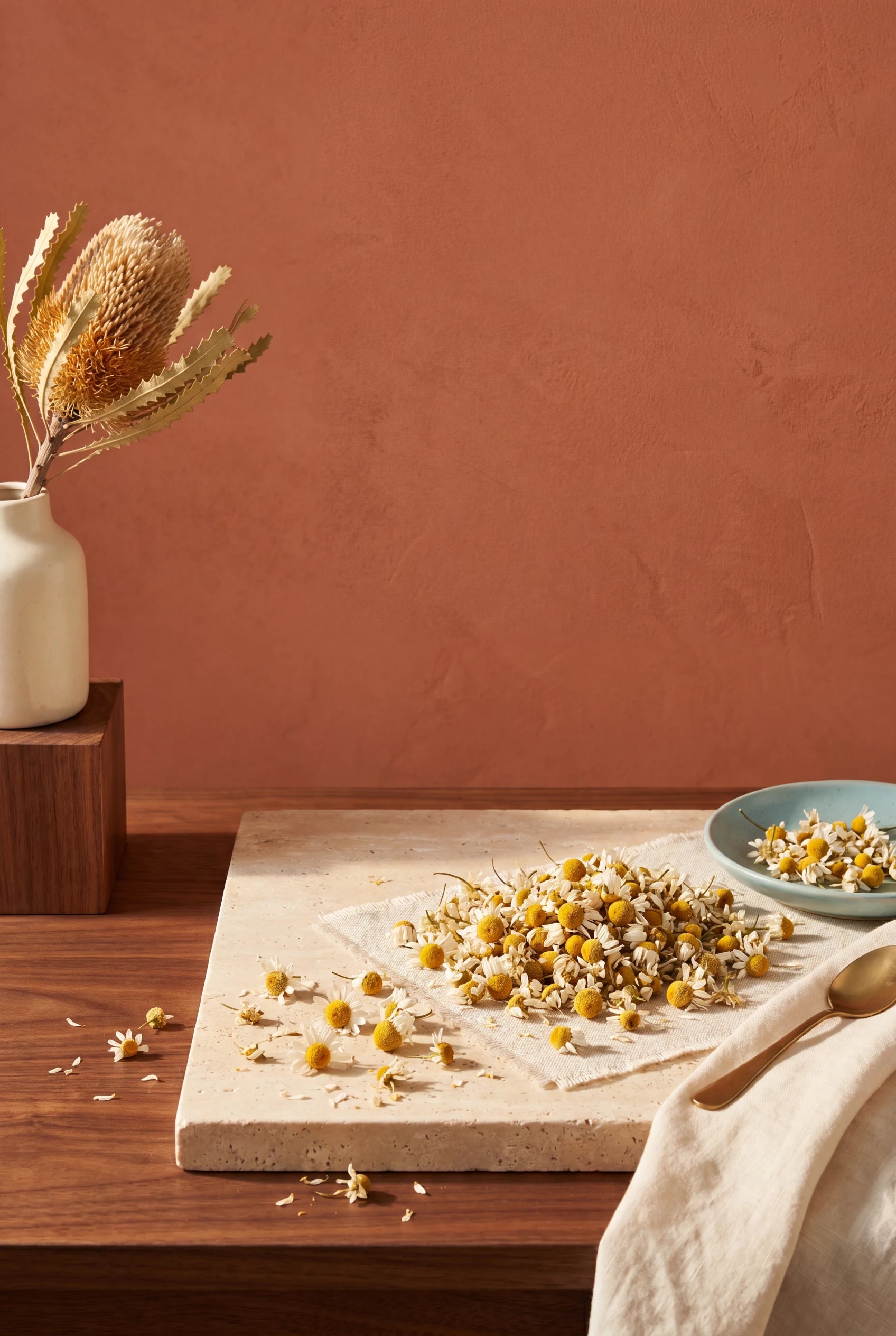
Chamomile flowers

Matricaria chamomilla

A gentle, calming flower with a long tradition in women's herbal care. It carries apigenin and bisabolol, studied for calming and anti-inflammatory action (Amsterdam et al., 2009; Mao et al., 2016), though those trials used concentrated extracts for anxiety, not period symptoms.

Found in: Quiet Hours teaTraditional

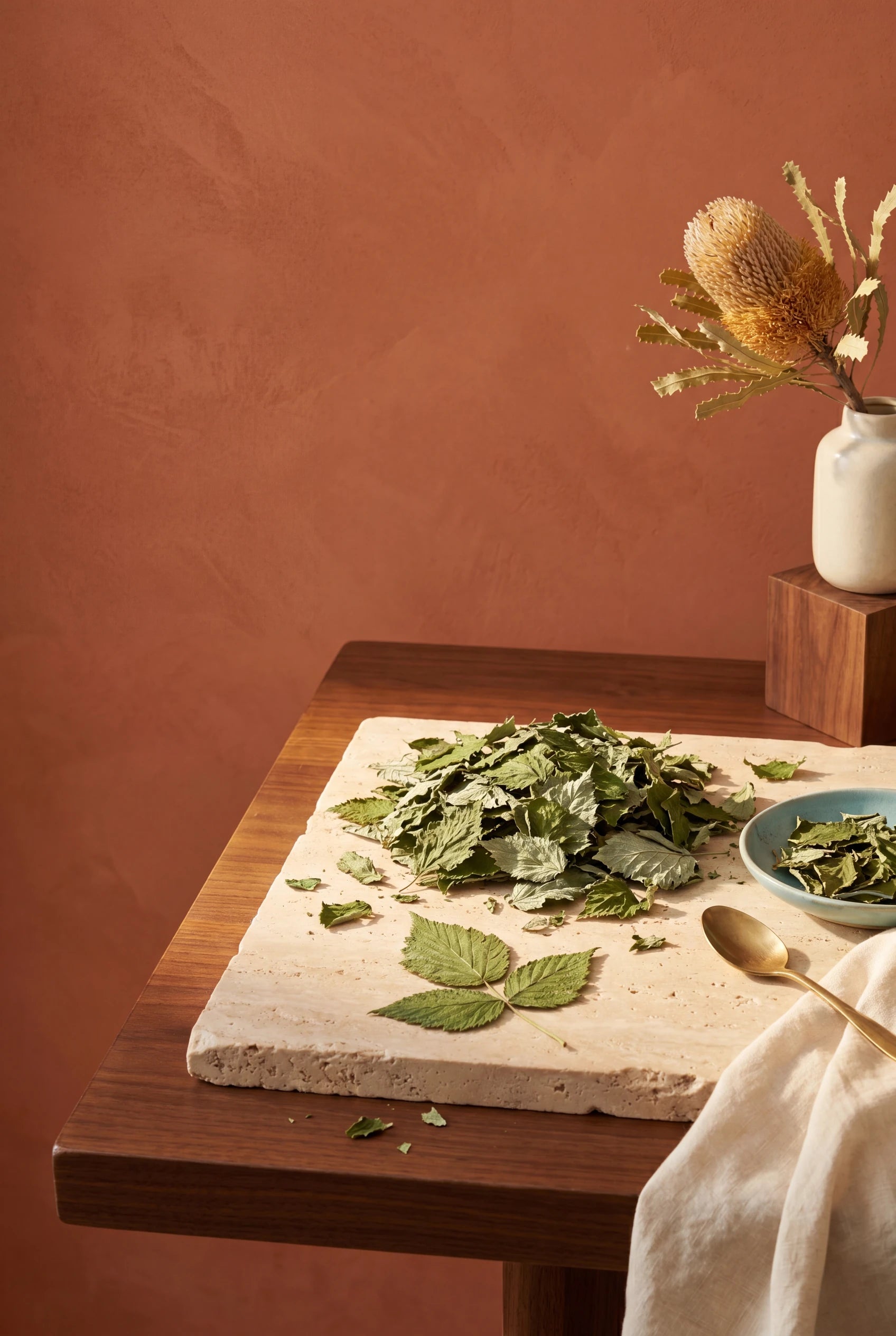
Raspberry leaf

Rubus idaeus

One of the oldest herbs in women's wellness tradition. We are honest that modern research is thin: a systematic review concluded the evidence is limited and more trials are needed (Bowman et al., 2021), so we keep this to long tradition, not a clinical claim.

Found in: Quiet Hours teaEmerging

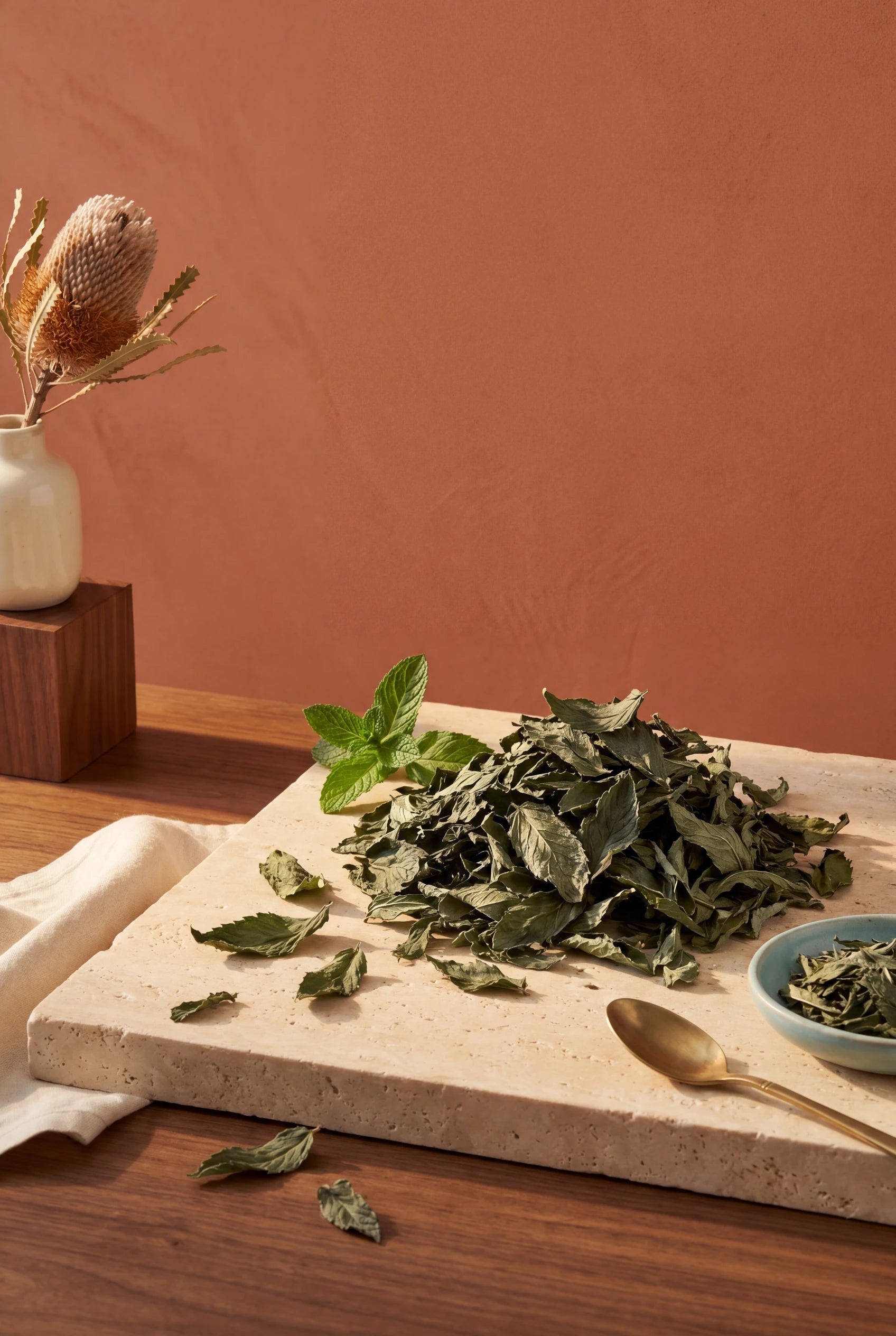
Spearmint leaf

Mentha spicata

Spearmint has drawn research interest for hormonal balance, with small trials on its anti-androgen effect (Grant, 2010). Here it adds a soft, mellow character and a herb with genuine, if early, research interest.

Found in: Quiet Hours teaWell established

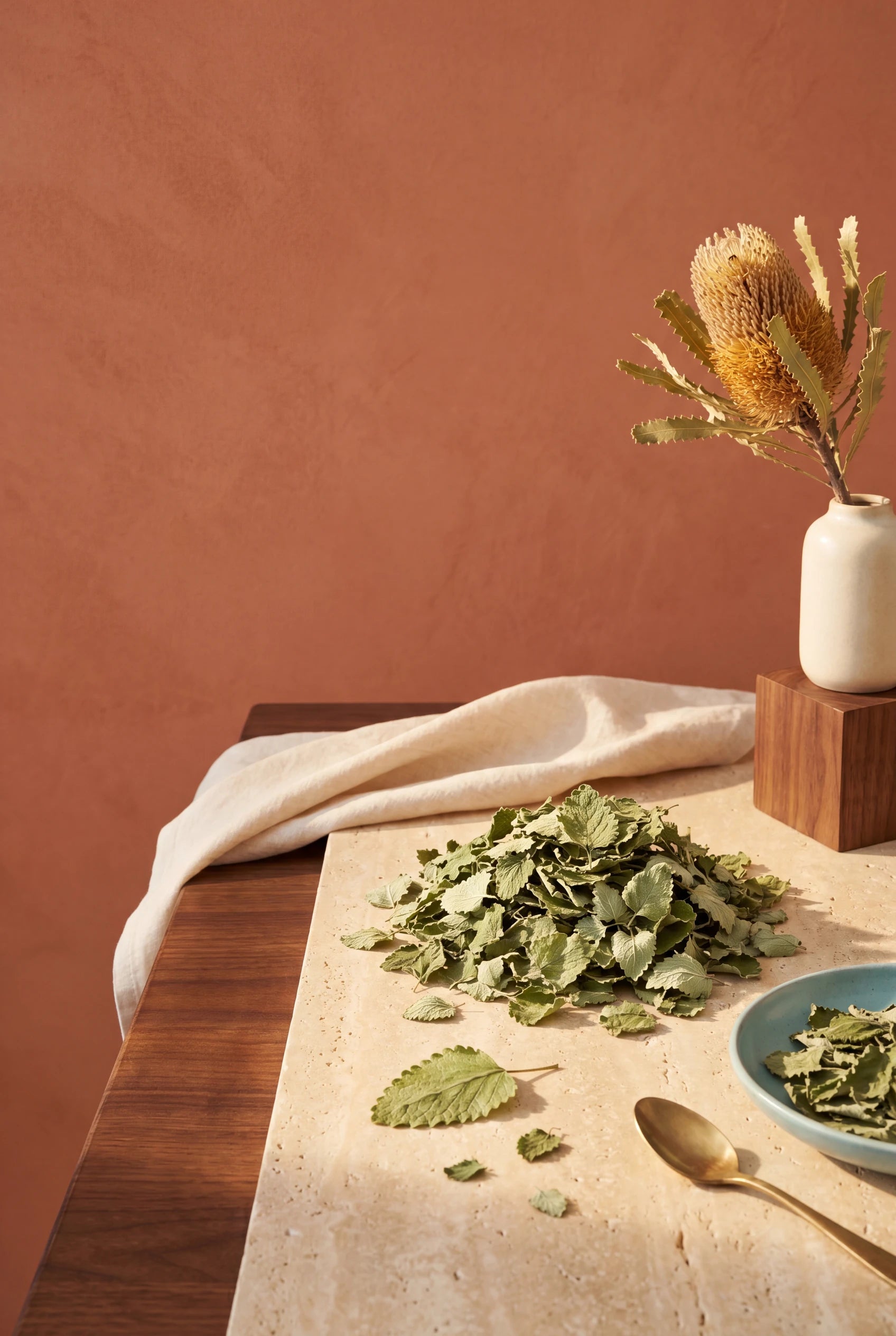
Lemon balm leaf

Melissa officinalis

A soft, citrusy herb shown in a meta-analysis to improve calm and mood versus placebo (Ghazizadeh et al., 2021), a natural fit for the mood side of the premenstrual week.

How it adapts

What you need, and how it helps

TargetHow it solves itKey ingredientWhat you'll notice
Curious about herbs for your cycleAn honest read of tradition and researchChamomile + raspberry leafClear, measured information
Wanting a warm comfort ritualA gentle, caffeine-free cup to slow down withThe whole cupA soothing daily moment
The low, flat premenstrual moodLemon balm, researched for calm and moodLemon balmA gentle lift
Not wanting caffeineNaturally caffeine-freeHerbal, no tea leafSip it any hour

People also ask

Questions, answered

We will be careful and honest: no tea treats period pain, PMS or any menstrual disorder, and severe symptoms deserve medical advice. Chamomile and raspberry leaf have centuries of traditional use in women's herbal care, and chamomile has calming research interest (Amsterdam et al., 2009), but the strong trials used concentrated extracts for other outcomes. So this is a comforting ritual built on tradition, not a treatment.

Not in the modern clinical sense. A systematic review concluded the evidence is limited and more research is needed (Bowman et al., 2021). It has a long, genuine tradition in women's wellness, which is how we frame it, honestly, as tradition rather than proof.

For most people it is a gentle everyday tea, and a warm caffeine-free cup can be a comforting part of the day around your cycle. If you are pregnant, trying to conceive, or have a health condition, check with your doctor first, as raspberry leaf in particular is often discussed in pregnancy and should be guided individually.

If period pain is severe, getting worse, or stopping you living your life, or if your cycle changes markedly, please see your doctor. A comforting cup is not a substitute for proper assessment.

Herbs and the cycle, honestly

The deep dive

Start with the limit

Menstrual health is exactly where wellness marketing tends to overpromise, so let's be clear: no tea treats period pain, PMS, or any menstrual or hormonal disorder, and severe or worsening symptoms deserve real medical assessment, not a cup of tea. With that firmly established, the herbal tradition here is still genuinely worth understanding.

Chamomile and raspberry leaf in tradition

Both herbs have deep roots in women's herbal care. Chamomile is the gentle, calming flower long associated with comfort, and it has real calming research interest, though the trials used concentrated extracts for anxiety rather than period symptoms (Amsterdam et al., 2009; Mao et al., 2016). Raspberry leaf is one of the oldest women's-wellness herbs, but we are honest that modern evidence is thin, with a systematic review calling for more research (Bowman et al., 2021).

Where spearmint and lemon balm come in

Two of the other herbs in the cup have their own, more measurable research interest. Spearmint has been studied for its anti-androgen effect in small trials (Grant, 2010), and lemon balm has a meta-analysis supporting improvements in calm and mood (Ghazizadeh et al., 2021), which speaks to the mood side of the premenstrual week. None of this makes the tea a treatment; it makes it a thoughtfully chosen comfort cup.

Where a daily cup fits

Think of Quiet Hours as a warm, caffeine-free comfort ritual for the days around your cycle, the cup you make to slow down with, not a remedy. Keep working with your doctor on anything painful or persistent, and enjoy the tea for the soothing, genuinely pleasant thing it is.

About the author

Dan Bartley

Co-founder, Sippo

Dan co-founded Sippo with Nicole and writes the brand's ingredient guides, working from peer-reviewed sources and standards bodies like Cochrane and the NIH. He is not a medical professional, and these guides are educational, not medical advice. Every clinical claim on this page is cited in full below, with its evidence tier and any caveats noted honestly.

hello@sippo.au
The research behind this5 peer-reviewed sources, with tiers and caveats
  1. Amsterdam, J. D., Li, Y., Soeller, I., Rockwell, K., Mao, J. J., & Shults, J. (2009). A randomized, double-blind, placebo-controlled trial of oral Matricaria recutita (chamomile) extract therapy for generalized anxiety disorder. Journal of Clinical Psychopharmacology, 29(4), 378-382. https://doi.org/10.1097/JCP.0b013e3181ac935c

    Tier 2Randomised controlled trial

    Chamomile extract reduced generalised anxiety symptoms versus placebo over 8 weeks. Used a standardised extract, not tea, so cited for the calming mechanism behind a soothing ritual, not as proof a teabag treats anything.

  2. Mao, J. J., Xie, S. X., Keefe, J. R., Soeller, I., Li, Q. S., & Amsterdam, J. D. (2016). Long-term chamomile (Matricaria chamomilla L.) treatment for generalized anxiety disorder: A randomized clinical trial. Phytomedicine, 23(14), 1735-1742. https://doi.org/10.1016/j.phymed.2016.10.012

    Tier 2Randomised controlled trial (n=179)

    Chamomile was safe and reduced anxiety symptoms over the long term. Used 1500 mg of chamomile EXTRACT daily (far more concentrated than a cup of tea), so we cite this for the ingredient's researched calming mechanism, not as proof a teabag matches that dose.

  3. Bowman, R., Taylor, J., Muggleton, S., & Davis, D. (2021). Biophysical effects, safety and efficacy of raspberry leaf use in pregnancy: A systematic integrative review. BMC Complementary Medicine and Therapies, 21(1), 56. https://doi.org/10.1186/s12906-021-03230-4

    Tier 2Systematic integrative review

    Reviewed raspberry leaf in women's wellness and concluded the evidence is limited and more rigorous trials are needed. Cited honestly to show the tradition is long but the modern research is thin.

  4. Grant, P. (2010). Spearmint herbal tea has significant anti-androgen effects in polycystic ovarian syndrome: A randomized controlled trial. Phytotherapy Research, 24(2), 186-188. https://doi.org/10.1002/ptr.2900

    Tier 2Randomised controlled trial (n=42)

    Drinking spearmint tea twice daily for 30 days reduced free and total testosterone in women with PCOS. Small trial; the reduction in visible hirsutism approached but did not reach significance. Genuine signal for the ingredient, not a treatment claim.

  5. Ghazizadeh, J., Sadigh-Eteghad, S., Marx, W., Fakhari, A., Hamedeyazdan, S., Torbati, M., Taheri-Tarighi, S., Araj-Khodaei, M., & Mirghafourvand, M. (2021). The effects of lemon balm (Melissa officinalis L.) on depression and anxiety in clinical trials: A systematic review and meta-analysis. Phytotherapy Research, 35(12), 6690-6705. https://doi.org/10.1002/ptr.7252

    Tier 2Systematic review and meta-analysis

    Pooled clinical trials found lemon balm improved anxiety and depression scores versus placebo. The strongest evidence is for calm/mood; we extend it to evening wind-down cautiously.

A comforting cup, honestly described

Gentle, caffeine-free, built on tradition with no overclaiming. Love it in 30 days or it's on us.

Shop Quiet Hours