Period cramps

Tea for period cramps: what the research actually says

An honest look at chamomile, the prostaglandin mechanism, and the limits of the evidence

In short

No tea cures period cramps, and severe period pain deserves medical advice, not a cup of tea. Honestly though, this is a topic with real research interest: a Cochrane review found the evidence for dietary supplements promising but limited, and a chamomile-specific review of seven trials suggested some benefit, though at gram-level doses, not tea-cup amounts. Sippo Quiet Hours is a warm, caffeine-free chamomile cup for cycle comfort, not a cramp treatment. The most-studied single herb here is ginger, which we do not make. See your GP if pain is severe.

Let's be honest from the first sip: no tea cures period cramps, and severe period pain is something to see your doctor about, not treat with tea. What is genuinely worth knowing is that the cramping of a normal period is prostaglandin-driven, which is what anti-inflammatory herbs are studied for, and chamomile has more research here than most. Quiet Hours is a chamomile-led comfort cup, so this is the careful, honest version.

The pick

What we'd reach for

The comfort cupQuiet Hours

Quiet Hours

mellow mint tea

Best for
A warm, caffeine-free cup for cycle comfort
Hero ingredient
Chamomile
Match
Anyone wanting a soothing cup around their period

What's inside, and why

The ingredients doing the work

Found in: Quiet Hours teaEmerging

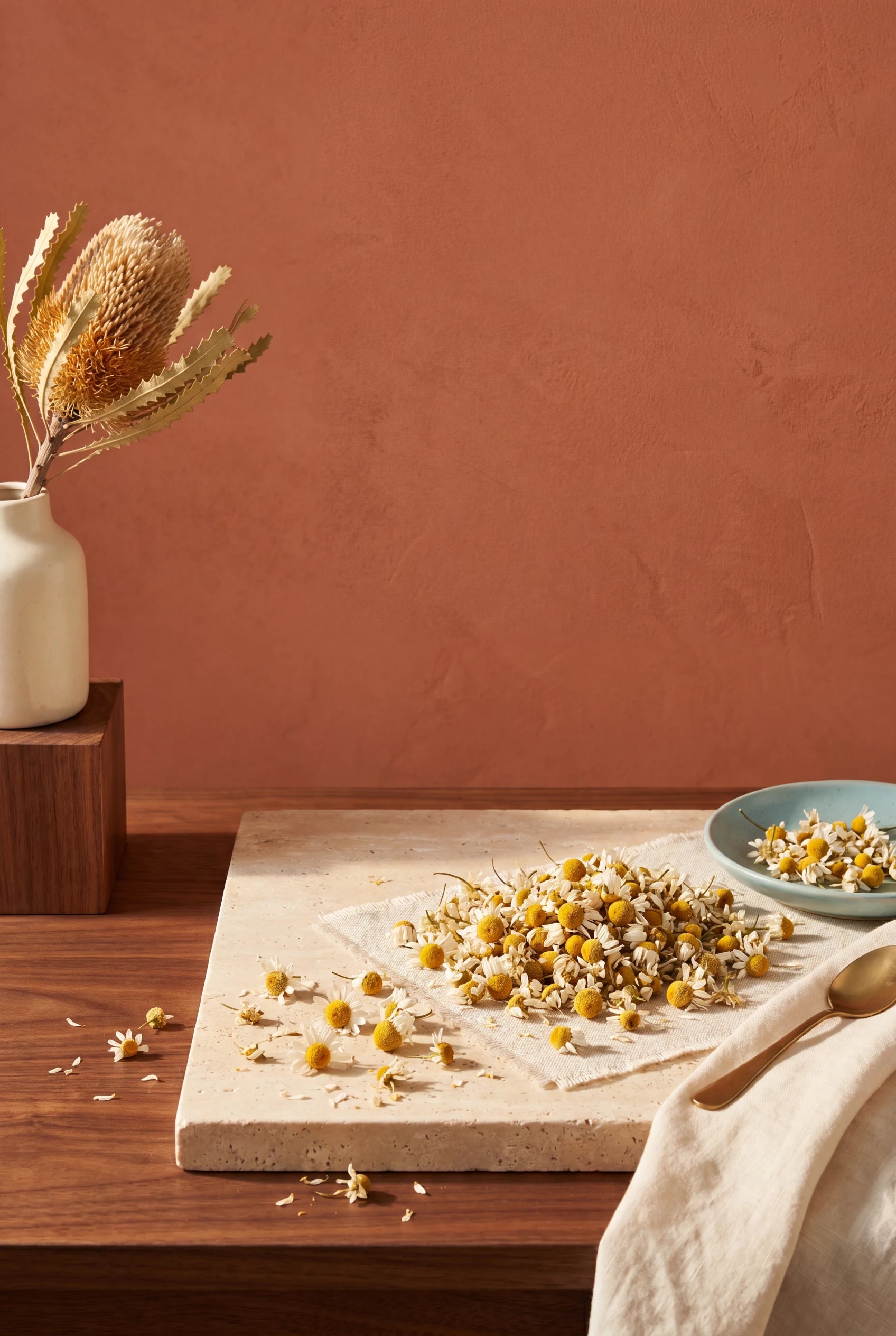
Chamomile flowers

Matricaria chamomilla

The lead, and the reason this page exists. A chamomile-specific systematic review of seven trials suggested chamomile may help period-pain and bleeding (Niazi & Moradi, 2021), with apigenin and bisabolol behind its anti-inflammatory research interest. Those trials used gram-level doses, not a teacup, so we cite the research, not a promise.

Found in: Quiet Hours teaWell established

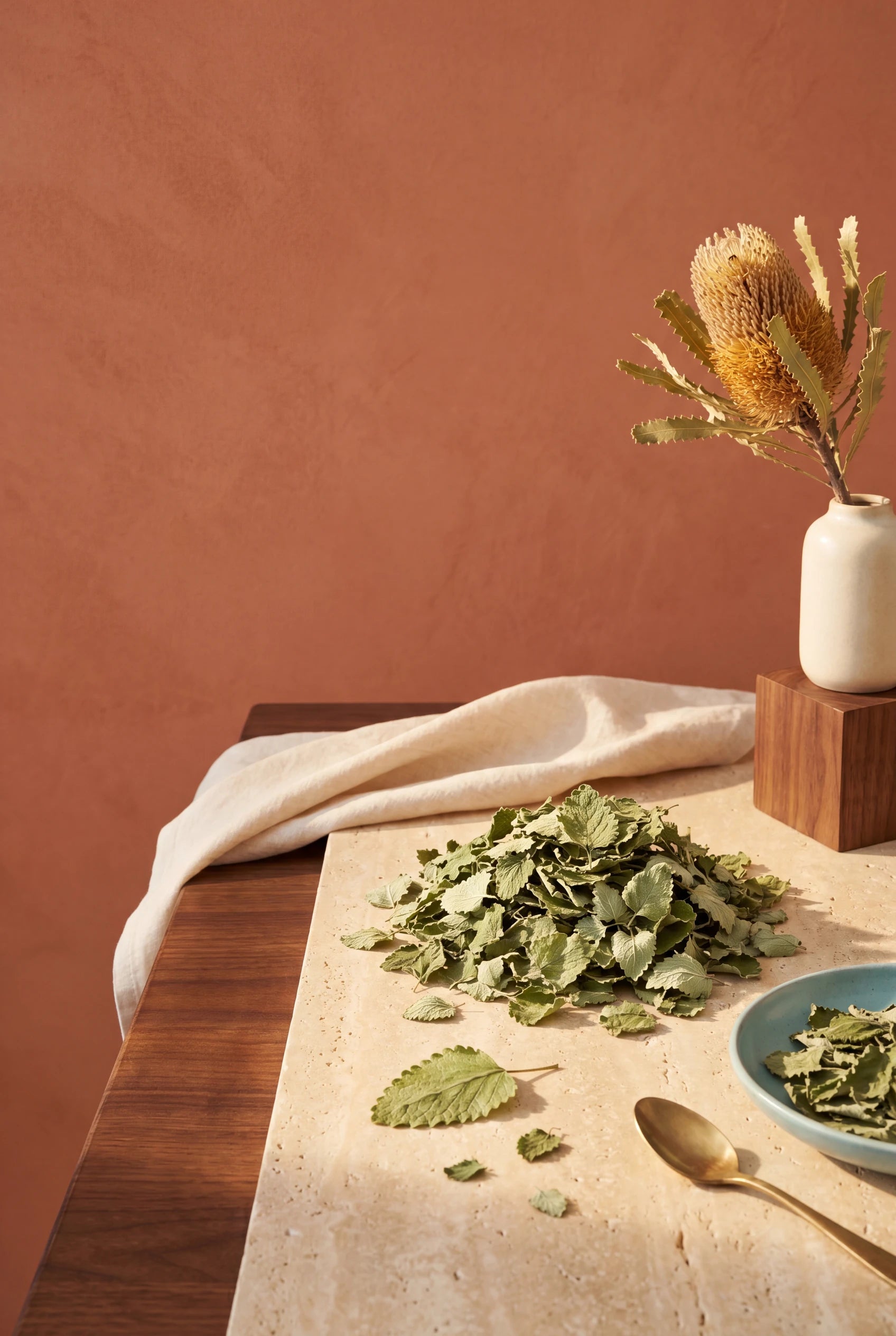
Lemon balm leaf

Melissa officinalis

A soft, citrusy herb a meta-analysis links to improved calm and mood versus placebo (Ghazizadeh et al., 2021), for the mood side of a difficult few days.

Found in: Quiet Hours teaTraditional

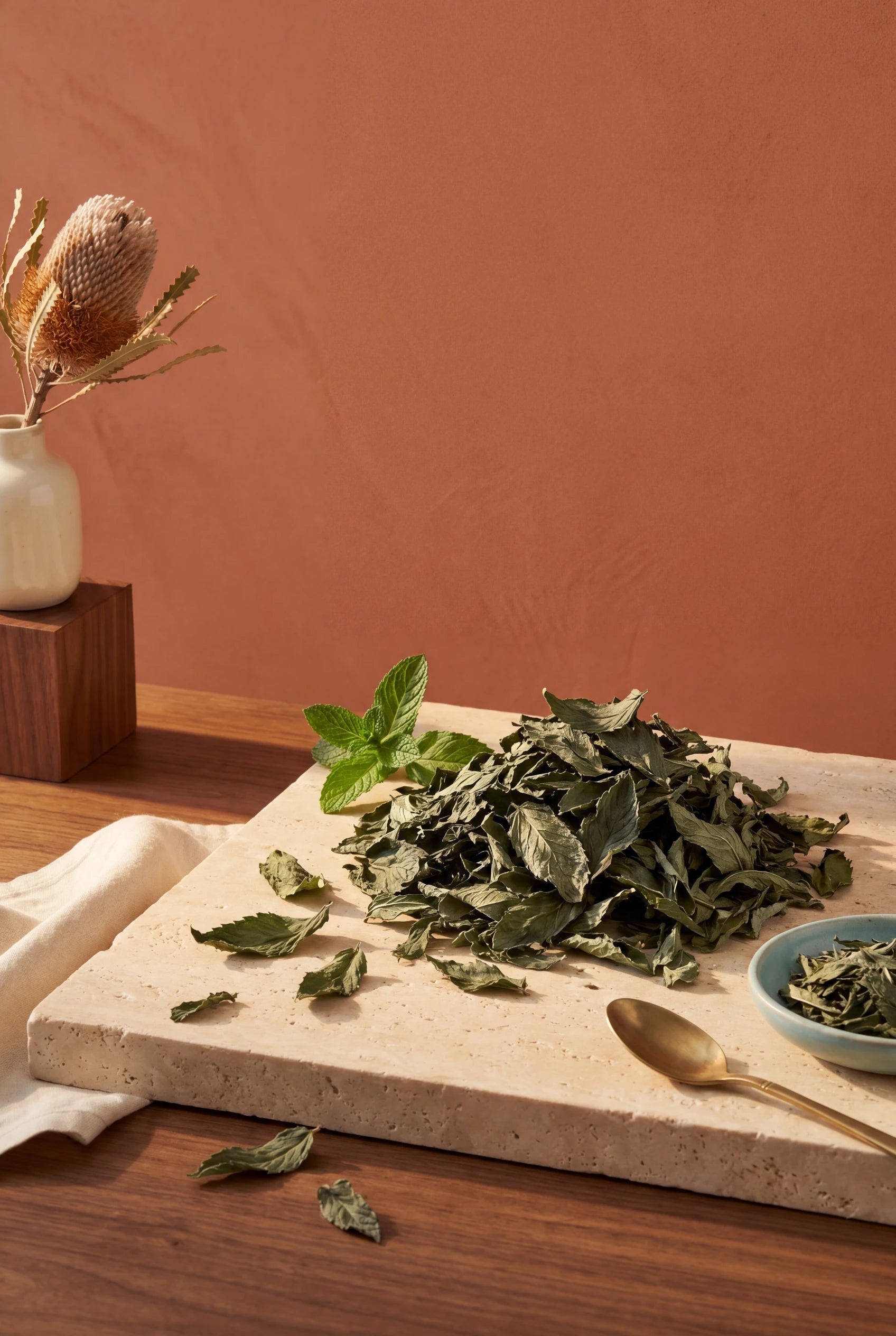
Spearmint leaf

Mentha spicata

Mellow spearmint gives the cup its soft, soothing character. Its research interest is in hormonal balance generally, not cramps specifically, so we keep it to flavour and comfort here.

Found in: Quiet Hours teaTraditional

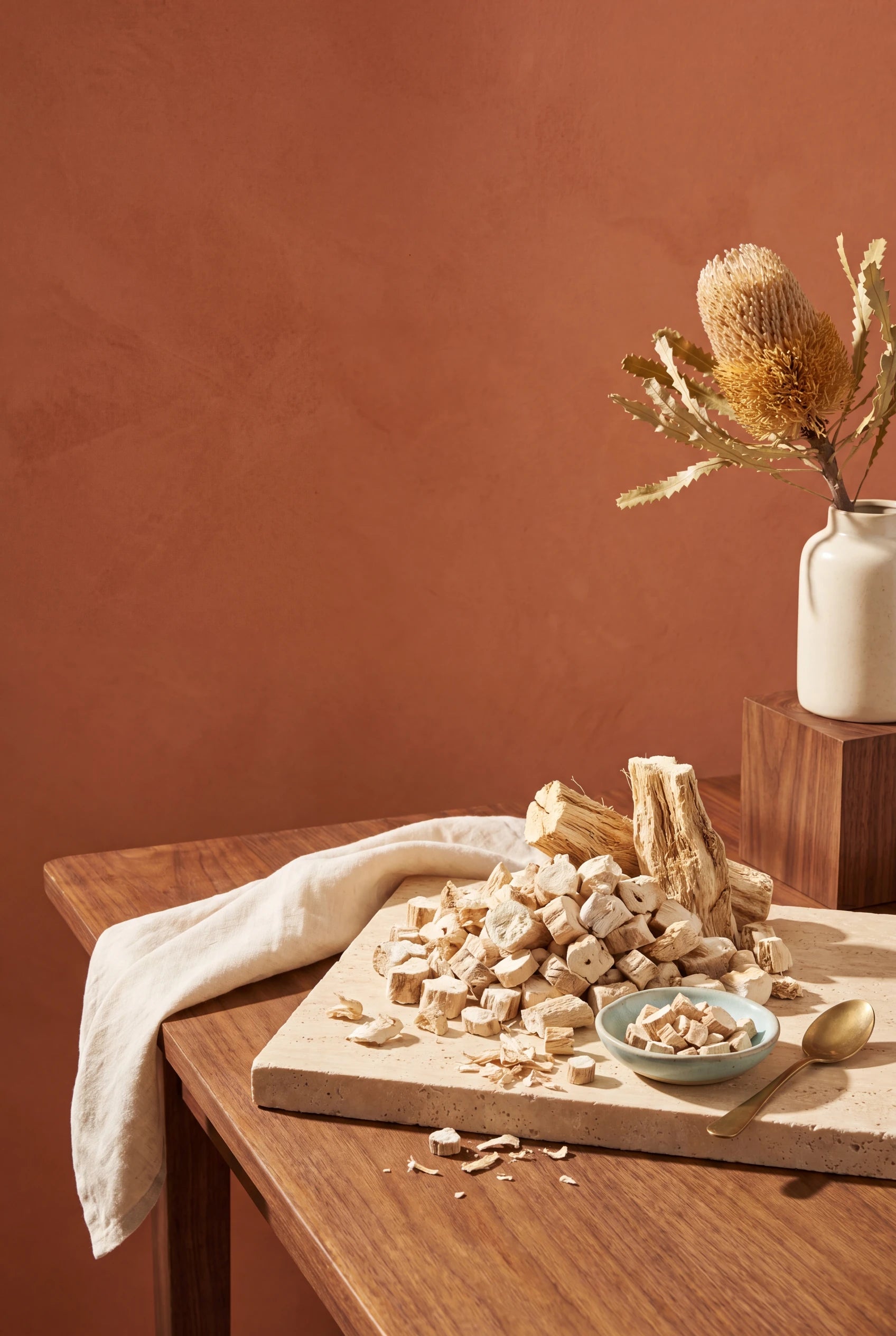
Marshmallow root

Althaea officinalis

A traditional demulcent that makes the cup smooth and comforting, the kind you wrap both hands around when you are not feeling your best.

How it adapts

What you need, and how it helps

TargetHow it solves itKey ingredientWhat you'll notice
Curious about herbs for crampsAn honest read of the research, not a promiseChamomileClear, measured information
Wanting a warm comfort ritualA soothing, caffeine-free cup to slow down withThe whole cupA genuine comfort moment
The low mood of a hard few daysLemon balm, researched for calm and moodLemon balmA gentle lift
Not wanting caffeineNaturally caffeine-freeHerbal, no tea leafSip it any hour, including bed

People also ask

Questions, answered

There is real research interest, with honest limits. The cramping of a normal period is driven by prostaglandins (Iacovides et al., 2015), which anti-inflammatory herbs are studied for, and a chamomile-specific review of seven trials suggested chamomile may help period pain (Niazi & Moradi, 2021). But Cochrane reviewed the wider supplement category and called the evidence promising yet methodologically limited (Pattanittum et al., 2016), and the trials used gram-level chamomile doses, far more than a teacup. So we frame Quiet Hours as a comfort ritual, not a cramp treatment.

Ginger has the strongest single-herb evidence: a meta-analysis found it reduced period-pain scores versus placebo (Daily et al., 2015). We are upfront that ginger is not an ingredient in our teas, so if that is what you are after, it is worth knowing the best-studied option is something we do not make.

No. If you use pain relief for your period, keep following your doctor's or pharmacist's guidance. A warm cup can be a comforting addition to your routine, but it is not a substitute for medication or medical care.

If period pain is severe, getting worse, or stopping you living your life, please see your GP. Very painful periods can have causes that need proper assessment, and that matters more than any cup of tea.

Period cramps and herbs, honestly

The deep dive

Start with the limit

Period pain is a topic where overpromising is everywhere, so let's anchor it: no tea cures period cramps or dysmenorrhea, and severe or worsening period pain deserves real medical assessment, not a cup of tea. With that clear, the research here is genuinely more interesting than for most cycle queries.

Why anti-inflammatory herbs are even relevant

The cramping of a normal period, primary dysmenorrhea, is driven largely by prostaglandins, which make the uterine muscle contract and heighten pain (Iacovides et al., 2015). That matters because it gives anti-inflammatory mechanisms a plausible target, which is why herbs like chamomile have been studied here at all, rather than the connection being pure tradition.

What the chamomile research actually shows

Chamomile has more dysmenorrhea research than most herbs. A chamomile-specific systematic review of seven trials concluded it may be an effective traditional intervention for period pain and bleeding (Niazi & Moradi, 2021). But two honest caveats sit alongside that: Cochrane reviewed the wider dietary-supplement category across 27 trials and found the evidence promising but methodologically limited (Pattanittum et al., 2016), and the chamomile trials used gram-level doses, far more concentrated than a cup of tea. Many also came from a small cluster of Iranian student studies, which limits how widely the findings generalise.

The honest comparison, and where the cup fits

If you want the single most-studied herb for period pain, it is ginger, with a meta-analysis showing reduced pain scores (Daily et al., 2015), and ginger is not in our teas. We would rather tell you that than pretend chamomile is the strongest option. So Quiet Hours is honestly this: a warm, caffeine-free, chamomile-led comfort cup for the days around your period, the ritual you reach for with a hot water bottle. Keep your usual pain relief and your doctor's guidance, and let the tea be the comforting part.

About the author

Dan Bartley

Co-founder, Sippo

Dan co-founded Sippo with Nicole and writes the brand's ingredient guides, working from peer-reviewed sources and standards bodies like Cochrane and the NIH. He is not a medical professional, and these guides are educational, not medical advice. Every clinical claim on this page is cited in full below, with its evidence tier and any caveats noted honestly.

hello@sippo.au
The research behind this5 peer-reviewed sources, with tiers and caveats
  1. Iacovides, S., Avidon, I., & Baker, F. C. (2015). What we know about primary dysmenorrhea today: A critical review. Human Reproduction Update, 21(6), 762-778. https://doi.org/10.1093/humupd/dmv039

    Tier 2Peer-reviewed critical review

    Establishes that primary dysmenorrhea is driven by prostaglandins, the mechanism anti-inflammatory herbs are studied for. Background framing, not a claim that any tea treats cramps.

  2. Pattanittum, P., Kunyanone, N., Brown, J., Sangkomkamhang, U. S., Barnes, J., Seyfoddin, V., & Marjoribanks, J. (2016). Dietary supplements for dysmenorrhoea. Cochrane Database of Systematic Reviews, 2016(3), CD002124. https://doi.org/10.1002/14651858.CD002124.pub2

    Tier 1Cochrane systematic review (27 RCTs)

    Reviewed dietary supplements (incl. chamomile, cinnamon, fennel, ginger) for period pain and found the evidence promising but methodologically limited, with no high-quality conclusion for any one supplement. The discipline citation for the page.

  3. Niazi, A., & Moradi, M. (2021). The effect of chamomile on pain and menstrual bleeding in primary dysmenorrhea: A systematic review. International Journal of Community Based Nursing and Midwifery, 9(3), 174-186. https://doi.org/10.30476/IJCBNM.2021.87219.1417

    Tier 2Systematic review (7 trials)

    Pooled 7 chamomile trials and concluded chamomile may be an effective traditional intervention for period pain, with heterogeneous methods and mostly gram-level doses, not tea-cup doses. Most trials were Iranian student populations, limiting generalisability.

  4. Daily, J. W., Zhang, X., Kim, D. S., & Park, S. (2015). Efficacy of ginger for alleviating the symptoms of primary dysmenorrhea: A systematic review and meta-analysis of randomized clinical trials. Pain Medicine, 16(12), 2243-2255. https://doi.org/10.1111/pme.12853

    Tier 2Systematic review and meta-analysis

    Found ginger reduced period-pain scores versus placebo. INFORMATIONAL ONLY: ginger is not an ingredient in Sippo teas, cited to show the strongest single-herb evidence is for something we do not make.

  5. Amsterdam, J. D., Li, Y., Soeller, I., Rockwell, K., Mao, J. J., & Shults, J. (2009). A randomized, double-blind, placebo-controlled trial of oral Matricaria recutita (chamomile) extract therapy for generalized anxiety disorder. Journal of Clinical Psychopharmacology, 29(4), 378-382. https://doi.org/10.1097/JCP.0b013e3181ac935c

    Tier 2Randomised controlled trial

    Chamomile extract reduced generalised anxiety symptoms versus placebo over 8 weeks. Used a standardised extract, not tea, so cited for the calming mechanism behind a soothing ritual, not as proof a teabag treats anything.

A comfort cup, honestly described

Warm, caffeine-free chamomile for cycle comfort, with no overclaiming. Love it in 30 days or it's on us.

Shop Quiet Hours