Perimenopause and women's wellness

Tea for perimenopause and women's wellness: an honest guide

What the evidence does and doesn't say about herbal tea through hormonal change, and where a gentle cup fits

In short

No tea treats perimenopause, menopause or any hormonal condition, and we will not pretend one does. What a gentle, caffeine-free cup can genuinely offer is a calming evening ritual through a demanding life stage, and spearmint specifically has small-trial research interest in androgens. Sippo Quiet Hours blends spearmint, chamomile, lemon balm and raspberry leaf, the last with long traditional use in women's wellness. A supportive ritual, not a treatment; work with your doctor.

Perimenopause and menopause are real, individual, and deserve real care, not a teabag dressed up as a remedy. So let's be honest from the start: no tea balances your hormones. What a warm, caffeine-free, calming cup can do is offer a small, reliable moment of comfort through a turbulent stretch, built on herbs with either genuine research interest or a long women's-wellness tradition.

The pick

What we'd reach for

A gentle daily ritualQuiet Hours

Quiet Hours

mellow mint tea

Best for
A calming, caffeine-free cup through hormonal change
Hero ingredient
Spearmint, chamomile, raspberry leaf
Match
Anyone wanting a supportive evening ritual

What's inside, and why

The ingredients doing the work

Found in: Quiet Hours teaEmerging

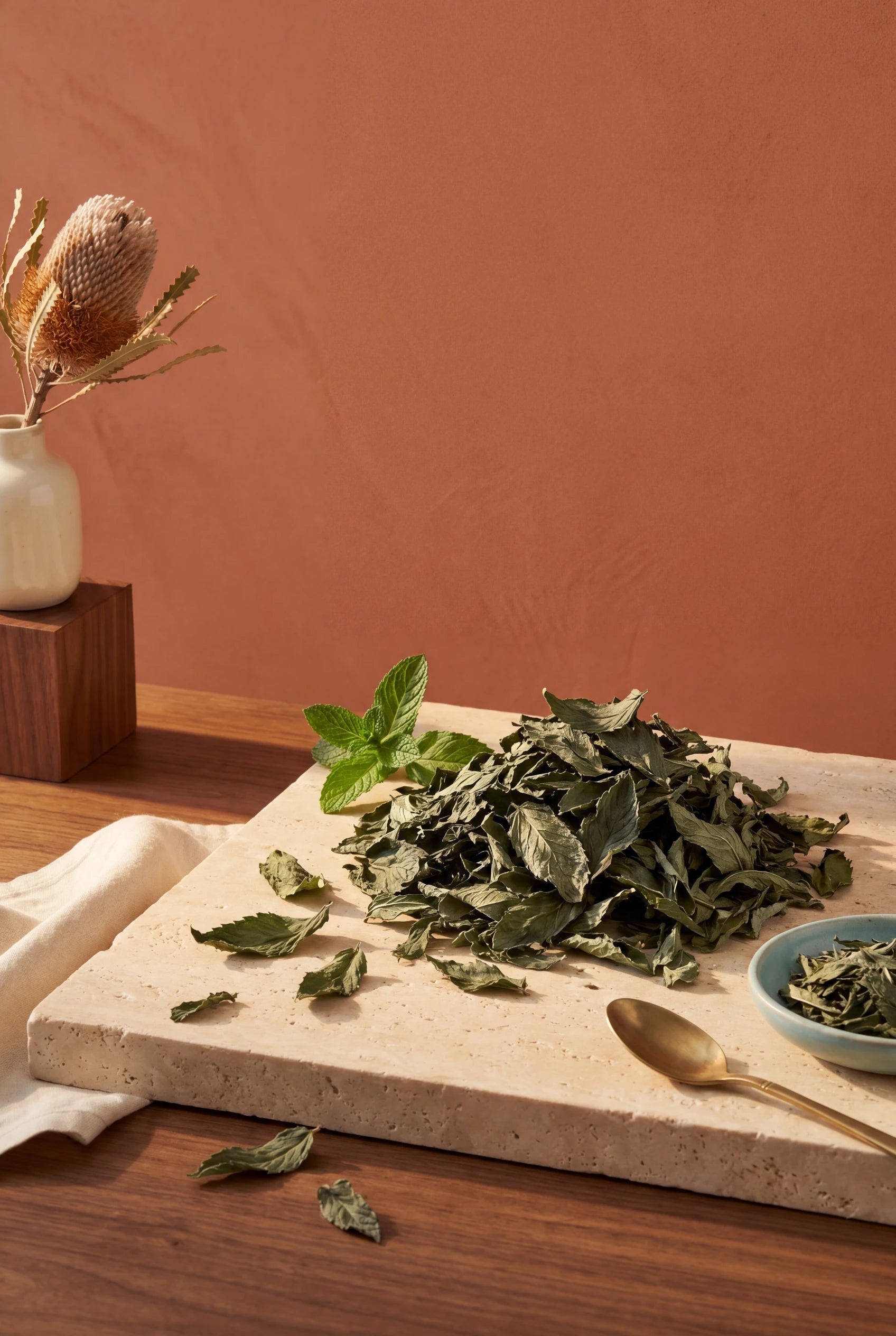
Spearmint leaf

Mentha spicata

The most-researched herb here for women specifically: two small randomised trials found spearmint tea reduced androgen levels in women with PCOS or hirsutism (Grant, 2010; Akdoğan et al., 2007). Small studies, and not a menopause treatment, but a genuine signal worth knowing.

Found in: Quiet Hours teaWell established

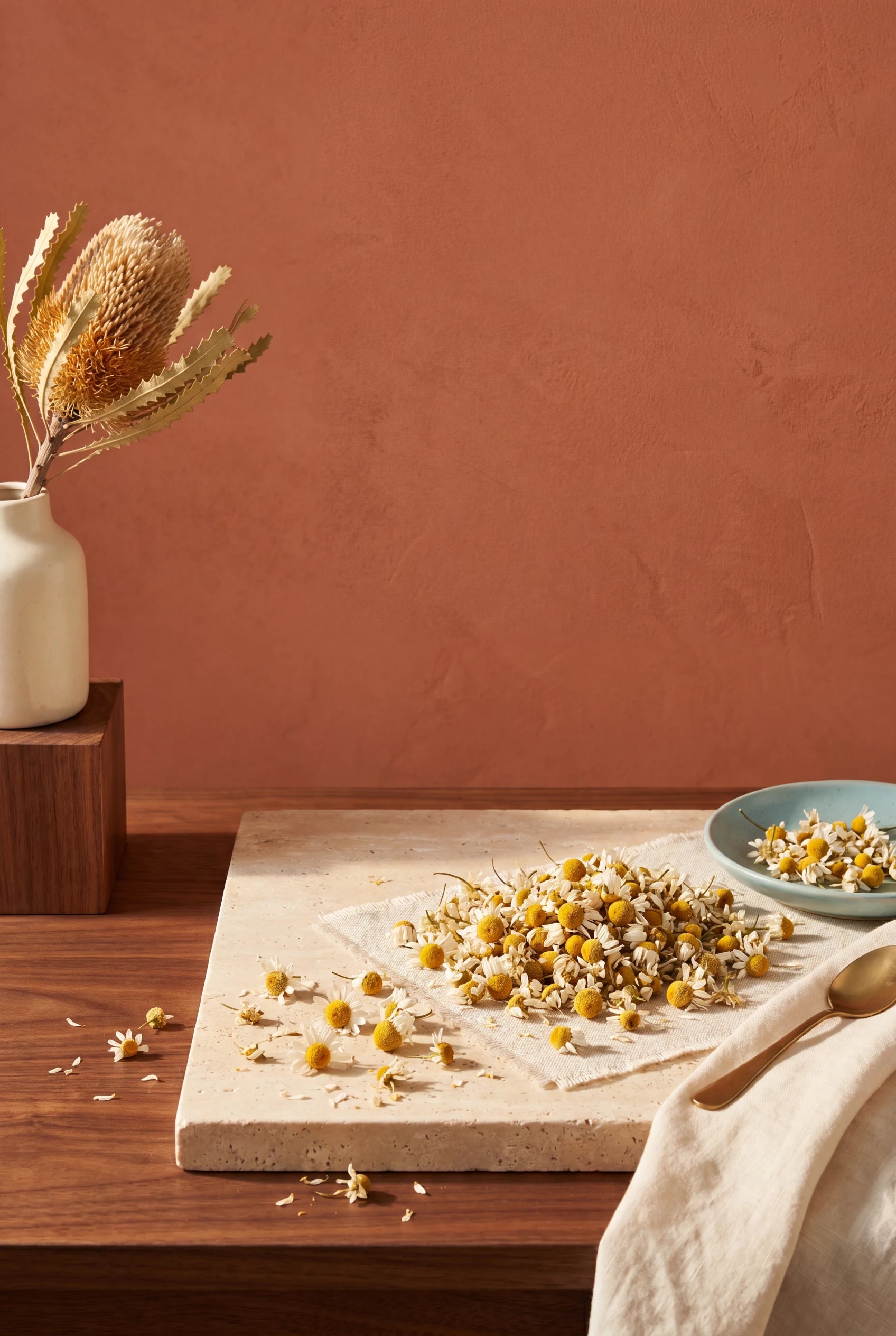
Chamomile flowers

Matricaria chamomilla

A calming flower with real research interest in calm and sleep quality (Hieu et al., 2019), supportive when hormonal change disrupts mood and rest. A soothing ritual, not a hormonal treatment.

Found in: Quiet Hours teaWell established

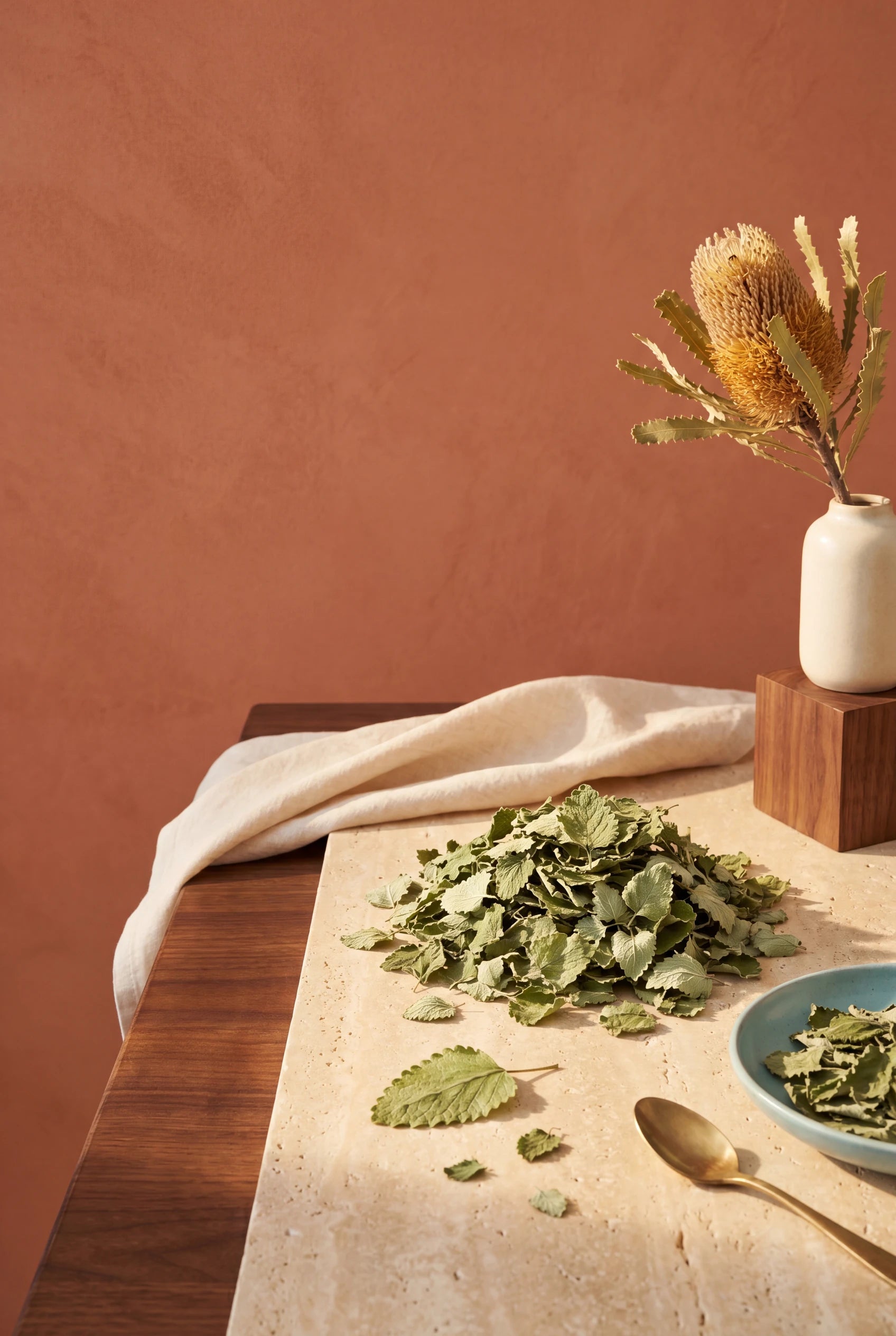
Lemon balm leaf

Melissa officinalis

Researched for calm and mood (Ghazizadeh et al., 2021), a gentle support for the mood shifts that can come with hormonal change.

Found in: Quiet Hours teaTraditional

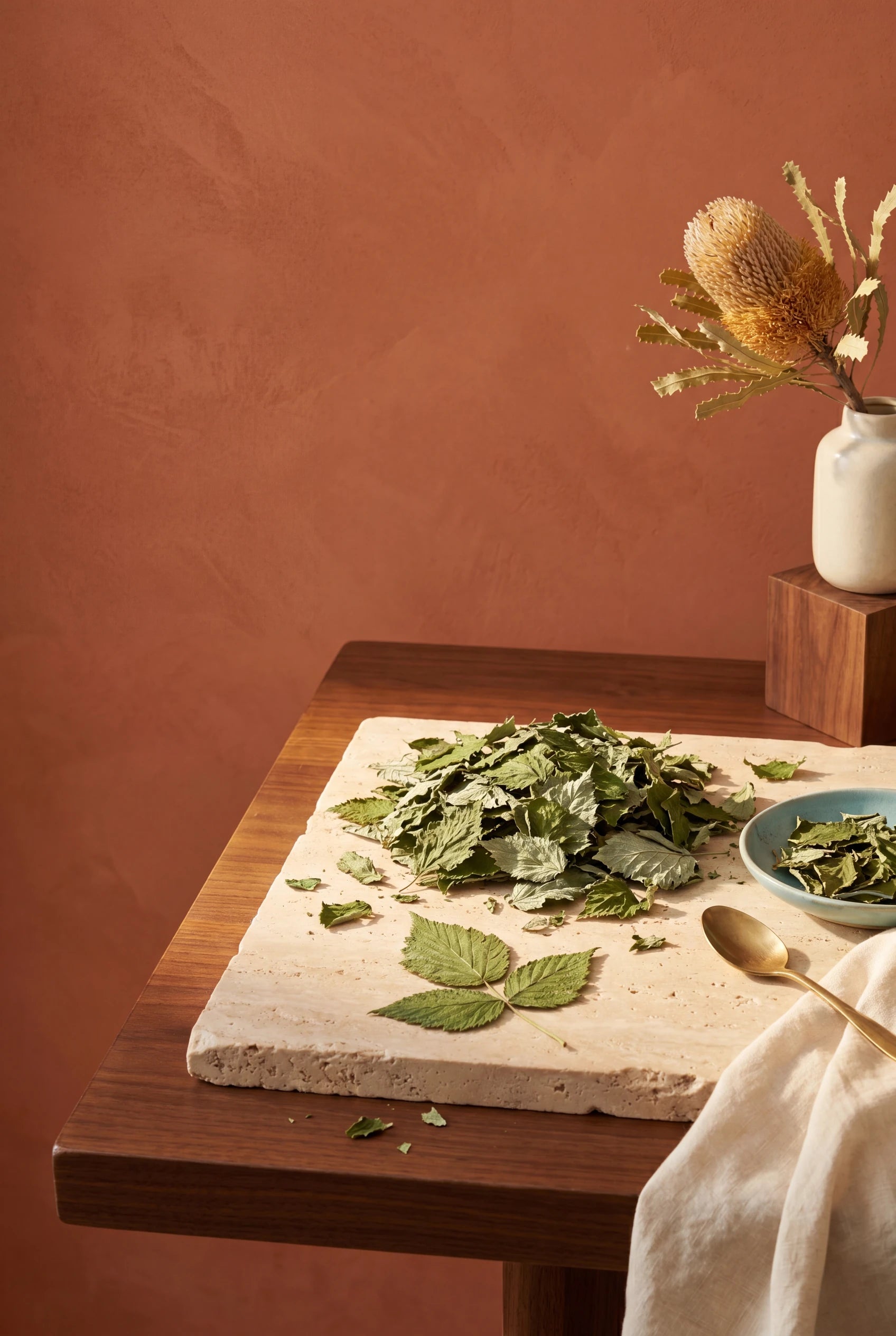
Raspberry leaf

Rubus idaeus

A herb with centuries of traditional use in women's wellness. We are honest that quality clinical evidence is limited, so we frame raspberry leaf as traditional use only, not a researched claim.

How it adapts

What you need, and how it helps

TargetHow it solves itKey ingredientWhat you'll notice
Wanting support through hormonal changeA calming, caffeine-free daily ritualThe whole cupA reliable moment of comfort
Disrupted sleep and moodChamomile and lemon balm for calmChamomile + lemon balmA soothing wind-down
Curious about spearmint and hormonesHonest framing of the small trialsSpearmintResearch interest, not a cure
Drawn to traditional women's herbsRaspberry leaf, traditional useRaspberry leafTradition, clearly labelled
Avoiding caffeine and hypeCaffeine-free, honestly describedHerbal blendCalm without overclaiming

Outside-in routine pairings

Care for changing skin, too

Quiet Hours offers a calming ritual from the inside. Hormonal change often brings drier, more reactive skin, which Mint Condition supports gently from the outside.

Mint Condition

Mint Condition

matcha mint body scrub

Mint Condition is our matcha mint body scrub, gentle and deeply moisturising with three plant oils, a soothing fit for skin that is drier or more reactive during hormonal change. A calming cup and a gentle scrub, a supportive ritual inside and out.

See Mint Condition

People also ask

Questions, answered

Not as a treatment, and we will not claim it can. No tea balances hormones or relieves menopause symptoms in any proven way. What a gentle, caffeine-free cup genuinely offers is a calming evening ritual through a demanding stage, with herbs like chamomile and lemon balm that have research interest in calm and sleep. For symptom management, please work with your doctor.

Spearmint is the one herb here with women-specific research: two small trials found spearmint tea lowered androgen levels in women with PCOS or hirsutism (Grant, 2010; Akdoğan et al., 2007). That is about androgens, not menopause, the studies were small, and a tea is not a treatment. We cover it fully in our spearmint and hormonal balance guide.

It has a long traditional use, which is why it is in the blend, but we are honest that quality clinical evidence is limited, so we frame it as traditional use only and make no medical claim. If you are pregnant or considering raspberry leaf for that reason, speak to your midwife or doctor first.

For most people it is a gentle, everyday caffeine-free tea. If you are on medication (including HRT), pregnant or breastfeeding, or managing a condition, check with your doctor, and avoid chamomile if you are allergic to daisy-family plants.

Tea and women's wellness, honestly

The deep dive

Start with the limit

Women's wellness, and menopause especially, is a field thick with products promising to balance hormones, and most of them cannot. So we will be clear and respectful: no herbal tea treats perimenopause, menopause or any hormonal condition, symptoms like hot flushes, mood changes and disrupted sleep deserve proper medical support, and a tea is not a substitute for it. What follows is what a cup can honestly offer alongside that care.

Where the genuine research is

The one herb here with women-specific evidence is spearmint: two small randomised trials found spearmint tea reduced androgen levels in women with PCOS or hirsutism (Grant, 2010; Akdoğan et al., 2007). That is a real, if small and androgen-specific, finding, not a menopause result. Chamomile and lemon balm add research interest in calm and sleep (Hieu et al., 2019; Ghazizadeh et al., 2021), which matters when hormonal change disrupts both. We cite these honestly, with their limits.

Where it's tradition, not evidence

Raspberry leaf is in the blend because of its long traditional use in women's wellness, but we will not dress that up as science: quality clinical evidence is limited, and the citation library we work from flags it as traditional-use only. So we include it for heritage and flavour, label it clearly as tradition, and make no medical claim. Honesty about what is evidence and what is tradition is the whole point of this page.

What a cup can genuinely offer

Set against proper medical care, a warm, caffeine-free, calming cup is a small but real comfort through a turbulent life stage: a reliable evening ritual, herbs with genuine research interest in calm and sleep, and no caffeine to worsen the sleep that is often already disrupted. Quiet Hours is built to be that gentle daily moment. Lean on your doctor for the symptoms, and let the tea be the calm, honest ritual it actually is.

About the author

Dan Bartley

Co-founder, Sippo

Dan co-founded Sippo with Nicole and writes the brand's ingredient guides, working from peer-reviewed sources and standards bodies like Cochrane and the NIH. He is not a medical professional, and these guides are educational, not medical advice. Every clinical claim on this page is cited in full below, with its evidence tier and any caveats noted honestly.

hello@sippo.au
The research behind this4 peer-reviewed sources, with tiers and caveats
  1. Grant, P. (2010). Spearmint herbal tea has significant anti-androgen effects in polycystic ovarian syndrome: A randomized controlled trial. Phytotherapy Research, 24(2), 186-188. https://doi.org/10.1002/ptr.2900

    Tier 2Randomised controlled trial (n=42)

    Drinking spearmint tea twice daily for 30 days reduced free and total testosterone in women with PCOS. Small trial; the reduction in visible hirsutism approached but did not reach significance. Genuine signal for the ingredient, not a treatment claim.

  2. Akdoğan, M., Tamer, M. N., Cüre, E., Cüre, M. C., Köroğlu, B. K., & Delibaş, N. (2007). Effect of spearmint (Mentha spicata Labiatae) teas on androgen levels in women with hirsutism. Phytotherapy Research, 21(5), 444-447. https://doi.org/10.1002/ptr.2074

    Tier 2Small clinical study (n=21)

    Spearmint tea reduced free testosterone in women with hirsutism over a short intervention. Very small and brief; supports the anti-androgen direction, not a clinical promise.

  3. Hieu, T. H., Dibas, M., Surya Dila, K. A., Sherif, N. A., Hashmi, M. U., Mahmoud, M., Trang, N. T. T., Abdullah, L., Nghia, T. L. B., Y, M. N., Hoang-Trong, T., Tien Huy, N., Karimzadeh, S., Kamel, M. G., & Huy, N. T. (2019). Therapeutic efficacy and safety of chamomile for state anxiety, generalized anxiety disorder, insomnia, and sleep quality: A systematic review and meta-analysis of randomized trials and quasi-randomized trials. Phytotherapy Research, 33(6), 1604-1615. https://doi.org/10.1002/ptr.6349

    Tier 2Systematic review and meta-analysis

    Pooled trials found chamomile improved anxiety and sleep quality. The included studies vary in form and dose; this supports research interest in chamomile for sleep, framed cautiously for a tea.

  4. Ghazizadeh, J., Sadigh-Eteghad, S., Marx, W., Fakhari, A., Hamedeyazdan, S., Torbati, M., Taheri-Tarighi, S., Araj-Khodaei, M., & Mirghafourvand, M. (2021). The effects of lemon balm (Melissa officinalis L.) on depression and anxiety in clinical trials: A systematic review and meta-analysis. Phytotherapy Research, 35(12), 6690-6705. https://doi.org/10.1002/ptr.7252

    Tier 2Systematic review and meta-analysis

    Pooled clinical trials found lemon balm improved anxiety and depression scores versus placebo. The strongest evidence is for calm/mood; we extend it to evening wind-down cautiously.

A calm, honest ritual through change

No hormone-balancing promises, just a gentle caffeine-free cup and the truth about the herbs. Love it in 30 days or it's on us.

Shop Quiet Hours