Raspberry leaf

Raspberry leaf tea benefits and traditional use: what's actually known

An honest look at one of the oldest women's herbs, where the tradition is long but the modern evidence is thin

In short

Raspberry leaf is one of the oldest herbs in women's wellness tradition, valued for centuries and rich in astringent tannins. But we will be honest: modern research is sparse, and a systematic review concluded the evidence is limited and more trials are needed. Sippo includes organic raspberry leaf in Quiet Hours and Good Times for its grounding, herbal character and its tradition, not for a clinical claim. If pregnant or trying to conceive, talk to your doctor before using it.

Raspberry leaf has been the women's herb of folk tradition for centuries, and it is genuinely interesting for that heritage alone. But the honest headline comes first: the modern evidence is thin, and we are not going to pretend otherwise. Sippo uses organic raspberry leaf in two blends for its grounding character and its long tradition, so here is the careful version.

The pick

What we'd reach for

Includes raspberry leafQuiet Hours

Quiet Hours

mellow mint tea

Best for
A grounding, caffeine-free herbal cup
Hero ingredient
Raspberry leaf
Match
Anyone curious about the traditional women's herb

What's inside, and why

The ingredients doing the work

Found in: Quiet Hours and Good TimesTraditional

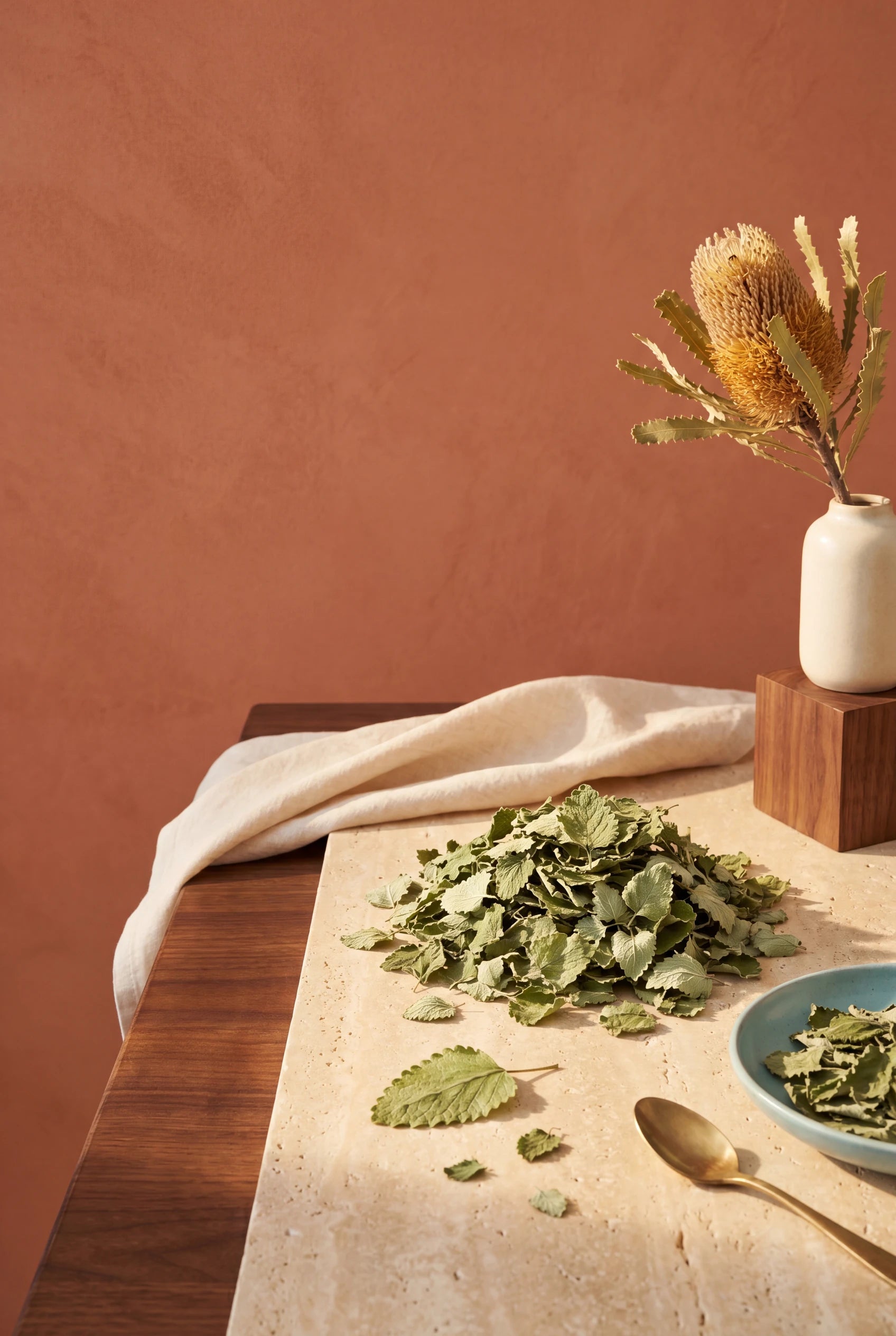
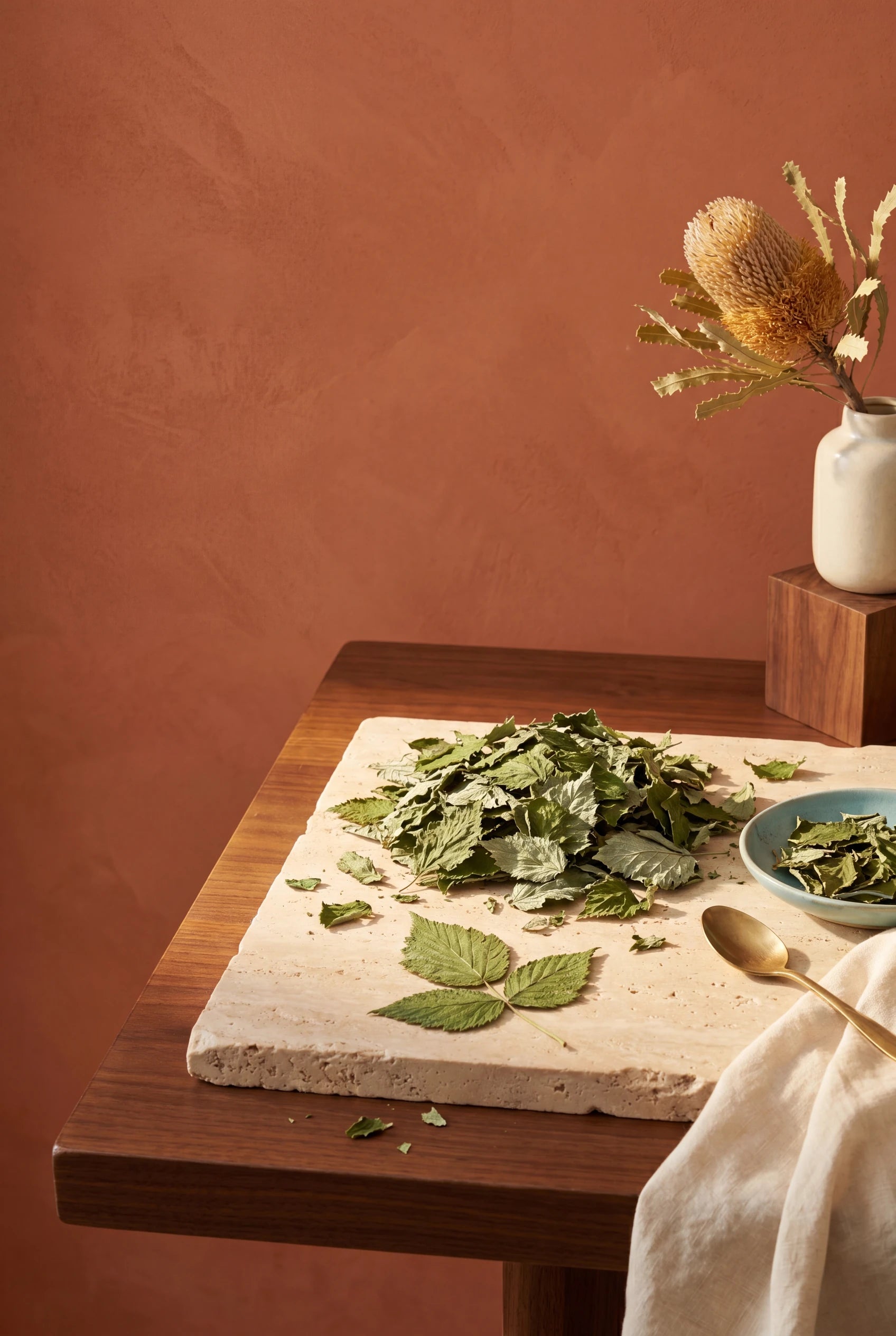
Raspberry leaf

Rubus idaeus

One of the oldest herbs in women's wellness tradition, rich in astringent tannins that give a grounding, slightly drying character. We are honest that modern research is sparse: a systematic review found the evidence limited and called for more trials (Bowman et al., 2021), so we keep this to tradition, not a clinical claim.
Found in: Quiet Hours teaWell established

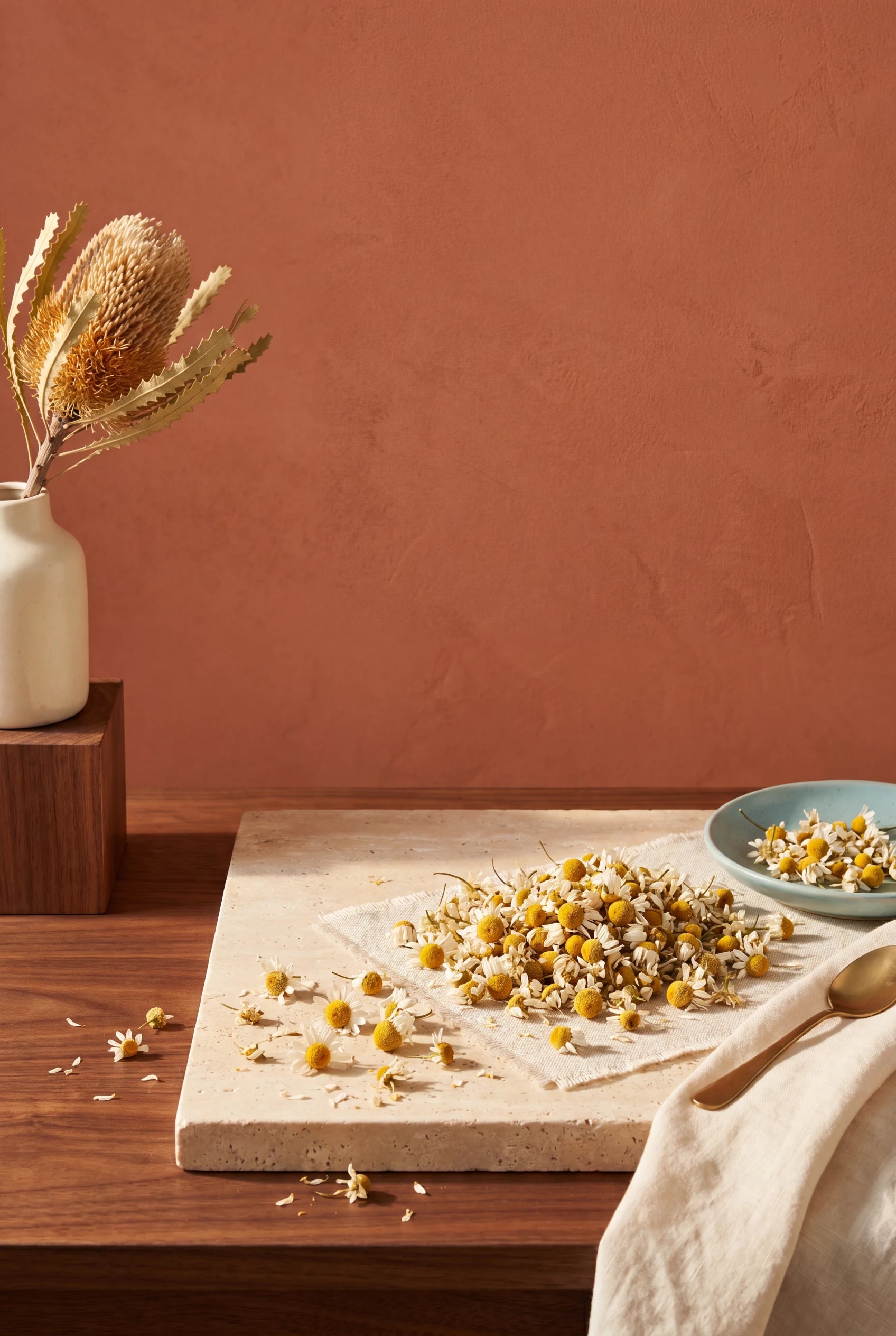
Chamomile flowers

Matricaria chamomilla

A gentle, calming flower with research interest in calm (Amsterdam et al., 2009), pairing softly with the herbal raspberry-leaf base.

Found in: Quiet Hours teaTraditional

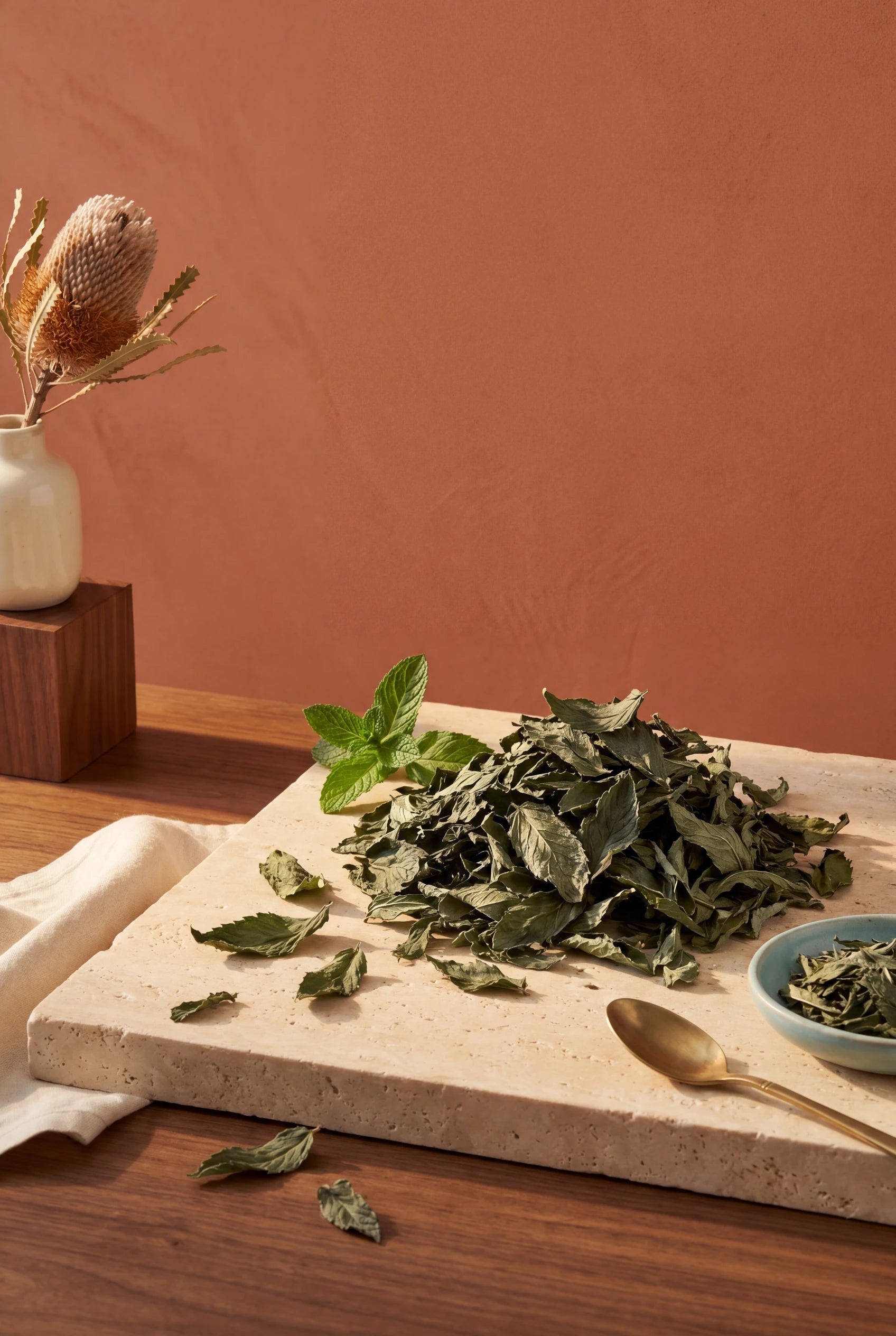
Spearmint leaf

Mentha spicata

Mellow spearmint lifts the grounding raspberry-leaf base with a soft, fresh note.

Found in: Quiet Hours teaWell established

Lemon balm leaf

Melissa officinalis

A soft, citrusy herb a meta-analysis links to improved calm and mood versus placebo (Ghazizadeh et al., 2021).

How it adapts

What you need, and how it helps

TargetHow it solves itKey ingredientWhat you'll notice
Curious about the traditional women's herbAn honest read of tradition and researchRaspberry leafClear, measured information
Wanting a grounding herbal cupAstringent, slightly drying tanninsRaspberry leafA grounding, earthy character
Wanting it caffeine freeA herbal blend, no tea leafQuiet HoursSip it any hour
Wanting it cleanNo added sugar or synthetic flavouringReal organic herbsHonest and simple

People also ask

Questions, answered

Its main claim is heritage: raspberry leaf has been a women's-wellness herb for centuries, and it is rich in astringent tannins that give a grounding character. We will be honest that modern research is sparse, with a systematic review finding the evidence limited and calling for more trials (Bowman et al., 2021). So we frame it as a traditional herb with a long history, not a clinically proven remedy.

Raspberry leaf is most often discussed in late pregnancy, and the evidence even there is limited and mixed. This is exactly the situation to not self-prescribe: if you are pregnant or trying to conceive, talk to your doctor or midwife before drinking raspberry leaf tea regularly, and follow their guidance.

In Quiet Hours, yes, it is a herbal blend with no tea leaf. Good Times, which also contains raspberry leaf, is caffeine free too.

Grounding and slightly drying, with a green, earthy, faintly tea-like character from the tannins. In our blends it is softened by chamomile and mint, so it never dominates.

Raspberry leaf, honestly

The deep dive

A long tradition

Raspberry leaf is one of the most enduring herbs in women's folk wellness, used across centuries and cultures, particularly in the context of women's health. That heritage is real and genuinely interesting, and it is the honest basis for why the herb appears in so many blends, including ours.

What the modern research shows

Here we have to be careful and honest. Despite the long tradition, the modern clinical evidence for raspberry leaf is thin: a systematic integrative review concluded the evidence is limited and that more rigorous trials are needed (Bowman et al., 2021). Most of that research concerns late pregnancy and labour outcomes, not everyday use, and it does not support broad health claims. So we present raspberry leaf as a traditional herb, not a proven one.

What it brings to the cup

Beyond the tradition, raspberry leaf earns its place on character. It is rich in astringent tannins, which give a grounding, slightly drying, green and earthy quality, a little like a light tea even though it is caffeine free. In Quiet Hours it is softened by chamomile, spearmint and lemon balm, so it adds depth without dominating.

A careful note on pregnancy

Because raspberry leaf is so associated with pregnancy, this matters: the evidence even there is limited and mixed, and this is not a herb to self-prescribe. If you are pregnant or trying to conceive, talk to your doctor or midwife before drinking it regularly, and follow their advice. For everyone else, enjoy it as a grounding, traditional, caffeine-free cup.

About the author

Dan Bartley

Co-founder, Sippo

Dan co-founded Sippo with Nicole and writes the brand's ingredient guides, working from peer-reviewed sources and standards bodies like Cochrane and the NIH. He is not a medical professional, and these guides are educational, not medical advice. Every clinical claim on this page is cited in full below, with its evidence tier and any caveats noted honestly.

hello@sippo.au
The research behind this3 peer-reviewed sources, with tiers and caveats
  1. Bowman, R., Taylor, J., Muggleton, S., & Davis, D. (2021). Biophysical effects, safety and efficacy of raspberry leaf use in pregnancy: A systematic integrative review. BMC Complementary Medicine and Therapies, 21(1), 56. https://doi.org/10.1186/s12906-021-03230-4

    Tier 2Systematic integrative review

    Reviewed raspberry leaf in women's wellness and concluded the evidence is limited and more rigorous trials are needed. Cited honestly to show the tradition is long but the modern research is thin.

  2. Amsterdam, J. D., Li, Y., Soeller, I., Rockwell, K., Mao, J. J., & Shults, J. (2009). A randomized, double-blind, placebo-controlled trial of oral Matricaria recutita (chamomile) extract therapy for generalized anxiety disorder. Journal of Clinical Psychopharmacology, 29(4), 378-382. https://doi.org/10.1097/JCP.0b013e3181ac935c

    Tier 2Randomised controlled trial

    Chamomile extract reduced generalised anxiety symptoms versus placebo over 8 weeks. Used a standardised extract, not tea, so cited for the calming mechanism behind a soothing ritual, not as proof a teabag treats anything.

  3. Ghazizadeh, J., Sadigh-Eteghad, S., Marx, W., Fakhari, A., Hamedeyazdan, S., Torbati, M., Taheri-Tarighi, S., Araj-Khodaei, M., & Mirghafourvand, M. (2021). The effects of lemon balm (Melissa officinalis L.) on depression and anxiety in clinical trials: A systematic review and meta-analysis. Phytotherapy Research, 35(12), 6690-6705. https://doi.org/10.1002/ptr.7252

    Tier 2Systematic review and meta-analysis

    Pooled clinical trials found lemon balm improved anxiety and depression scores versus placebo. The strongest evidence is for calm/mood; we extend it to evening wind-down cautiously.

A traditional herb, honestly described

Grounding, caffeine-free, with the evidence picture told straight. Love it in 30 days or it's on us.

Shop Quiet Hours